
What will early elections bring to Kosovo?
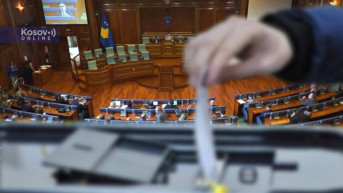
After ten months and two unsuccessful attempts to elect a government, the citizens of Kosovo will once again choose their representatives in the Assembly on December 28. According to the interlocutors of Kosovo Online, the ranking of political parties will not change significantly even after these elections, which means that forming a new government will depend solely on the willingness to compromise and make concessions. Otherwise, the political crisis will spill over into the first months of 2026.
Written by: Dusica Radeka Djordjevic
Within just 15 months, Kosovo’s President Vjosa Osmani will sign a decree calling for parliamentary elections for the second time. The first was on 16 August 2024, when she scheduled regular elections for 9 February 2025, and today she announced that early elections will be held on 28 December.
Before that, she dissolved the ninth convocation of the Assembly following consultations with representatives of political parties.
Opposition parties PDK, LDK, and AAK advocated for 21 December as the date of the new elections, while the parties still in the caretaker government—Self-Determination and Guxo—supported 28 December.
This date is also when the diaspora, which traditionally favors Self-Determination, will be in Kosovo. However, Osmani rejected journalists’ suggestions at today’s press conference that she had chosen a date favorable to Albin Kurti’s party.
“Why do you assume that the diaspora supports only one party?” she responded.
In the 9 February elections, among Albanian parties, Self-Determination won 42.3 percent of the vote, PDK came second with 20.95 percent, LDK third with 18.27 percent, and the AAK–Nisma coalition placed fourth with 7.06 percent.
Political analyst Nexhmedin Spahiu believes December’s results will remain more or less the same.
“Someone may gain or lose a few votes, but essentially nothing will change. That is a sign that the crisis will deepen, because with this kind of political mindset nothing can be achieved. The budget has not even been adopted, and if there is no government by March, employees will not be able to receive salaries, no payments will be possible, which is a huge risk for Kosovo’s society,” Spahiu told Kosovo Online.
He assumes that holding elections on December 28, when many people from the diaspora arrive in Kosovo, will benefit Albin Kurti.
“The diaspora has been his support so far, but we’ll see once elections take place. The diaspora may bring a few extra percentage points, possibly enabling him to form a government alone. However, when the time comes to elect the President of Kosovo—which is immediately in March and requires a two-thirds majority—with this political mindset we will still be in crisis and facing new elections. That is unthinkable to anyone who observes things rationally. Stubbornness outweighs political and national interest, and even the interests of individuals,” he said.
What has happened since 9 February, according to him, reflects a lack of patriotism among Kosovo’s political parties that represent the majority population.
“In this crisis, ethnic minorities in Kosovo have not contributed anything negative; on the contrary, they have been more willing to offer a positive contribution. But unfortunately, the fate of the country depends on the majority, and the majority has acted unpatriotically,” he said.
Because of the new elections, he added, the dialogue with Belgrade will remain blocked, even though responsibility does not lie solely with Kosovo—Kosovo bears only half the blame. Meanwhile, EU funds from the Growth Plan will remain out of reach.
According to Stefan Surlic, assistant professor at the Faculty of Political Science in Belgrade, the scenario people in Kosovo now fear is that the new elections will not resolve anything: the balance of forces will remain the same and there will be no qualified majority to support a government.
He sees two potential solutions to such a situation.
The first is an agreement between Self-Determination and another party, which could involve a major concession—such as allowing the prime minister not to be from Self-Determination.
“That is one option, which would fracture the already fragile unity of the opposition. The second option is forming a broad coalition of opposition parties, setting aside all divisions to create an anti-Kurti bloc. But in that case, a situation similar to previous elections may occur—where the Serb List becomes the deciding factor, and would have to be included. And that is the biggest problem for these parties, because Kurti has succeeded in portraying any coalition with the Serb List as an alliance with Serbia and against Kosovo,” Surlic told Kosovo Online.
Whether opposition parties will keep their distance from the Serb List, he says, will depend on international pressure.
“It depends on whether the role of the Serb List is rebranded and presented as a painful but necessary step to achieve at least some societal unity and allow Serbs and Albanians to form a government together. That would certainly benefit Serb representatives, as they would again be part of the institutions and system, and it would reset everything that Kurti’s government dismantled in the previous period. However, Kurti has more room for maneuver. I am sure that if he offered key ministries—and the presidency could also come into play—he could persuade at least one of the opposition parties to support his government after the elections,” Surlic said.
Research, he added, shows that especially after the local elections, Self-Determination remains stable, and even if it does not join the government after the early parliamentary elections, it would certainly be a very strong opposition.
Surlic points out that in the previous period there was clearly a highly organized obstruction aimed at delaying the elections as much as possible. He believes Albin Kurti was aware he would not have a secure government and used time to ensure elections would be held no earlier than the end of the year.
“Vjosa Osmani is helping him in this. When we look at the procedures for constituting the Assembly and securing quorum, it is clear that legal and constitutional norms in force in Kosovo are being flagrantly violated. This leads to the paradox that Kurti’s government insisted that only Serbs follow the laws and norms in Kosovo, while Albanians and their leaders are allowed to violate the very norms they claim to uphold. Osmani gave Kurti wind in his sails through the political maneuver surrounding Konjufca, even though it was evident he had no support and that there was no political agreement,” Surlic said.
Journalist Lazar Stevic from North Mitrovica also does not believe that dramatic changes will occur in the voter support parties will receive next month, but he says the opposition could benefit, because Self-Determination has achieved nothing in the past period.
He reminds that its government has been in a technical mandate for nearly a year and institutions are in total paralysis.
“Neither the budget for Pristina nor for other cities—and not even for the entire territory of Kosovo—has been adopted, which causes dissatisfaction among citizens,” Stevic told Kosovo Online.
The timing of the elections—December 28—is, in his view, most favorable to Self-Determination.
“We all know that a large number of voters from the diaspora vote for Self-Determination. They want to use this to achieve better results,” he said, but added that citizens are unlikely to be motivated to turn out in large numbers this time, because this year already saw too many elections: first parliamentary, then two rounds of local elections.
Stevic believes that the Serb List will be a very important factor in forming the new government.
“No matter how strange that may sound to Albanians, the biggest winner of the previous parliamentary and local elections was the Serb List. It is important that the Serb List also participates at the central level of government, to revoke the decisions made in the previous period, especially in northern Kosovo. Only then can the survival and better life of the people living in these areas be ensured,” Stevic said.
Former U.S. Assistant Secretary of State for European and Eurasian Affairs and former U.S. Ambassador to North Macedonia Philip Reeker, commenting on the months-long political crisis in Pristina, recently told Kosovo Online that Kosovo needs a government capable of cooperating with the United States and willing to implement what has been agreed.


comments