
Which presidential candidate would be the least painful compromise for Kurti?
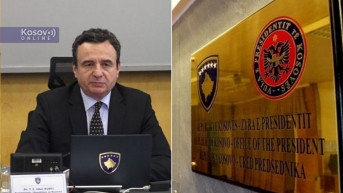
As negotiations over candidates for Kosovo's next president are about to begin, Self-Determination has defined what it considers acceptable: proposed candidates should be non-partisan. So far, the opposition has not put forward such names, and according to Kosovo Online's interlocutors, the only compromise that Albin Kurti might accept would be a neutral figure from academia or a member of the Jashari family.
Written by: Dusica Radeka Djordjevic
A few days ago, Arberie Nagavci, head of Self-Determination's parliamentary group in the previous legislature, outlined the direction the opposition should take if it wants its candidate to be elected President of Kosovo. Party-affiliated candidates, she said, are not the best solution for the office of president.
Nagavci also stated that Self-Determination is prepared to discuss a consensus, non-partisan candidate.
If this remains Self-Determination's firm position, it would effectively rule out candidates backed by political parties, such as former President Vjosa Osmani, who ran on the Democratic League of Kosovo (LDK) electoral list, or the honorary president of Ramush Haradinaj's Alliance.
Political analyst Ilir Deda believes that journalist and publicist Blerim Shala would make a suitable presidential candidate because he maintains cooperation with all political actors. However, Shala showed no interest in assuming such a role last year.
Some observers of Pristina's political scene believe that Kurti, in reality, will not accept any candidate proposed by the opposition.
Analyst Astrit Gashi, for example, does not believe in any scenario in which the decision on the president would be beyond Kurti's control. Political analyst Shqipe Pantina shares a similar view, arguing that Albin Kurti wants to choose a president "tailored to his own preferences" or to push the country toward another election.
Is there a least painful compromise that the Self-Determination leader would accept, particularly at a time when diplomats are openly emphasizing that even the largest political party must be prepared to make compromises?
"The only name that could be proposed by the opposition as a presidential candidate and that Albin Kurti would not be able to reject would be someone from the Jashari family," political scientist Ognjen Gogic told Kosovo Online.
He recalls that Kurti himself has previously stated that he would find a member of the Jashari family acceptable for the position.
"If, for instance, the opposition managed to persuade one of them to accept the nomination, Kurti would not be able to oppose it. However, the chances of that happening are slim," Gogic believes.
As for any other candidate—whether a member of an opposition party, a party official, or a non-partisan figure proposed by the opposition—Gogic believes Kurti would find a way to reject the proposal.
"Not because of the individual in question, but because the proposal would come from the opposition. The only insurmountable obstacle for him would be rejecting a candidate from the Jashari family if that person were nominated by the opposition," the political scientist says.
Former diplomat Sylë Ukshini believes that if Albin Kurti genuinely wants an agreement on the election of the president, then the candidate's name will have to be the subject of negotiations and could ultimately be a neutral figure from academia. He adds that it is equally important for the person to be trustworthy, free from any reputation for corruption, and without any legal issues.
"As far as Kosovo's two million Albanians are concerned, there are as many potential political candidates as one could wish for. However, judging by Kurti's style of governance, it appears that he is not inclined toward compromise," Ukshini told Kosovo Online.
"He says he won the election. Kurti, like everyone else, should understand that no party has enough votes to elect the president on its own, which is why compromise is essential. He has said that the candidate should be non-partisan. It is difficult to understand exactly what he means, but based on his statements before the elections, it seems he wants to push the country toward another election, believing he can once again defeat the other parties and wear them down. Democracy, however, is not merely about winning elections and exhausting your opponents—it is also about earning the trust of voters to govern the country," Ukshini says.
He adds that while both the Speaker of Parliament and the Prime Minister belong to the Self-Determination Movement, it would be beneficial to reach a compromise regarding the presidency.
"The fact that Kurti has the largest number of MPs works in his favor. If he truly wants an agreement on the election of the president, then the president's name will have to be negotiated. I believe a neutral figure from academia could be an appropriate choice, but it is important that this person possesses integrity, is trustworthy, has no reputation for corruption, and has never had any legal problems," he concludes.
Aleksandar Rapajic, Programme Director of the NGO Center for the Advocacy of Democratic Culture in North Mitrovica, believes that at this stage Self-Determination and Albin Kurti do not want a prominent political figure to become president and that, if they genuinely want a president to be elected, they will opt for a non-partisan candidate.
"I believe that both Vjosa Osmani and Haradinaj are out of the running because their election would create a dual power structure, something Albin Kurti definitely does not want. He does not want a strong political figure who might at some point challenge his decisions. If he truly intends to elect a president, he will support a non-partisan candidate. If, however, he wants to force another election, he will insist on a candidate from his own circle who would be unacceptable to the other parties," Rapajic told Kosovo Online.
Asked whether there are any names Kurti could accept without alienating his own voters, Rapajic says Self-Determination must weigh the political costs of each option.
As he points out, the latest elections showed that Self-Determination's share of the popular vote declined significantly, suggesting that the trend could continue in future elections. However, he notes that the party's number of parliamentary seats did not decrease.
"At this point, Self-Determination is weighing whether it is better to elect a president, form the institutions, and assume responsibility for making potentially difficult decisions, or to continue prolonging the current situation in which the institutions remain unconstituted and there is effectively no political accountability," Rapajic concludes.
According to announcements by Kosovo's caretaker Prime Minister Albin Kurti, negotiations on forming the new institutions will begin once the Central Election Commission officially certifies the results of the June 7 elections.
Procedure
The President of Kosovo is elected by the Assembly through a secret ballot. To be nominated, a candidate must secure the signatures of at least 30 Members of Parliament.
To be elected in the first or second round of voting, a candidate must receive a two-thirds majority of all 120 MPs. If no candidate obtains the required majority in the first two rounds, a third round is held between the two candidates who received the highest number of votes in the second round. In that round, the candidate who secures a majority of the votes cast by the MPs present is elected.
Under the 2022 Rules of Procedure of the Assembly, at least 80 MPs must participate for the first and second rounds of voting to be valid, while at least 61 MPs must take part in the third round.
If no president is elected in the third round, the Assembly is dissolved and new elections must be called, to be held within 45 days.
0 comments