
Why does not the diplomatic call to both sides for de-escalation produce results?
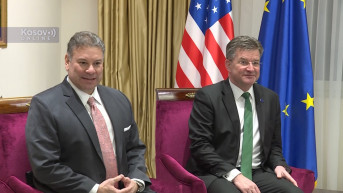
Since the newly elected Albanian mayors, with the assistance of the Kosovo Police, entered the buildings of the Serbian municipalities in the north of Kosovo, and the citizens of these municipalities took to the streets to peacefully express their dissatisfaction, calls from international officials to "both sides" to calm tensions and return to dialogue are heard every day. The effect of diplomatic calls is missing, and analysts say for Kosovo Online that there is no reaction to Western warnings, because there are no concrete measures to punish Pristina for the repression it applies to the Serbs.
Analysts warn that diplomatic words, without concrete action, can lead to a complete escalation and large-scale conflict, but also that the lack of concrete measures indicates that there is a certain kind of support for Kurti for all the actions he implements.
Retired diplomat Zoran Milivojevic points out that calls for de-escalation and reduction of tensions do not yield results solely because everything ends with verbal warnings, without the implementation of measures that would force Pristina to stop provocations and violence.
He also told Kosovo Online that by the fact that the West was calling on both sides to de-escalate, it was actually sending a message that it treated Kosovo and Serbia as two independent states.
"Calling both sides to de-escalation by the West means a political confirmation of the political position and strategy of the collective West, which recognized Kosovo and Metohija that it treats the two sides equally and that it treats Kosovo as an independent state and that in that sense it has understanding for their measures and actions they take in that capacity. The diplomatic call we are witnessing without concrete measures has no effect, and at the same time it means that there is no political will to take more concrete measures against the Pristina authorities, in order to prevent the reasons and take measures against the actions that led to the escalation," Milivojevic explains.
By the factors that contributed to the escalation, our interlocutor means the police in the north of Kosovo, the repression that the Pristina authorities carry out with that police; the attempt to forcefully install mayors in four municipalities in the north of Kosovo based on illegitimate elections and the lack of reaction from KFOR.
KFOR, Milivojevic points out, represents the basis of NATO's actions, pointing out that the lack of reaction of that mission to attacks on the Serbs actually represents a lack of political will on the part of Washington and the majority in Brussels to calm the situation in Kosovo.
"Therefore, it is obvious that apart from diplomatic and political demands, threats, warnings, and everything else, the lack of concrete measures does not actually contribute to de-escalation. Inaction and the lack of concrete measures in a waypoint to two conclusions. The first is that there is some kind of support for Kurti for all these measures and actions he implements, and secondly, that this policy and strategy of Pristina fits into the ultimate goal of changing Belgrade's attitude and influencing the Serbs in the north to give up their resistance to that measures taken by Kurti," Milivojevic said.
Western power centers led by Washington and the majority in Brussels, he estimates, have all the mechanisms and instruments to exert direct pressure on the authorities in Pristina and to deprive them of their mechanisms of action.
"The ministries of force and justice are key, and if they put them under control and take away the mechanisms from Kurti and the executive power, then we wouldn't have this situation that we have, and they can do it because they completely control the situation in Kosovo and they control that government politically, security-wise and financially and in every respect. So it can be done and it's not a problem, it's a matter of political will," he says.
According to Milivojevic, Kurti's arrogant behavior even towards international officials indicates that there is some kind of agreement and that there is no clear political will to influence Kurti.
"Under these conditions, verbal advocacy and diplomatic measures are useless. Without direct sanctions and measures that would take the mechanisms of action out of his hands, there is no change in policy. There is no question of that, his rating is growing because of such a policy, and they will are letting him. You can see that Lajcak has become direct and talks about Kosovo as a state, therefore, they do not want to question the political system and Kosovo as a state. We have seen what Stano says, for him it is the government that has the right to act, Lajcak sees Kurti as a democrat, therefore everything has been said and everything is clear," Milivojevic concludes.
Predrag Rajic from the Center for Social Stability agrees with Milivojevic that diplomatic calls for de-escalation have no effect due to the lack of concrete measures that would sanction and stop Pristina's behavior.
Western power centers, he says, still haven't decided to make an adequate effort to persuade Kurti to refrain from violence against the Serbs in Kosovo.
"I think that the strong will has not yet matured in Washington and Brussels to move from words to actions, that is, to move from condemning Kurti's behavior to concrete consequences for such actions in the form of clear restrictive actions that would punish Kurti for his behavior. For now, we only see verbal notes, which are obviously not enough because Kurti does not care about them, what's more, he speaks very openly about how such statements of Western officials are not of interest to them and tries to discipline them and even humiliate them,” Rajic said.
He believes that it is hardly sustainable for the international community that "in front of them is a Kurti who is quite an irrelevant factor for them and who constantly humiliates them and radicalizes them with his rhetoric and his actions", and apparently, as he adds, he has no intention of stopping with such actions.
Rajic says that he hopes that the international community is aware that there is a high risk of a total escalation in Kosovo if their warnings remain only on verbal calls for both sides to calm tensions.
"I would like to believe that the centers of power of the international community think the same way, that his actions lead to additional complications of the situation and possible conflict. I would really like to see their action, which would, first of all, deter him from this and that action because otherwise, I fear that we may have an escalation of the conflict in Kosovo with incalculable consequences for the entire region," Rajic warned.

0 comments