
Why is the path to membership in the Council of Europe being paved for Kosovo?
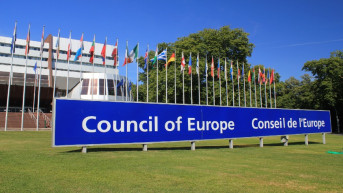
The Political Committee of the Parliamentary Assembly of the Council of Europe will have only one item on the agenda at tomorrow's extraordinary meeting – voting on the report by Dora Bakoyannis, recommending Kosovo's admission to this organization.
Although Bakoyannis, who is the rapporteur for Kosovo in PACE, indicated three main unresolved issues regarding Kosovo's membership in the Council of Europe before the same Committee on March 5th: the Constitutional Court's ruling on the Visoki Decani Monastery, effective protection of the Serbian community in the northern municipalities, i.e., the formation of the CSM, and expropriation of land in municipalities with a Serbian majority, the Greek delegate quickly gave the green light for Kosovo to become a member of the Council of Europe, as Pristina had meanwhile implemented the court decision to return land to the Visoki Decani Monastery, awaited for a full eight years.
Why is the path to membership in the Council of Europe for Kosovo being openly paved when the legal experts' report on the compatibility of Kosovo's legal system with Council of Europe standards noted that Kosovo's legal framework was generally in line with international standards, but that "this does not mean that there are no problems regarding the application of standards in practice"?
Kosovo Online interlocutors point out that there is enormous pressure to vote for Kosovo's admission into this organization, and some believe that this process should be viewed in the context of the political momentum in the region related to geopolitical events on the continent and the desire to put the entire region under strong control of international organizations.
The Political Committee of PACE has 85 members, and if all of them were to participate in the vote tomorrow, 57 votes would be needed to confirm Bakoyannis's recommendation. However, to hold the meeting, a quorum of 27 members is sufficient, so in case that number of parliamentarians is present for the vote, two-thirds would be - 18.
If Kosovo passes this step tomorrow, the next step will be the vote in the plenary session, with the final decision made by the Committee of Ministers.
The head of the permanent delegation of the Serbian Parliament to the PACE, Biljana Pantic-Pilja, tells Kosovo Online that Serbia's maneuvering space is very limited ahead of tomorrow's vote.
"Bakoyannis will present her report and position, which unfortunately she has changed compared to two weeks ago. Considering that neither the delegations of Russia nor Azerbaijan are present in the PACE anymore, Serbia's maneuvering space is significantly reduced in terms of the number of our friends in the PACE," Pilja says.
In addition to recommending Kosovo's accession to the Council of Europe, rapporteur Bakoyannis stated in the media that its membership would give the Serbian community and all other minorities in Kosovo the right to appeal to the European Court of Human Rights, which she believes would provide them with better protection. However, Pantic-Pilja says this is a very hypocritical statement.
“We always emphasize that Articles 3 and 4 of the Council of Europe Statute state that only a state that respects rights and human and minority freedoms can be a member. We constantly emphasize that Kosovo is not a state, but they are trying to suppress that fact, while we refer to UN Security Council Resolution 1244 that Kosovo is a southern Serbian province and that no entity can become a member of the Council of Europe. There is no respect but constant violation of human rights, especially the rights of Serbs, but they don't want to hear that. So, her statement, 'Now you can say that to the European Court of Human Rights,' even though the report doesn't mention all these violations of human rights, is very hypocritical," Pantic-Pilja says.
Maja Vukicevic, head of the Montenegrin delegation to PACE, as announced, will not vote for Kosovo's accession to the Council of Europe despite Podgorica recognizing Kosovo. Pantic-Pilja says that just as there are positive examples like this, there are also negative ones.
“For example, a member from Romania, which has not recognized Kosovo, advocates for Kosovo's independence and supports its membership in the Council of Europe. Each member of PACE votes according to their personal discretion, and two-thirds of the votes of present members in PACE are enough for a positive opinion, after which the final decision is made by the Committee of Ministers in May," the head of the Serbian delegation to PACE says.
Regarding whether the positions of Council of Europe members can be influenced by the announcement of a possible withdrawal of Serbia from the Council of Europe if Kosovo is admitted to this organization, she says it is evident that they are uncomfortable with that announcement.
"They think we're bluffing. Because it's not easy to explain why a country is withdrawing from the Council of Europe on its own. But they have shown that they do not respect any democratic principles. They expelled Azerbaijan in January, now they will admit Kosovo... If Kosovo is admitted, I expect a reaction from the state of Serbia," Pantic-Pilja says.
Regarding Bakoyannis's positive opinion that Kosovo should be admitted to the Council of Europe, former ambassador to the OSCE, Branka Latinovic, says that Kosovo has been put in quotation marks in the recommendation, which means that some formula has been found in line with the Brussels Agreement and that the quotation marks indicate that it is a questionable state.
“One mitigating factor for the authorities in Pristina was that they have a good legal framework on paper, worked on by foreign experts. That was one of the elements that 'pulled' the rapporteurs to use it as an argument to give a recommendation," Latinovic says for Kosovo Online.
In addition to one fulfilled condition for Kosovo's admission regarding the Visoki Decani Monastery, our interlocutor points out that written promises have been made by the president, prime minister, and president of the Kosovo Assembly to fulfill the remaining conditions related to the negotiation process mediated by the EU.
"It should be noted that the report recommends strong monitoring, which means that the obligations Kosovo has undertaken will be under strong monitoring by the appropriate committee, or perhaps a Council of Europe mission will be opened in Pristina to oversee, control, and warn about it, and there are corresponding control mechanisms," Latinovic says.
She emphasizes that this is not an isolated process but should be viewed in the context of the political momentum in the region related to geopolitical events on the continent regarding the war in Ukraine and the aspiration to bring the entire region under strong control of international organizations, including accelerating the integration process into the EU.
Latinovic stresses that we currently do not know the outcome of the whole story, but everything indicates that Kosovo can be expected to regulate its status in the Council of Europe in the foreseeable future.
Petr Bystron, the head of the Foreign Policy Committee of the parliamentary group Alternative for Germany (AfD) in the Bundestag, tells Kosovo Online that he observes with great concern the processes regarding Kosovo's request to become a member of the Council of Europe, and he notes that there is immense pressure on all countries to support these tendencies.
"There is a desire to integrate Kosovo into all possible international organizations. We are strongly against it, Kosovo is not a state, it is a construction that cannot survive. It is a NATO and EU protectorate. We see great potential for further escalation if we continue on this path," Bystron, who is a deputy member of the Permanent Delegation of the Bundestag to the Parliamentary Assembly of the Council of Europe, says.
0 comments