
Western Balkans between growth and stagnation: Who is leading the region?
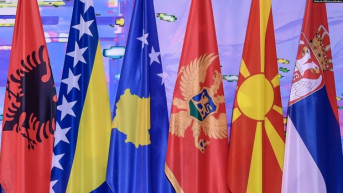
The economic landscape of the Western Balkans presents a mixed picture. On the one hand, the region continues to record stable economic growth, attract investment, and pursue ambitious infrastructure projects. On the other, it remains burdened by deep-rooted structural problems that continue to impede long-term development. The region as a whole is characterized by dependence on foreign direct investment, insufficient integration of foreign investment into domestic economies, labor emigration, and pronounced social inequality.
Written by: Darko Savanovic
To accelerate development and move closer to European living standards, experts interviewed by Kosovo Online stress the need to transform the region's economic model by shifting toward higher value-added sectors, strengthening institutions, investing in human capital, and fostering greater regional cooperation.
Serbia stands out as the region's largest economy, with a substantial inflow of foreign direct investment and an investment-grade credit rating. At the same time, it faces constraints such as low productivity and insufficient innovation. Montenegro and Albania, meanwhile, lead the region in reform implementation and are the closest to European Union membership despite having smaller economies.
With annual foreign investment inflows amounting to several billion euros and accounting for roughly half of the Western Balkans' total gross domestic product (GDP), Serbia dominates the region economically.
Its economic model continues to rely on major infrastructure projects, foreign direct investment, and the development of selected sectors such as agriculture. However, persistent challenges—including low competitiveness, weak productivity, and insufficient innovation—continue to constrain further economic growth.
Serbian economist Veljko M. Mijuskovic expects Serbia to retain its leading regional position following the announced modernization of its economic growth model.
"The changes we expect in the country's economic model primarily involve a greater focus on technologies with higher added value, which will increase the level of innovation within the economy," Mijuskovic told Kosovo Online.
Montenegro and Albania, although economically smaller than Serbia, have made greater progress toward European integration thanks to the implementation of far-reaching reforms.
Their progress demonstrates that economic strength alone is not the determining factor in advancing toward EU membership. Political commitment and institutional reform play an equally important role. Albania's tourism sector, which generates billions of euros annually, together with Montenegro's stable growth and reform agenda, illustrates that alternative development models can also deliver tangible results.
Pristina-based economics professor Shkumbin Misini believes Montenegro and Albania are closest to joining the European Union, primarily because of the reforms they have undertaken, with Montenegro leading the way.
Kosovo and Bosnia and Herzegovina, according to the experts interviewed, continue to lag behind because of institutional weaknesses and slower progress in the EU accession process, while North Macedonia has entered a period of stagnation.
According to Olimpija Hristova Zaevska, an expert in economic development and green finance from Skopje, the region should focus on attracting high value-added investment accompanied by mandatory investment in research and development, further expanding the ICT sector, and developing service industries such as consulting and accounting.
Another challenge facing the region is the persistently high level of social inequality. Although economic growth continues, its benefits are not distributed evenly.
Serbia – The Region's Economic Leader
Mijuskovic notes that Serbia is the economic leader of the Western Balkans, attracting approximately EUR 4–5 billion in foreign direct investment annually while generating approximately 50–55 percent of the region's total GDP.
"If we compare the Western Balkans with neighboring countries such as Croatia and Slovenia, they have naturally advanced further thanks to EU membership. However, when looking exclusively at the Western Balkans, Serbia is the leader," Mijuskovic said.
He explained that Serbia's economic growth is currently driven by several key factors, including major infrastructure projects, foreign direct investment, infrastructure development, and segments of the agricultural sector. Nevertheless, he emphasized that significant constraints remain.
"There are numerous obstacles limiting economic development, including the low competitiveness of domestic enterprises, weak productivity among small and medium-sized businesses, and an insufficient degree of innovation in manufacturing," the economist noted.
He believes that the planned changes to Serbia's economic model will enable the country to preserve its regional leadership.
According to him, Serbia should continue implementing reforms and advancing toward the European Union by strengthening economic competitiveness, institutional capacity, the rule of law, and the overall business environment.
Tourism – The Pillar of Albania's Economy
Albanian EU financing and venture capital expert Ergis Sefa notes that international financial institutions recognize Albania and Montenegro as the region's leading reformers and fastest-growing economies, while emphasizing that Albania must substantially improve labor productivity in order to accelerate further development.
"International institutions such as the International Monetary Fund and the World Bank consider Albania and Montenegro to be the two countries that have advanced most rapidly in terms of both reforms and economic growth, and they are expected to continue along that path," Sefa told Kosovo Online.
He considers it encouraging that Albania's economy continues to grow at a rate exceeding three percent while inflation remains under control despite external shocks. However, he stressed that natural resources must be managed more efficiently and labor productivity significantly increased.
"We also need to increase labor productivity, and we must do much more to improve it—and to do so rapidly," Sefa said.
Speaking about Albania's economic structure, Sefa stressed that tourism remains the country's main economic pillar but argued that future development must focus on quality rather than quantity.
Besides coastal tourism, he highlighted the untapped potential of mountain and cultural tourism and emphasized the importance of creating a distinctive and authentic tourism offering.
The key prerequisite, he argued, is investment in human capital through education and professional training in order to ensure service quality comparable to established destinations such as Croatia, Greece, Italy, and Türkiye.
He also pointed to the significant but underutilized potential of agriculture, which could develop alongside tourism.
Growing demand for local food and agricultural products resulting from tourism expansion could stimulate small farms and agribusinesses. However, Sefa believes that stronger government support and faster reforms are necessary for agriculture to keep pace with tourism.
He also warned that social inequality remains high throughout the Western Balkans, with Gini coefficients significantly above European averages.
Kosovo's Economic Growth Driven by Consumption
According to Misini, Kosovo, Serbia, and Bosnia and Herzegovina have experienced a slowdown in their EU accession process, resulting in the loss of certain financial support and negatively affecting their economic and social development.
Kosovo remains the furthest behind in European integration because negotiations have not yet advanced to the stage of opening negotiating chapters.
"Kosovo is far from the integration process because the chapters it should have opened have not yet been addressed, particularly due to the dialogue issue and the lack of coordination with the EU and the Quint countries, which has effectively prevented Kosovo from opening accession chapters," Misini said.
He added that Albania and Montenegro have made substantial progress through radical reforms aimed at European integration.
According to Misini, Montenegro and Albania could complete their negotiating chapters by 2030.
He believes the principal challenges facing Kosovo, Serbia, and Bosnia and Herzegovina stem from shortcomings in judicial reform.
"These three countries have been significantly affected under the Economic Growth Plan, which has had a direct impact on their economic and social well-being. This is a consequence of autocratic tendencies, particularly state interference in judicial systems, which the European Union opposes," Misini said.
Regarding Kosovo specifically, he explained that its economic growth is largely consumption-driven.
"The principal driver of Kosovo's economic growth is increased consumption, with remittances from the diaspora serving as the main factor supporting that consumption," he assessed.
Discussing living standards across the region, Misini stated that Montenegro has recorded the highest levels of economic prosperity and GDP growth in recent years, narrowing—and in some respects surpassing—the gap with Serbia following wage increases, while Albania continues to record stable and progressive growth.
Attracting Foreign Capital Through a Common Market
Hristova Zaevska believes that foreign direct investment remains both the principal driver and one of the key limitations of economic growth in the Western Balkans.
According to her, accelerating development will require substantially higher economic growth—around 7 percent annually—which, in turn, requires a new economic model centered on higher value-added industries and effective measures to retain skilled talent.
She noted that the region attracts foreign investment equivalent to approximately 6.4 percent of GDP, with North Macedonia ranking among the region's stronger performers in attracting investment according to UNCTAD.
However, she emphasized that foreign investment has generally remained disconnected from domestic economies, focusing mainly on assembly operations and exports without significant technology transfer or knowledge sharing.
Global trends are changing, she said, and the region must reposition itself toward higher value-added sectors such as energy, artificial intelligence, and industries supporting the green energy transition.
"There are more competitive countries for traditional types of foreign investment. If we want faster economic growth, we must position ourselves around new technologies. These primarily include energy, artificial intelligence, components for electric vehicles, and everything that supports the energy transition," the Macedonian economist told Kosovo Online.
According to Hristova Zaevska, one of the greatest challenges is the shortage of human capital, as highly educated professionals continue to leave the region, making economic transformation more difficult.
Speaking about living standards, she estimated that, at its current rate of growth, North Macedonia would need approximately 60 years to reach the European Union average.
She considers Serbia to be the region's most advanced economy, followed by Montenegro and Albania, while Bosnia and Herzegovina and Kosovo continue to lag behind primarily because of weaker institutions. Nevertheless, she noted that both Bosnia and Herzegovina and Kosovo have made measurable progress over the past fifteen years, whereas North Macedonia has experienced a decade of stagnation in converging toward European standards.
To accelerate development, Hristova Zaevska reiterated that the region needs annual economic growth of approximately seven percent, supported by structural reforms, greater emphasis on high value-added sectors, and policies designed to retain skilled professionals.
Among her priorities are attracting high value-added investment coupled with mandatory investment in research and development, further expansion of the ICT sector, and the growth of service industries such as consulting and accounting. She also stressed the importance of active government policies—including tax incentives and other support measures—to retain highly qualified professionals and encourage service exports.
She identified energy, smart agriculture, and carbon credit-related projects as particularly promising sectors but emphasized that their development requires a clearer institutional framework and more effective strategic planning.
Finally, Hristova Zaevska underscored the importance of developing a common regional market in the Western Balkans. Individual economies, she argued, lack sufficient scale to attract major investment independently, whereas removing barriers and strengthening regional integration would support both domestic entrepreneurship and foreign investment.



0 comments