
Will the tug-of-war resume over the election of a Serbian Deputy Speaker of Parliament?
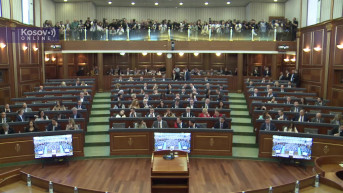
Members of parliament elected in the 28 December elections will take their seats tomorrow. Once their mandates are verified and the agenda turns to the election of a Serbian Deputy Speaker of the Assembly, two scenarios are possible: compliance with the decision of the Constitutional Court by electing a candidate backed by a majority of Serbian MPs, or a renewed political and legal impasse. Interlocutors of Kosovo Online offer differing forecasts. Some believe that Self-Determination Movement will this time support a candidate of the Serb List, given its interest in swiftly completing the formation of parliament. Others are less certain, arguing that Albin Kurti is working to dismantle protected rights for the Serbian community.
Written by: Dusica Radeka Djordjevic
For tomorrow at noon, Kosovo President Vjosa Osmani has convened the constitutive session of the Assembly, following yesterday’s confirmation of the final results of the 28 December elections by the Central Election Commission.
The constitution of the 10th convocation of the Assembly comes seven days after the Constitutional Court of Kosovo published its ruling on the appeal filed by the Serb List concerning the election of the Serbian Deputy Speaker in the previous convocation. Under that ruling, the candidate for the Serbian Deputy Speaker must be proposed by a majority of MPs from that community.
Self-Determination, which will hold 57 of the Assembly’s 120 seats, sharply criticized the ruling, claiming that the Constitutional Court exceeded constitutional limits and abused its authority, arguing that the Constitution does not refer to a “majority of Serbian MPs” in the election of a Deputy Speaker from the Serbian community.
The Court, however, also took into account the Rules of Procedure of the Assembly of Kosovo, which stipulate that the candidate for Deputy Speaker from the Serbian community is proposed by a majority of MPs from that community.
“Members of parliament are obliged to find a way to elect the President and Deputy Speakers of the Assembly in accordance with constitutional provisions and the Assembly’s Rules of Procedure, and to make the Assembly functional. This is, in principle, done on the basis of proposals by the majority of MPs who propose candidates for Deputy Speakers from non-majority communities,” the Court’s ruling states.
Will Self-Determination—despite opposing the Court’s decision—find an “alibi” for its MPs to support a candidate of the Serb List, which holds nine of the ten seats reserved for the Serbian community, or does an alternative path to a different outcome still exist?
Court Decision Narrows Self-Determination’s Options
Aleksandar Sljuka, an associate of the NGO Nova drustvena inicijativa, told Kosovo Online that it will certainly be difficult for Self-Determination to appoint anyone from the Serb List.
Nevertheless, he notes that the Constitutional Court’s decision has significantly narrowed the party’s room for maneuver, making it harder to again appoint Nenad Rasic of the Party for Freedom, Justice and Survival to the post of Deputy Speaker.
If Self-Determination does not act in a completely self-destructive manner, Sljuka says, the urgency of forming institutions will likely lead to a compromise at least at the level of political communication, with a candidate of the Serb List elected as Serbian Deputy Speaker, in order to comply with the Constitutional Court’s ruling and the Constitution of Kosovo.
As he emphasizes, the Court clearly stated that the previous election of the Serbian Deputy Speaker was unconstitutional, while Self-Determination’s practice to date has been to seek quasi-legal methods to pursue actions that negatively affect the Serbian community.
“They must form institutions as soon as possible because of deadlines—above all in the context of electing the President of Kosovo—to avoid new elections that could introduce a different dynamic. Self-Determination is currently in a favorable position, having achieved a significantly better result than in last February’s elections, and they likely want to preserve that advantage and form institutions on that basis,” Sljuka assesses.
Political analyst Nexhmedin Spahiu shares the view that Self-Determination will comply with the Constitutional Court’s ruling and believes that a Deputy Speaker from the Serb List will pass this time.
Although Self-Determination has criticized many Constitutional Court decisions, Spahiu notes that it has nevertheless adhered to them.
“The decision was adopted by a majority of the Constitutional Court judges, and I think it will have to be respected because it is not in their interest for the formation of institutions to be delayed. Using the justification that they must respect the ruling, I believe the Deputy Speaker from the Serb List will be elected. Any other course would run counter to their own interests,” Spahiu said.
“Kurti Is Seeking to Create a New Facticity”
A different view is offered by Dusko Celic, Assistant Professor at the Faculty of Law of the University of Pristina with temporary seat in Kosovska Mitrovica. He believes that Self-Determination leader Albin Kurti will again propose, for Deputy Speaker from the Serbian community, a person who does not represent the Serbian people in any meaningful majority sense and lacks that kind of legitimacy.
Despite the Constitutional Court’s decision, Celic is convinced that Kurti will once again take an unconstitutional step, arguing that a pattern of unconstitutional conduct has already been established.
“This is what we lawyers call a ‘factual constitution.’ By repeatedly engaging in unconstitutional behavior, he is attempting to create—so to speak—a new facticity. Given that such a standard has already been set, I do not believe he will go below it this time either, even at the cost of the Constitutional Court later annulling such a decision again,” Celic told Kosovo Online.
Serbian Minister and Consultations
Following the constitution of the Assembly, the formation of the Government will ensue. Regarding the appointment of a minister from the Serbian community, the Constitution provides that there must be at least one, to be appointed following consultations with parties, coalitions, or groups representing non-majority communities in Kosovo.
Celic believes Kurti will not consult the Serb List—despite it having won nine of the ten guaranteed seats for the Serbian community—nor allow it to propose a member of the Government.
“Kurti does not want any remnants that point to the consociationalism nature of Kosovo society as envisaged by the so-called Ahtisaari Plan, elements of which remain in the so-called Constitution of Kosovo. This applies to the proposal of a government member, the election of Deputy Speakers of the Assembly, and the very concept of Kosovo as a society of communities—a consociationalism society in which communities, including the Serbian people, enjoy protected rights and mechanisms that ensure mandatory representation and participation of legitimate Serbian representatives in both the legislature and the executive,” Celic argues.
He believes that, at a certain point, Kurti will assert the existence of a new de facto constitution without protective mechanisms for Serbs and, if international circumstances prove favorable, initiate a campaign to formally amend the Constitution to eliminate those mechanisms.
Sljuka notes that, when it comes to appointing a minister from the Serbian community, the Prime Minister-designate should hold consultations with parties representing that community, including the Serb List, which should propose a candidate—but stresses that the designate is not obliged to accept that proposal.
“They may claim consultations were held, or conduct them in a perfunctory way—perhaps without a formal, media-covered meeting—to minimize political costs. This could be done in writing or through a more alternative and ‘creative’ format, so that consultations are deemed fulfilled, while someone else is ultimately appointed. If a Deputy Speaker from the Serb List is elected, it is possible that Rasic would then assume the ministerial post reserved for the Serbian community,” Sljuka says.
If the candidate for minister from the Serbian community were to come from outside parliament, Sljuka adds, that person would have to be confirmed by the Assembly—primarily by representatives of non-majority communities—which, in this case, would be impossible.
Spahiu, however, is convinced that the minister from the Serbian community will be Nenad Rasic.
“There is no doubt about it. Nowhere in the Constitutional Court’s decisions or in the Constitution does it state that the minister must come from the party that holds the majority of votes within the Serbian minority. Rasic will have 65 votes in parliament, which will easily suffice. The minister will be Rasic, and the Deputy Speaker will come from the Serb List,” Spahiu concludes.

comments