
Wishful Thinking in Pristina versus Expectations in Brussels: What Messages Will Marta Kos Bring?
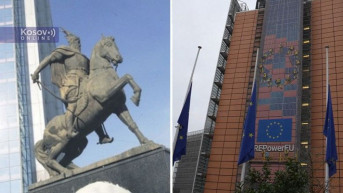
On one side are Pristina’s hopes that Kosovo may obtain candidate status for membership in the European Union; on the other are Brussels’ expectations that Pristina swiftly form a government after the June elections, elect a president, continue reforms, and implement agreements reached in the dialogue with Belgrade. In this equation, there are few unknowns, and the instructions for solving it may be brought to Pristina by European Commissioner for Enlargement Marta Kos, whose visit is expected later this week. Although Brussels’ messages contain a degree of ambiguity, as one of Kosovo Online’s interlocutors notes, analysts agree that the EU certainly cannot be satisfied with developments in Kosovo over the past year and more.
Written by: Dusica Radeka Djordjevic
In Brussels, where an informal meeting of EU foreign ministers with their counterparts from the Western Balkans was held two days ago, Kosovo’s acting foreign minister Glauk Konjufca stated that Kosovo should receive candidate status and begin accession negotiations with the European Union.
The same message was conveyed by Kosovo’s chief negotiator with the EU, Jeton Zuljfaj, at an informal meeting of ministers for European affairs in Nicosia.
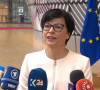
The remarks by European Commissioner for Enlargement Marta Kos — that there is room in the EU for everyone from the Western Balkans — could be interpreted by Pristina as a positive signal. However, the Commissioner will likely outline the concrete tasks Kosovo must complete in order to reach that goal once she arrives in Pristina.
Some matters have already been made entirely clear.
Namely, the acting head of the EU Office in Kosovo, Eva Palatova, addressing Albin Kurti, the acting prime minister, stated last week that Kosovo must continue proving its democratic standards and institutional stability, and that Brussels cannot simply grant candidate status automatically, but that Kosovo must convince all 27 EU member states.
The European Union, Palatova emphasized, expects the rapid formation of institutions following the elections and the continuation of reforms, while EU member states are simultaneously monitoring the way Kosovo treats non-majority communities and implements agreements from the dialogue with Belgrade.
Is the EU angry with Albin Kurti, given some of the sharp statements made by European representatives, or is it offering him support, considering that Kos’s visit, should it take place this week, would occur at a time when Kosovo is preparing for new elections?
Assistant Professor at the University of Agder, Abit Hoxha, says that the issue is not whether the EU is concerned about Kurti personally, but rather about processes that, in the eyes of the EU, have not advanced as much as expected.
“In the dialogue and regarding the Association of Municipalities, as well as other matters, Kosovo has essentially not progressed in the eyes of the EU,” Hoxha stated for Kosovo Online.
According to his expectations, the announced visit of Kos will not bring changes in the EU’s approach toward Pristina, but will instead repeat Brussels’ already familiar positions.
“I do not expect things to change, but rather a repetition of the EU’s political positions on Kosovo — namely that Kosovo needs to achieve what Kosovo’s politicians refer to as conditions, although that is not the case. These are not conditions, but progress Kosovo needs to achieve for itself, not for the EU,” he said.
At the same time, he observes that Brussels sends messages to Kosovo that are not always entirely clear.
“There is always a certain ambiguity with Brussels, but I believe that Kosovo politicians in this scenario should understand that the best interpretation of Brussels is always progress toward what Brussels expects institutions to accomplish,” our interlocutor pointed out.
“The EU Can No Longer Wait”
Editor of the foreign affairs desk of Radio Belgrade’s First Programme, Nikola Dencic, assessed for Kosovo Online that Brussels cannot be satisfied with developments in Kosovo over the past year and more, during which Prime Minister Albin Kurti failed to act in accordance with what had been agreed, both in the Belgrade–Pristina dialogue and in direct contacts between Pristina and Brussels.
Dencic says that the first visit to Kosovo by European Commissioner Marta Kos, should it occur, will in itself be a message that the European Union can no longer wait for what it expected from Pristina — namely the formation of stable institutions and the continuation of a certain level of dialogue with Brussels and EU member states.
“At this moment, Pristina is not even a candidate for EU membership, although this is expected and promoted from certain quarters. At present, there are certainly no conditions for that, and the Commissioner’s visit will surely also be aimed at initiating that process and perhaps enabling Pristina, in some future period, at least to move closer to candidate status,” Dencic believes.
As he adds, it is difficult to predict to what extent such messages would suit one or another political structure in Pristina that is preparing for new elections.
“Brussels certainly cannot be satisfied with what has taken place over the previous year and more. It is also certain that the prime minister of the provisional institutions, Albin Kurti, now serving in a technical mandate, did not act in accordance with what had been agreed both in the Belgrade–Pristina dialogue and in direct contacts with Brussels, and he will probably receive some form of criticism. On the other hand, we know that even before his government there was not much success in achieving what the European Union expects,” our interlocutor said.
Perhaps the greatest message of Marta Kos’s visit, he adds, may be the absence of any concrete message at all.
“It has happened that European Union officials come, whether to Belgrade or Pristina, and apart from the most basic diplomatic messages, almost nothing else is heard. So once we see Marta Kos’s reaction, we will also know the purpose of the visit. What we can assume is that Brussels expects Pristina to activate certain processes, both on Pristina’s path toward the European Union — which, of course, has not even formally begun — and regarding the Belgrade–Pristina dialogue,” Dencic concluded.

0 comments