
Baraliu: Protests are a democratic way of expressing the will of the people, but the solution is in the hands of the political class
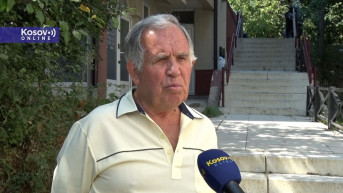
Constitutional law professor Mazllum Baraliu said that the opposition does not have the ability to bring people into the streets and organize protests over the current political situation in Kosovo, taking into account the number of votes won by the three opposition parties, PDK, LDK, and the Alliance, in the most recent elections.
Baraliu told Kosovo Online that protests are a democratic way of expressing the will of the people, but that at this moment there should be trust and goodwill among the parties.
“Protests are a democratic way of expressing the will, that is, the demands of citizens. There is nothing controversial about that. However, first and foremost, there should be goodwill and trust between political parties so that they can reach an agreement, find a way, a modality, an alternative, or an option for reaching an agreement on the election of the president. Since this does not exist, we expect the goodwill and reason of the political parties to prevail. It seems they are more concerned with political interests, perhaps even Machiavellian intentions in politics, than with establishing institutions, which is otherwise the basic duty and obligation of every one of the 120 MPs and every political party,” Baraliu said.
As he added, Kosovo needs political and democratic emancipation in order to move forward with resolving its problems.
“The people have been let down. They did not expect this. They placed their trust in each political option, in proportion to the support they gave it. There should be negotiations, there should be goodwill, and there should be political and democratic emancipation at a level that allows the institutions to be constituted and everything to become functional so that we can move forward. There is a great deal to be resolved domestically, including citizens' economic and social problems, as well as matters on the international level. Kosovo has a lot of work to do and needs to rise to the occasion. And I think this political class has not proven that it is at that level,” Baraliu said.
According to him, the opposition does not have sufficient public support, as demonstrated by the elections, to call for protests.
“It is enough to look at the percentage, that is, how many votes they received in the last elections. And not only in the last elections. Out of an electorate of two million citizens, only 37 percent turned out to vote in the most recent elections. Of those, Self-Determination and its coalition received 50 percent. The opposition received less than half. This is the key to the opposition's decision and orientation: do they have the mobilizing power and strength to bring masses of people out to protests? I do not think they do,” Baraliu said.
Baraliu stressed that citizens have the right to their democratic choice, but that protests would not lead to a solution. The solution, he says, is in the hands of the political parties.
“The solution would be, and it is in the hands of the political class, to reach an agreement on the president. Since PDK and the Alliance have in a way excluded themselves, the only alternative remaining is for the Democratic League of Kosovo, together with the election winner, Self-Determination, to reach an agreement. It is not difficult. It could be achieved in a few hours, perhaps even a few minutes. But there needs to be goodwill and a commitment to fulfilling the duties and obligations that every political entity has toward its voters, that is, toward the electorate,” Baraliu said.
0 comments