
A Year After the Protests in Zvecan - What's Changed?
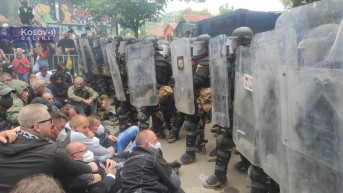
On this day last year, several thousand Serbs gathered in front of the municipal building in Zvecan, where KFOR forces were stationed, demanding the withdrawal of the special Kosovo police from this building and the removal of Mayor Ilir Peci, who was elected with 114 votes in an election boycotted by Serbs. With the same demands related to their municipalities, citizens peacefully protested in Leposavic and Zubin Potok, but the situation in Zvecan escalated during the day.
Around thirty stun grenades were detonated, the Kosovo police used firearms, KFOR used tear gas, and stones were thrown from the crowd.
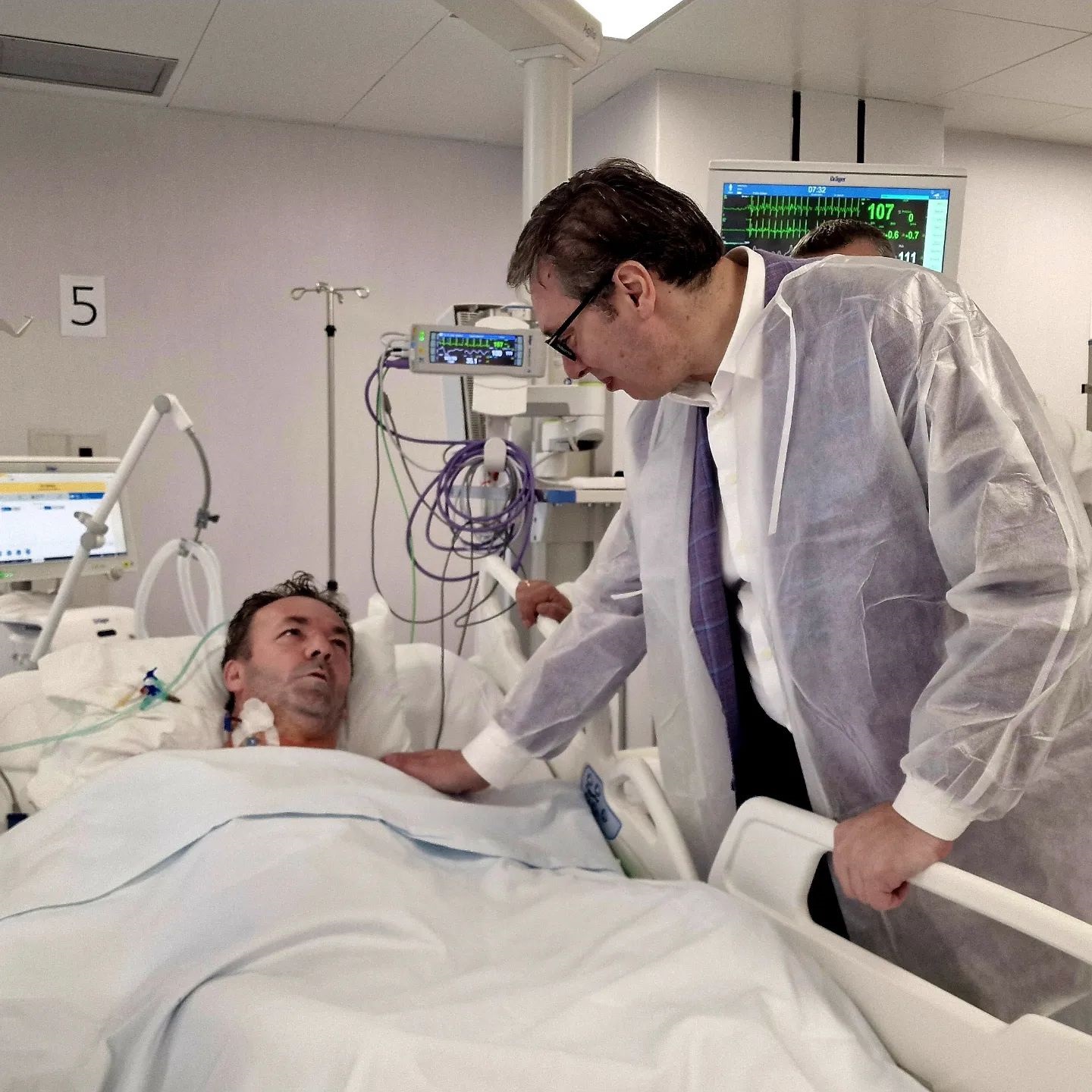
Outcome: Three Serbs were seriously injured and 30 KFOR members were hurt. The most seriously injured was Dragisa Galjak (50), who was shot in the back by the Kosovo police and had gunshot wounds in the lumbar region and index finger. Dragisa Milovic and Caslav Sofronijevic also sustained serious injuries.
Due to tear gas and stun grenades, 52 people sought medical assistance at the Clinical-Hospital Center in North Mitrovica. According to KFOR, 19 Hungarian and 11 Italian soldiers were injured, suffering fractures and burns from explosive devices.
The unrest began when the Serbs, demanding the withdrawal of the special police, did not accept KFOR's request to move the special police vehicles, surrounded by Serbs, behind the KFOR line. Following this refusal, KFOR initiated an action using tear gas against the citizens who were sitting and peacefully protesting. This led to physical confrontations between some citizens and KFOR members. After Galjak was shot by the Kosovo police, the assembled Serbs responded by throwing stones.
Arrests and Beatings
Arrests of Serbs began on the same day and continued in the following days.
During the arrest on May 29, the Kosovo police beat Dusan Obrenovic so severely that, according to his lawyer, he had cuts, tears, and hematomas on his head. In February this year, Obrenovic and Rados Petrovic were sentenced to six months in prison for the criminal offense of "Participating in a crowd committing criminal acts or hooliganism." After Petrovic pleaded guilty, his sentence was converted to a fine of 6,000 euros, while Obrenovic had already served six months in detention. They were initially charged with three additional criminal offenses: "Attack on the constitutional order," "Attack on international personnel under international protection," and "Attack on officials," which were dropped during the investigation.
On that day, Nebojsa Lezovic and Srecko Vitkovic were also arrested, followed by the arrest of a minor, N.M. (16) from Grabovac near Zvecan, who was physically and psychologically abused. Athlete Milun Milenkovic was also beaten, medical worker Dalibor Spasic from North Mitrovica was arrested for allegedly attacking journalists in Zvecan, Nenad Orlovic from North Mitrovica for participating in the protests in Zvecan, Uros Vukasinovic from Leposavic for allegedly attacking journalists, and others.
KFOR personnel remained in the municipal building in Zvecan until February 25 this year, when they announced that the situation in the municipality had stabilized and that operational reserve force units would no longer be present in the building.
KFOR Commander Ozkan Ulutaş stated today that the bravery of the mission's soldiers at the protests in Zvecan a year ago helped stabilize the situation in the area and prevent further escalation of violence. KFOR reminded that after this event, NATO deployed nearly 1,000 additional peacekeeping forces and heavier armored forces in Kosovo, tripling the number of patrols, including along the administrative line.
Albin Kurti's Self-Determination movement stated today that a year later, the situation in Zvecan is "completely different because there is no alternative to implementing constitutionality, legality, and thus preserving the sovereignty and territorial integrity of the Republic of Kosovo."
Interviewees from Kosovo online say that many things are different in the north, but in a negative sense, as people live in uncertainty and fear.
"Worse Than Before"
Lawyer Ljubomir Pantovic says that since last May, courts and prosecutors have become stricter towards suspects, not only for the events in Zvecan but also for those in Leposavic and Zubin Potok last May.
"Prosecutors and courts, without Serbian prosecutors and judges, are much stricter. People have been unjustly convicted and detained, which would not happen under normal circumstances," Pantovic told Kosovo online.
People are afraid, and their fear is justified, as several individuals were arrested and detained just for being present in front of the Zvecan municipal building during the unrest. Criminal proceedings are now underway against them.
"There are no clear criteria or reliable evidence, and people are afraid they might face the same fate - to be arrested, detained for months, and tried. We see that some people have left Mitrovica out of fear. Indictments are not formally hidden, but behind the scenes, the prosecution and police dig through video material they have, obtain certain witnesses, seek information, and someone ends up being arrested. There are no secret indictments in the true sense of the word, but they are still digging into May 2023 related to Zvecan, Leposavic, and Zubin Potok," Pantovic said.
As a vivid example of the current situation, he cites a case where a person spent a month and a half in detention for cursing someone in front of the Leposavic municipal building. The prosecution sought to extend the detention even after the indictment was filed.
"It was just a curse and a minor public order offense. There are more such cases. Judicial authorities have significantly tightened their criteria. Whether this is following some instructions from a center in Pristina or not, we don't know, but this has happened," Pantovic said.
According to security studies researcher Nikola Vujinovic, the situation is worse than last year, and democratic processes are completely suspended.
"You can see the behavior of those mayors. According to European standards, in majority-minority municipalities, you cannot erase Cyrillic script or change the names of villages and towns, but that is what these municipal representatives are doing. Violence against the Serbian community has now become individual, as people are literally targeted by name and surname, and their yards and shops are invaded," Vujinovic said.
He said that last year's Serbian protests were their civil right.
"People have the right to protest, which Western Europe promotes as its value. Soldiers who protected municipal buildings promote these values. On the other hand, it was also an image of the Kosovo state or state-like entity, non-democratic, autocratic, and the image of the hypocrisy of the international community. None of this would have happened if it hadn't been sanctioned by the international community," our interlocutor said.
The resistance shown by Serbs, he said, was a picture of the Serbian struggle.
"I believe it was one of the events that strengthened the community to fight. We understand from Belgrade, let alone the people living in Kosovo and Metohija, that they have been pushed to the wall and there is no turning back," Vujinovic said.
He noted that such situations did not occur during the previous governments in Kosovo, which speaks about Albin Kurti's government and the hypocrisy of the international community.
"Whose influence is this, I don't know, but Kurti, as the most democratic of all Albanian leaders, is also the most radical. It is also about the hypocrisy of the international community. You have clear jurisdictions and clear procedures for how that jurisdiction should be implemented, but you don't implement it and pretend it doesn't concern you. It is hypocrisy one-on-one," Vujinovic said.
Recalling the events and protests that followed after the new mayor of Leposavic, Lulzim Hetemi, elected with 100 votes, entered the municipal building with police assistance, stun grenades, and tear gas, former Mayor of Leposavic Zoran Todic said that nothing is the same and that the overall situation is difficult for the Serbian people.
"There is great uncertainty present in our municipality from May 26 last year to this day. At that time, heavily armed Kosovo police special forces brought the newly elected municipal representatives into the Leposavic municipal building, and there was indeed a lot of tension. During the summer period, the municipal building looked more like a barracks, as a large number of Kosovo special forces were stationed there, and later it was guarded by KFOR members," Todic told Kosovo online.
Todic believes that all this is the result of unilateral unreasonable anti-Serbian decisions by the government in Pristina, which the international community has often ignored.
"There is a lot of pressure, tension, uncertainty, and the most suffering are ordinary people, employees who spent their working lives in this building and who have not had access to their workplaces since May 26. Their jobs and duties are to provide services to our population," he said.

0 comments