
Micko Livadic records more than 100 mushroom species on the Sar mountains: It's like exploring outer space
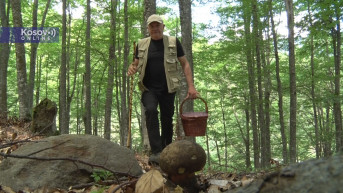
For the past 20 years, nature enthusiast Micko Livadic has been exploring the rich biodiversity of the Sar Mountains, searching for the mushrooms hidden in its forests and meadows. What began as a hobby has gradually evolved into serious research, resulting in the identification and documentation of more than one hundred different mushroom species.
Livadic says that learning about mushrooms requires years of study, careful observation, and great respect for nature, as poisonous species capable of causing fatal poisoning can often be found alongside edible ones.
“My interest in mushrooms dates back to my earliest childhood. As children, we collected porcini and chanterelles because they were the easiest species to identify. At that time, there was no professional literature or experienced mycologists who could help us expand our knowledge. With the development of modern technology and access to specialized literature, I gradually broadened the range of mushrooms I collect. For the past fifteen to twenty years, I have been intensively engaged in mushroom identification, primarily in the Sar Mountains,” Livadic told Kosovo Online.
According to him, entering the world of mushroom research is almost the same as exploring outer space.
He estimates that as many as 1,500 mushroom species may occur throughout the Sar Mountains.
“Mushroom identification is a demanding and highly complex process that requires a great deal of time, effort, and above all teamwork, because identifying mushrooms is simply too extensive a task for one person. Every species has distinctive morphological characteristics that enable us to distinguish it from others. It is also essential to examine the habitat, since every mushroom has its preferred environment. Some species grow on old tree stumps and will never be found emerging directly from the ground like porcini or chanterelles. Many species live in mycorrhizal association with particular tree species, and these are principles we must always bear in mind,” Livadic explained.
He points out that many people are afraid of mushrooms and rarely dare to eat them, but emphasizes that what people need is not fear, but caution.
“A thorough approach is the most important thing in mushroom research. There is no need to rush when you are in the forest. Every mushroom should be examined carefully and, if necessary, removed from the ground intact. The cap, flesh color, gills, and other characteristics must be analyzed in order to determine with certainty which genus the mushroom belongs to. To date, with the help of a group of enthusiasts, I have identified 113 mushroom species in the Sar Mountains. The latest was the solitary amanita, which I identified with the assistance of my friend Dragan Kecic from Strpce,” he added.
He advises anyone entering the world of mushrooms to first become familiar with poisonous species.
“The first one I would mention is the death cap, which is the letter 'A' of the mushroom alphabet. It is responsible for the highest number of fatal mushroom poisonings. It often shares the same habitat as edible mushrooms, and beginners can easily mistake it for the edible brittlegill. The key difference is that the death cap emerges from an egg-like structure called a volva. If you carefully remove the entire mushroom from the ground, you will see that it grows from this cup-like structure, whereas the brittlegill has neither a ring nor a volva at the base of its stem. Since people in this region commonly collect chanterelles, they should also watch out for the false chanterelle, which closely resembles the true chanterelle, especially in its early stages of development,” the researcher warned.
He recommends that mushroom pickers avoid collecting immature specimens and instead wait until the mushroom has developed the features necessary for reliable identification.
“A true chanterelle never grows in clusters, whereas the false chanterelle always grows from dead organic matter. If you scratch the surface slightly, you will notice remains of roots and branches beneath it, and it invariably grows in dense clusters,” Livadic explained.
He emphasizes that the Sar Mountains are exceptionally rich in high-quality edible mushrooms.
“The best known is the porcini mushroom, a prized delicacy valued both in gastronomy and among commercial foragers because it is purchased in large quantities. There is also the chanterelle, and these are the two most widespread species. We also have brittlegills, which are mushrooms of outstanding quality, as well as oyster mushrooms, which have a wide range of culinary uses,” Livadic said.
He stresses that people living at the foot of the Sar Mountains are particularly fortunate because the area is home to numerous medicinal mushrooms.
“In my hand I am holding the world-famous turkey tail mushroom, renowned for its medicinal properties. It can be used to prepare tea or alcohol-based tinctures. It is highly effective in strengthening the immune system and is widely used in both Japanese and American medicine. It serves as supportive therapy during cancer treatment, and in Japan it has officially been approved as a medicinal product for the treatment of the most serious oncological diseases. Another highly medicinal species is willow bracket fungus, a woody mushroom that resembles a stone. It is also used in teas and alcohol tinctures. Unlike ordinary herbal teas, however, this mushroom must be simmered over low heat for about 45 minutes before it is consumed,” he explained.
Livadic concludes by noting that mushroom-based therapies are far more widespread abroad than they are in the Balkans.
“Mycotherapy is highly developed around the world, whereas in our region it is still relatively unknown. I have seen companies in neighboring countries extracting medicinal compounds from mushrooms, and I hope this practice will eventually take hold here as well, because mushrooms have proven to be an important resource in the treatment of various diseases,” Livadic said.

0 comments