
Gajic: Due to the emigration of young people, Kosovo is entering a phase of demographic aging
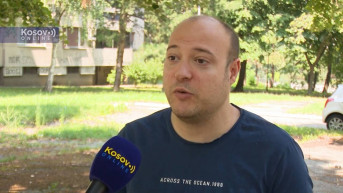
Economist from Libek, Mihailo Gajic, assesses that due to the increasing emigration of young people, primarily to Western Europe, Kosovo is entering a phase of demographic aging, which will impact economic growth and lead to various social problems.
"Kosovo, like other countries in the region, is entering a phase of demographic aging for several reasons. One is the declining birth rate, another is the emigration of young people from Kosovo, primarily to Western Europe, but also to Serbia, due to economic and political reasons. This will then affect economic parameters in terms of slowing economic growth, which can then lead to various other social problems," Gajic emphasizes.
This economic expert believes that even the final results of the population census will not provide an accurate picture of how many Kosovo citizens live in the diaspora.
"I think we will never know the exact data. If we look at other countries in the region that have the same or similar problems, such as Bosnia and Herzegovina and North Macedonia, where the census results are also very controversial and criticized, primarily regarding whether and how the diaspora was counted as the population that actually lives there even if they are not present," Gajic says.
He explains that according to international methodology during the census, the domicile population includes those who have been abroad for less than a year.
"So, if someone goes on a short trip of three or six months, they would be counted as a resident of Kosovo. If it's a longer period, then they would no longer be counted in the domestic present population. Precisely because of this, there is a great possibility of some kind of manipulation of these data, which tells us that the data from Kosovo are probably not entirely accurate and do not reflect the true economic situation," Gajic warns.
He says that the West is currently facing "cyclical migrations," which involve the working-age population going abroad for several years and then returning.
"We still haven't experienced that here. In the entire region, the dominant type of migration is still the one where people leave with no intention of ever returning," Gajic emphasizes.
He asserts that there is no "magic wand" to stop the trend of leaving Kosovo.
"Overall, I am not sure that any country has managed to find a magical solution for migration problems. What is clear is that the main levers, the reasons for this, are economic in nature. That is, whether people can find a job of adequate quality in the field they have been educated in, and also have decent earnings and a good quality of life in their own country. Then they wouldn't actually move abroad," Gajic explains.
He emphasizes that the solution lies in stabilization and high economic growth rates, which would bridge the gap between the less developed countries of Central and Eastern Europe and the developed countries of Western Europe.
"We already see that some more successful countries like Slovenia, Poland, and Estonia are reducing this gap, and thereby those migration waves stop being primarily economic and become more about other opportunities," Gajic concludes.



0 comments