
Gerxhaliu: Kosovo records increase in extreme poverty; higher minimum wage a pre-election campaign
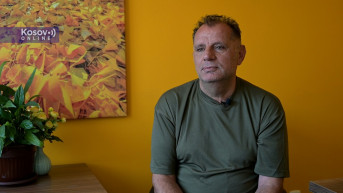
The decision by the Government of Kosovo to raise the minimum wage has been described by former president of the Chamber of Commerce, Safet Gerxhaliu, as pre-election marketing. He warns that Kosovo is experiencing an annual increase in extreme poverty.
“It is true that this is a good decision, but it is delayed. On the other hand, it is always a sign that elections are coming. Whenever there are political elections, we see such steps or decisions that are aimed at or exploit wage increases for some kind of promotion of a political party and serve as a pre-election campaign. The truth is that the minimum wage is the lowest in the region, and in that context, we are lagging behind,” he says.
He explains that with a wage of 350 euros, it is impossible to keep up with rising prices and what he calls speculative trade dominating Kosovo.
“Today, purchasing power has declined, and the simple fact is that Kosovo is an import-dependent society. In 2023, we imported goods worth over 5.8 billion euros, and we are importing what’s known as silent inflation, which directly impacts consumers. Therefore, we need to pay much more attention to these social aspects. No country can achieve either social peace or an accelerated integrated process of economic development without political stability, and in that context, the challenges are definitely significant,” Gerxhaliu explains.
He emphasizes that more attention needs to be paid to citizens and highlights that Kosovo experiences an annual rise in extreme poverty.
“That is a concerning situation. Last year, we had over 28,000 new citizens who applied for assistance. I think this is a challenge that needs to be addressed, and it can only be resolved through dialogue with the private sector, by developing the private sector, and ensuring that economic development is substantial, not just about numbers,” he states.
He adds that a family of four needs more than 1,150 euros per month for a decent living income.
“So, with 350 euros, there’s little room for a better life. But I think it is still better than remaining at 170 euros. There is always hope that this year or early next year, there will be elections and some progress in that regard, whether it is pensions or wages in the private sector, as well as in the public sector,” Gerxhaliu says.
On the other hand, he warns that under the current economic circumstances, an increase in the minimum wage will negatively impact the private sector, as it won’t be able to bear the burden of wage costs, which is why public-private dialogue is necessary.
“The government needs to find a solution to support the private sector. Other countries do this as well, and in that context, I would never question the strength of the private sector due to the rise in the minimum wage. What is important for us is consumption, production, and attracting foreign investments, which we currently lack,” Gerxhaliu concludes.

0 comments