
Savic: For Serbia's economic growth, it is crucial for the EU economy to function well
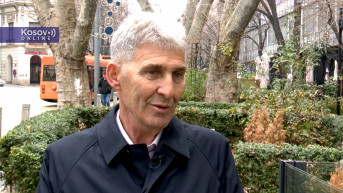
Economist Ljubodrag Savic stated that Serbia faces numerous economic challenges this year, primarily due to the war in Ukraine, the crisis resulting from US sanctions on NIS company, inflation, and the recession in Germany. However, he notes that since politics cannot be separated from economics, Serbia's growth depends on the European Union economy functioning well. He says that while it will be difficult for Serbia, it will be twice as hard for Serbs in Kosovo.
Savic told Kosovo Online that the European Commission's forecast of 4.2% GDP growth for Serbia was reasonable before recent events unfolded.
“The war in Ukraine is becoming increasingly complicated, particularly for Serbia, due to sanctions against Russia and the demand to sell NIS. This is a significant issue for Serbia, with potential political and economic consequences. The problem isn’t just oil, although disruptions are inevitable. However, I don’t think it will seriously impact growth rates. The bigger issue is gas, as Ukraine has already tried to disrupt supply. Why are both oil and gas crucial? They are raw materials vital to foreign companies that significantly contribute to Serbia’s growth alongside domestic factors,” Savic explained.
He reminds that most foreign companies in Serbia are from the EU.
“Unfortunately, the European Union is currently facing significant challenges, including the war, the disruption of oil and gas supplies from Russia, and the loss of cheap Russian raw materials and a vast market. These factors have considerably narrowed the scope of operations for EU companies. There are also problems in Germany, one of the few countries with quarterly growth rates hovering around +0.1% or -0.1%. Sometimes the decline is even steeper. In any case, the German economy is in recession,” the professor said.
He stresses that Germany is of great importance to Serbia as its most significant trade partner.
“The largest portion of Serbian exports goes to Germany. Most foreign companies and direct investments in Serbia also come from Germany. Achieving Serbia’s projected growth rate is heavily dependent on the EU and German economies functioning well. These are Serbia’s most important foreign trade partners. If they don’t perform well, it will be hard to achieve the projected GDP growth. For the first time in years, Serbia has planned a fiscal deficit of 3%,” Savic explained.
He adds that Serbia recently received a credit rating that is exceptionally good for its circumstances.
“We are one of the first countries at our level of development to receive a positive credit rating, allowing us to borrow under much more favorable terms. Regarding the refinery situation, there is pressure to remove Russian ownership. Even in the best-case scenario for Serbia, where we purchase an additional 5% stake to become the majority owner, it is estimated to cost 600 million euros. This would breach the 3% deficit limit, sending a negative signal to credit rating agencies. While Serbia has the funds to pay, it might mean cutting back on capital investments, which have been a key reason foreign investors have been attracted to Serbia,” the professor said.
He assesses that these are the basic risks facing Serbia, but that the biggest risk is the question of how the situation in Europe will unfold when it comes to the war in Ukraine.
“As it stands, the conflict seems to be escalating, and it is clear that nothing can be normal while there is a war on European soil. The conflict is unlikely to remain confined to Europe and could widen significantly. Even if it doesn’t escalate into a full-scale war, tensions will increase. Many believe Trump will resolve the situation. He is a nationalist and a Republican, prioritizing American sovereignty. His policies will subordinate global issues to US interests. We must keep our eyes open and remain cautious, as there are many traps ahead. Look at what is happening in Kosovo and Republika Srpska. Politics and economics are intertwined. These are challenges beyond our control. Hypothetically, if we could steer our policies independently, we could achieve a better growth trajectory in a few years. Unfortunately, that is not possible,” Savic said.
Regarding living standards in Serbia in 2025, he says there wouldn’t be much improvement compared to 2024.
“Salaries will nominally increase, but not in real terms. Pensioners, for instance, don’t care about rising car prices or loan costs. They are concerned about utilities, which are increasing rapidly, and food prices, which have been the highest in the region for years. Add to that the rising costs of medications, and it is clear that living standards won’t improve despite nominal pension growth. If we focused only on nominal increases, few people in Serbia would be dissatisfied. However, real indicators, such as inflation, devalue these gains, making the situation less positive than it appears at first glance,” Savic explained.
Asked about the region’s importance for economic development, Savic emphasized the principle: “Your neighbor is the most important in life,” which also applies to economics.
“The region is deeply divided. The problem is not the economy but unresolved political disputes from the past 100–200 years. Naturally, regional cooperation should come first. We had CEFTA, which functioned well, but Albania made a poor decision by blocking Serbian imports. They don’t understand this harms not only Serbian citizens but also their own. Balkan politics are schizophrenic, leading to many issues. However, economic interests have sometimes compelled cooperation, as when Croatia supported us during the oil crisis to protect its own interests. If we could prioritize economic cooperation, political misunderstandings would be easier to resolve. Unfortunately, with the Kosovo issue, it is the Serbs who bear the brunt. The Serbian state is powerless, Europe lacks interest, and Western goals lie elsewhere. Life will be hardest for Serbs in Kosovo, harder than for us, perhaps twice as hard,” Savic concluded.
0 comments