
Stanic: Placement of Serbian goods in Kosovo is rising despite all restrictions from Pristina
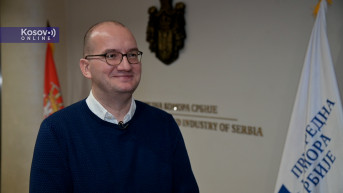
Trade exchange between Serbia and Kosovo in 2025 increased by about one third compared to the same period in 2024, despite all restrictions, Bojan Stanic, Assistant Director of the Strategic Analyses, Services and Internationalization Sector of the Serbian Chamber of Commerce, told Kosovo Online.
“When you look at the data on trade with the territory of Kosovo and Metohija in 2025, from January to November, the exchange increased by about one third compared to the same period in 2024. Our placement of goods there increased by 36 percent, while deliveries from the territory of Kosovo and Metohija increased by about 10 percent,” Stanic said.
He added that total trade exchange in those 11 months amounted to 375 million euros, of which Serbia achieved a surplus of 280 million euros.
“This clearly shows the strong competitiveness of the Serbian economy in the territory of Kosovo and Metohija. Regardless of all those restrictions, non-tariff barriers, and the fact that there is only one functional administrative crossing for cargo transport, there was still significant growth. It would have been even higher had it not been for the restrictions that are still being implemented,” Stanic said, reminding that the most recent blockade of goods caused about 300 million euros in losses for companies from Serbia.
Stanic assesses that the issue of the flow of goods must be resolved, both because this is prescribed by the CEFTA free trade agreement and because of Pristina’s efforts to further integrate into the European economic area.
Commenting on the capacity of the Merdare crossing, he notes that it is currently utilized at about 50 percent.
“Its capacity is roughly around 50 percent, because certain donations were made to improve the infrastructure at that administrative crossing. And despite that, we still have kilometer-long queues at that crossing, even though there is a possibility to relieve it,” Stanic says.
He points out that alternatives exist.
“For example, goods from southwestern Serbia could go through crossings in the western part of Kosovo and Metohija, but now they have to take detours to reach Merdare. This increases costs, and on the other hand, there are delays. What should pass within a few hours is sometimes delayed for an entire day, or even several days. In that sense, it is clear that this is an attempt to prevent what is inevitable, and that is Serbia significantly strengthening its position in the Kosovo and Metohija market,” Stanic emphasizes.
He notes that after the installation of the scanner at the Merdare crossing, it is technically expected that the pace will increase, but that “the question of will” remains.
“On the other hand, there is the possibility for them to shorten the working hours of personnel at those crossings. For example, on Sundays there is no possibility to pass through that customs procedure, and practically, anyone who fails to pass by Saturday evening must wait until Monday, meaning more than one day. Again, if there is certain pressure from the EU to increase the functionality of that administrative crossing and to open other crossings for truck transport, this would certainly increase traffic, and thus the shipment of goods from Serbia to Kosovo,” Stanic explains.
He expressed hope that other crossings would also be opened in 2026.
“We expect this, we hope for it, bearing in mind that we cooperate with businesspeople from Kosovo and Metohija within the framework of the chamber investment forum. And indeed, this also causes damage to their companies, considering that they procure goods from Serbia that are more price-competitive and more acceptable for them,” Stanic said.
He added that Serbia mostly exports grains, aluminum, aluminum products, various food products, and animal feed to Kosovo.
“So, these are all goods coming from Serbia that, in terms of price, contribute to lowering their production costs compared to sourcing them from Albania, North Macedonia, and some other markets,” Stanic noted.


0 comments