
Symbols, red color and gold metallic thread – Kosovo embroidery the most intricate in the Balkans
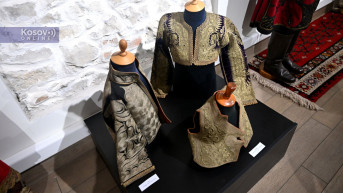
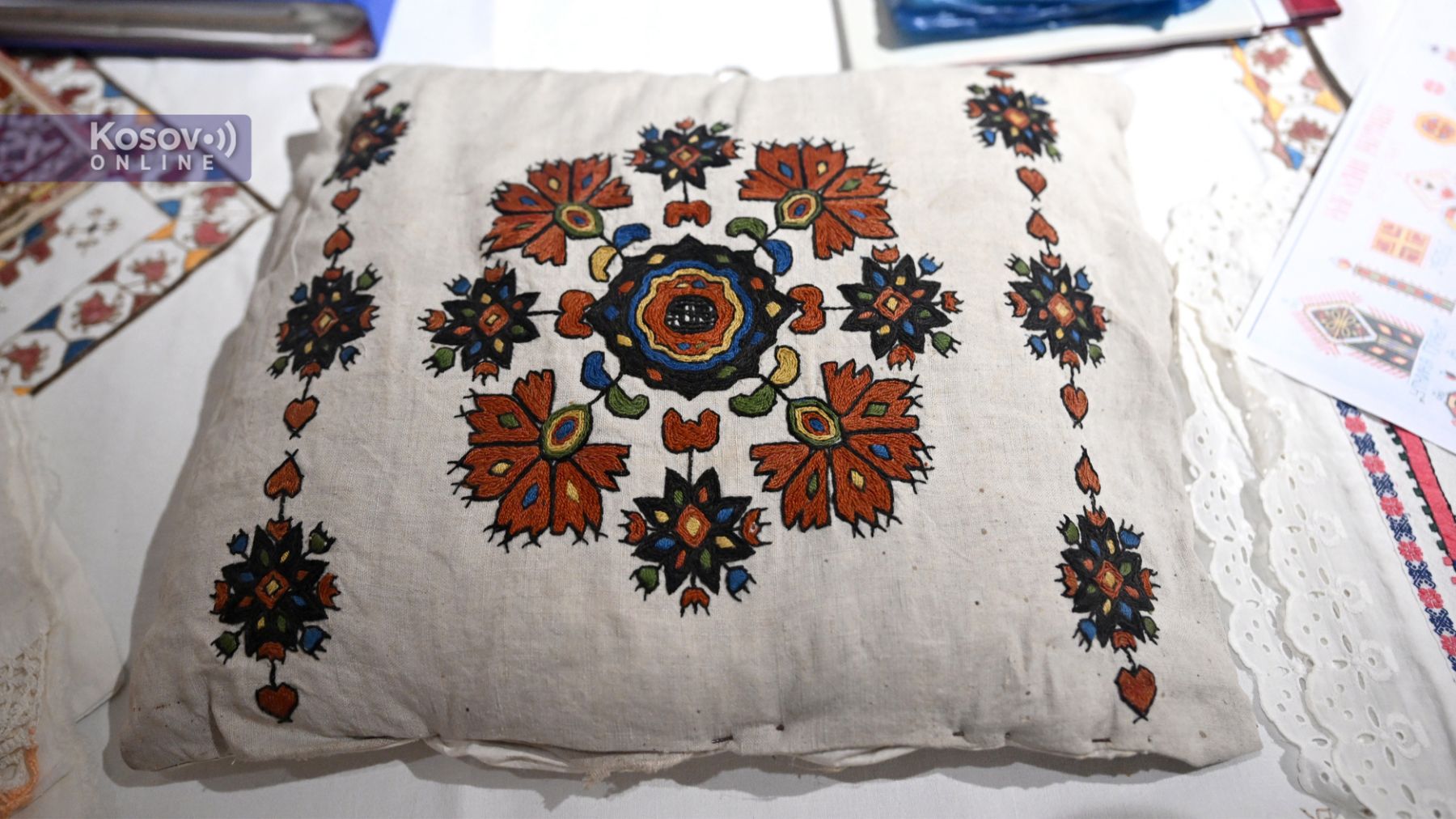
Rich in symbolism, featuring strictly defined geometric forms, the obligatory use of red and costly metallic thread—these are the principal characteristics of Kosovo embroidery. Women in Kosovo created it by candlelight at night, mostly during the winter, after completing all their chores and tending to their children. The distinctive features and secrets of Kosovo embroidery were presented at an exhibition of traditional costumes and embroidery at the Zarkovo Local History Museum.
Written by: Katarina Saicic
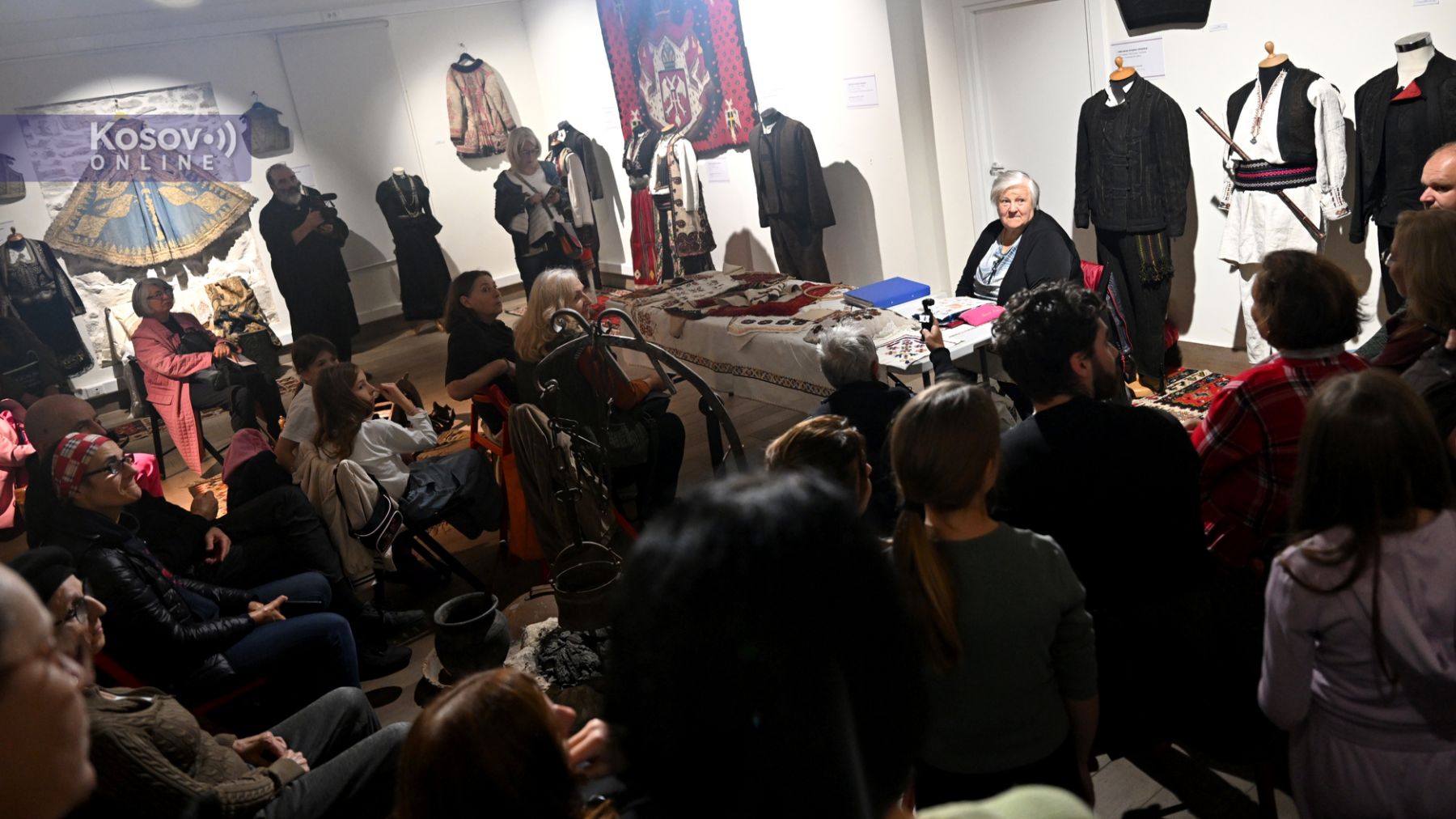
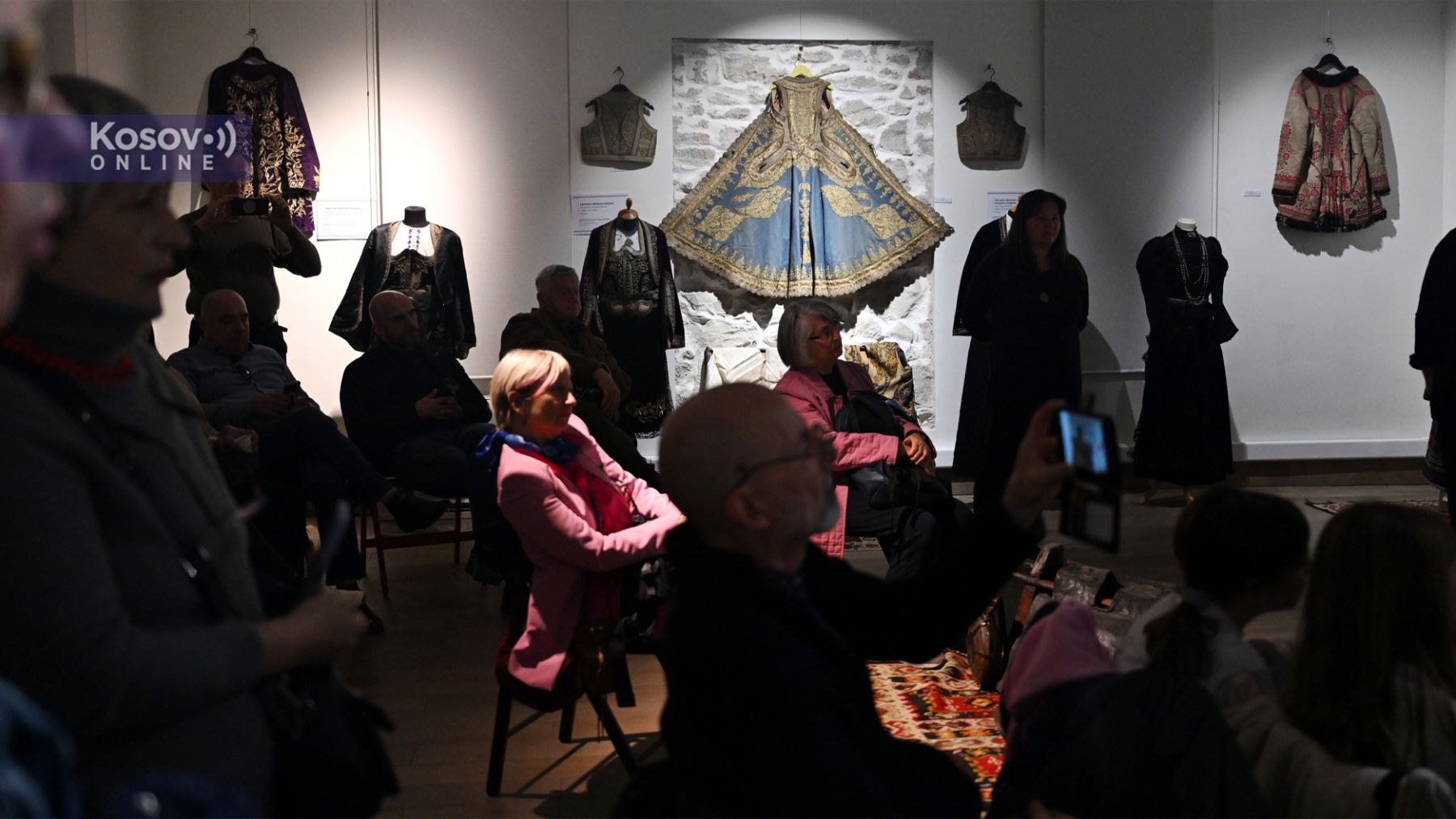
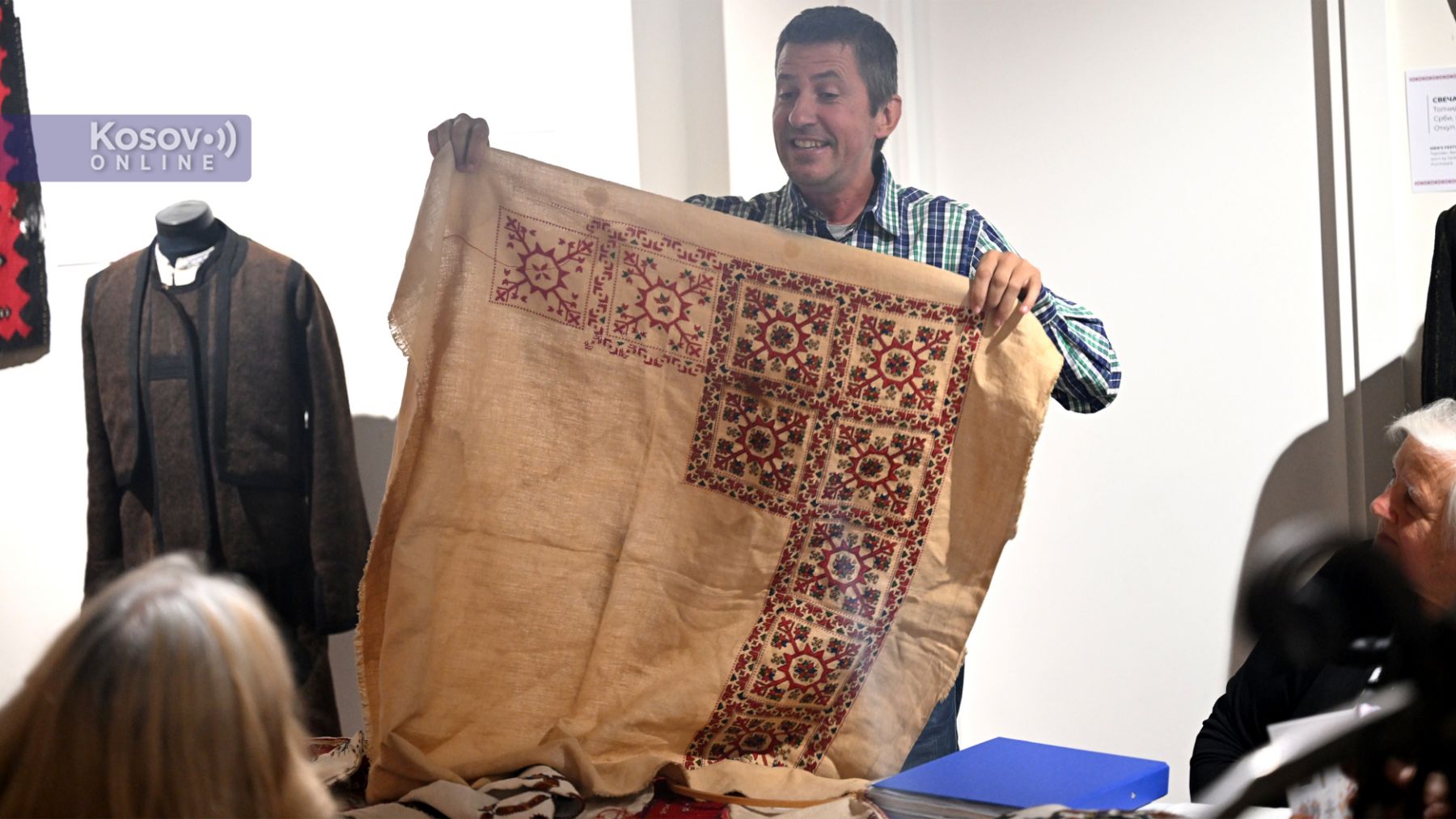
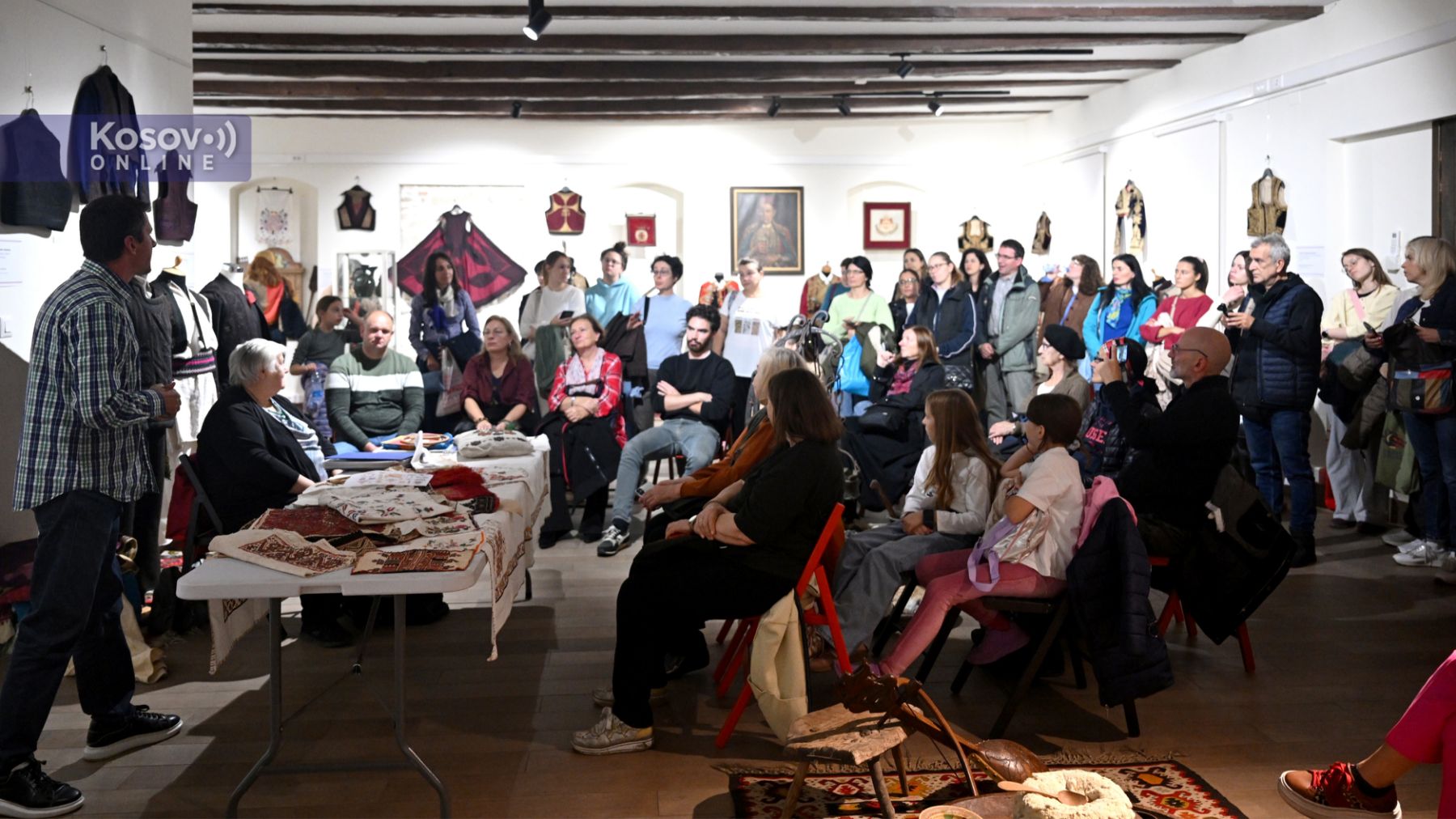
The exhibition drew a large audience, including mothers with children. Everyone came to see and hear about the embroidery, while some visitors even tried their hand at a few stitches. The exhibition organizer, architect Zeljko Utvar, who has been involved in ethnography for 23 years, spoke to visitors about Kosovo embroidery.
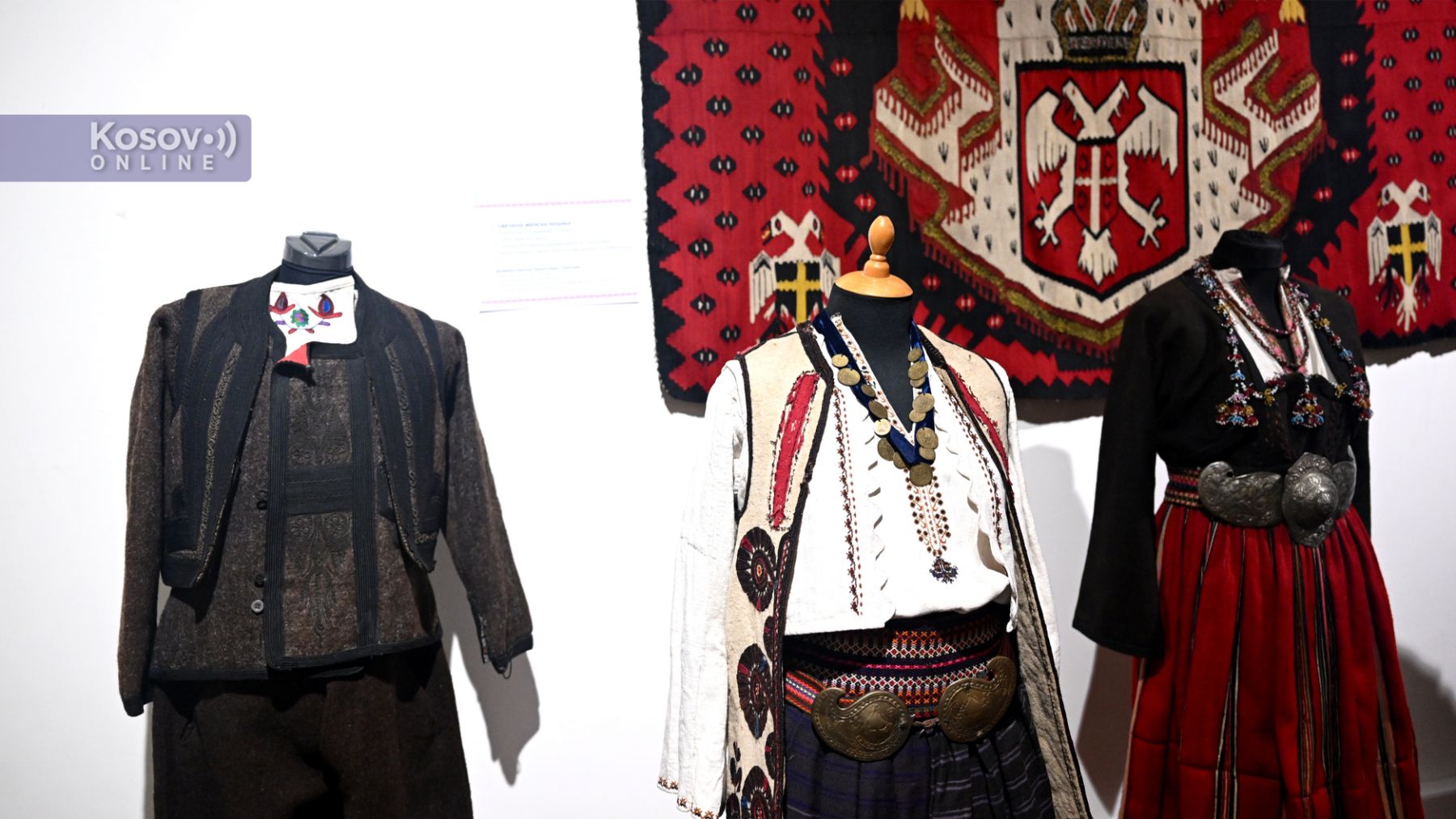
The exhibition featured numerous pieces of traditional costume from across Serbia, as well as costumes from Kosovo featuring authentic Kosovo embroidery, jewelry and precage. Wooden chests containing bridal trousseaus were also displayed, along with examples of children’s traditional costumes and rifle stocks and rifles.
Utvar told Kosovo Online that, in terms of the complexity of its technique, Kosovo embroidery differed from all other embroidery traditions in the Balkans. It is filled with symbols, many of them prehistoric, such as crosses, while other motifs depicted mothers as protectors of the family, as well as symbols intended to ward off the evil eye, such as horns meant to repel evil.
Some examples were known as “Nine-Needle” embroidery because as many as nine different embroidery techniques were used on a single piece.
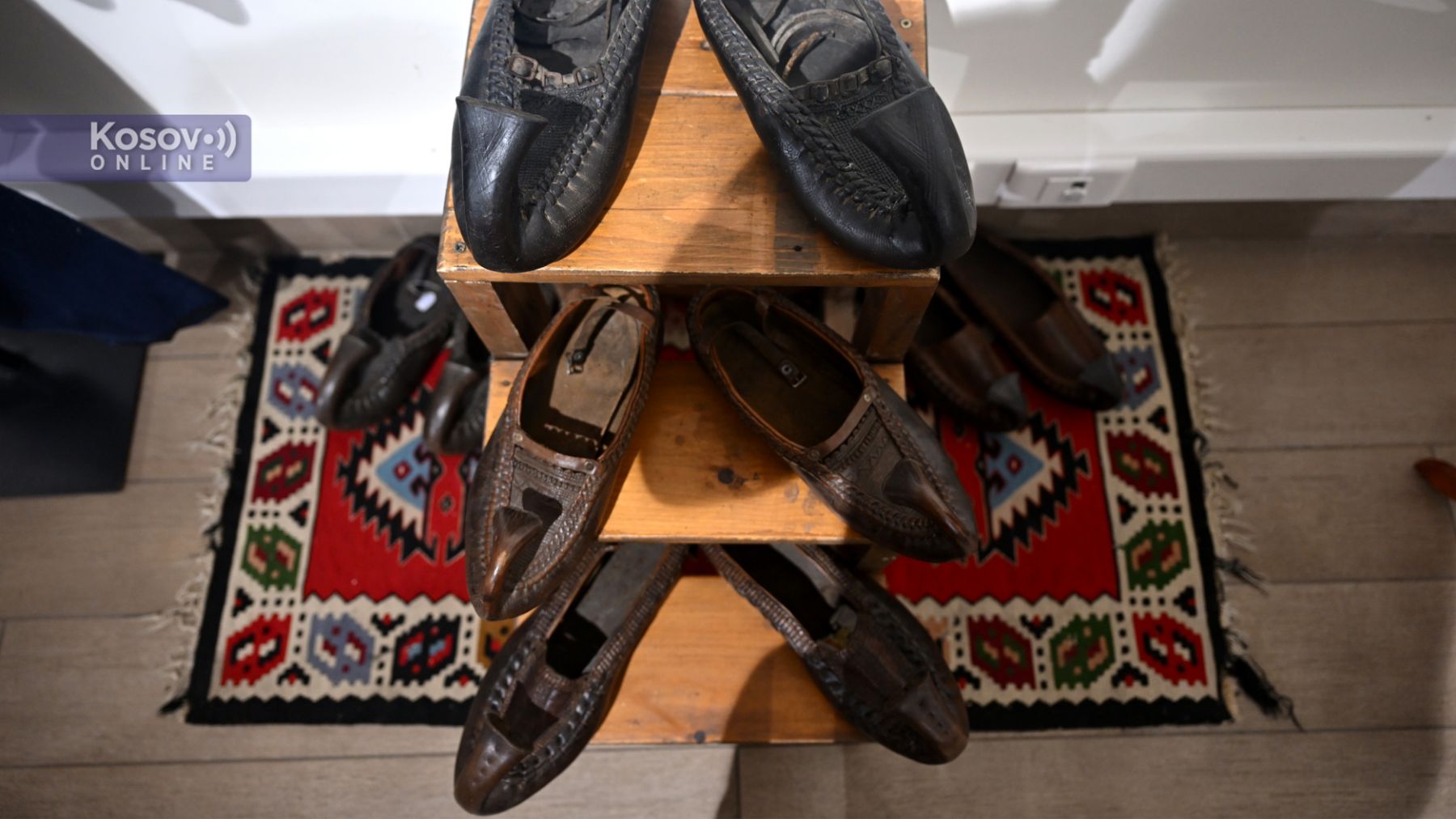
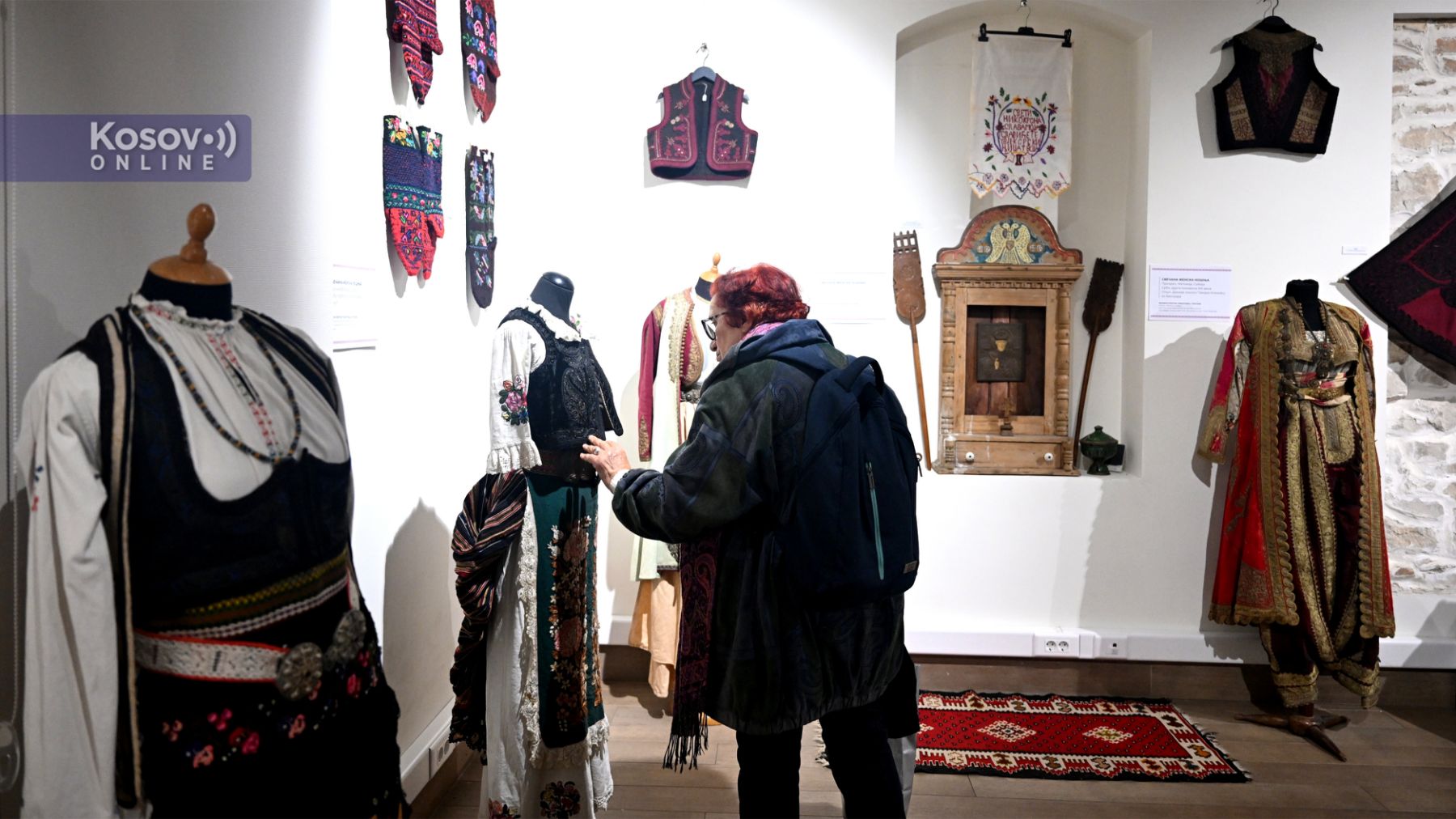
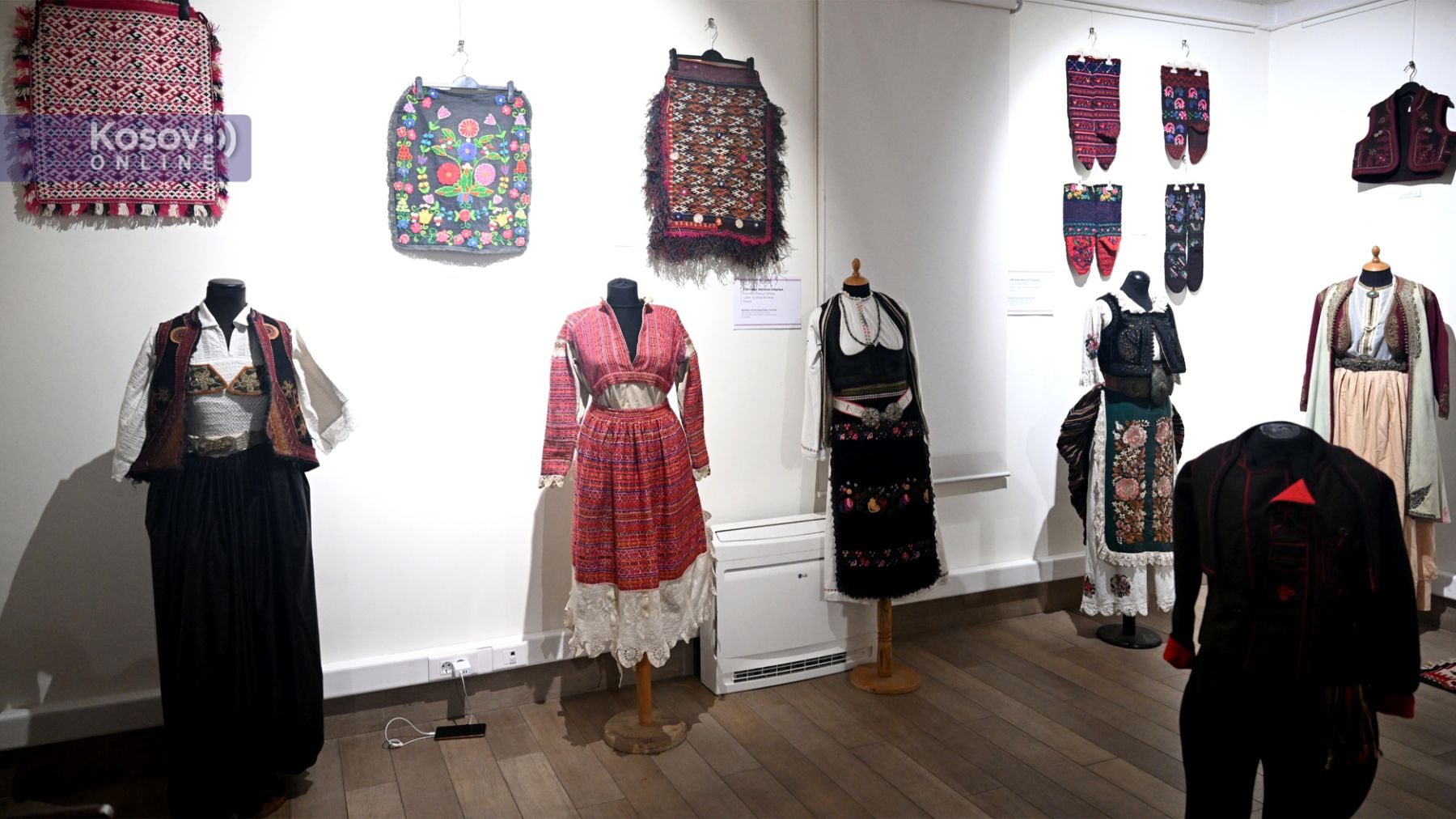
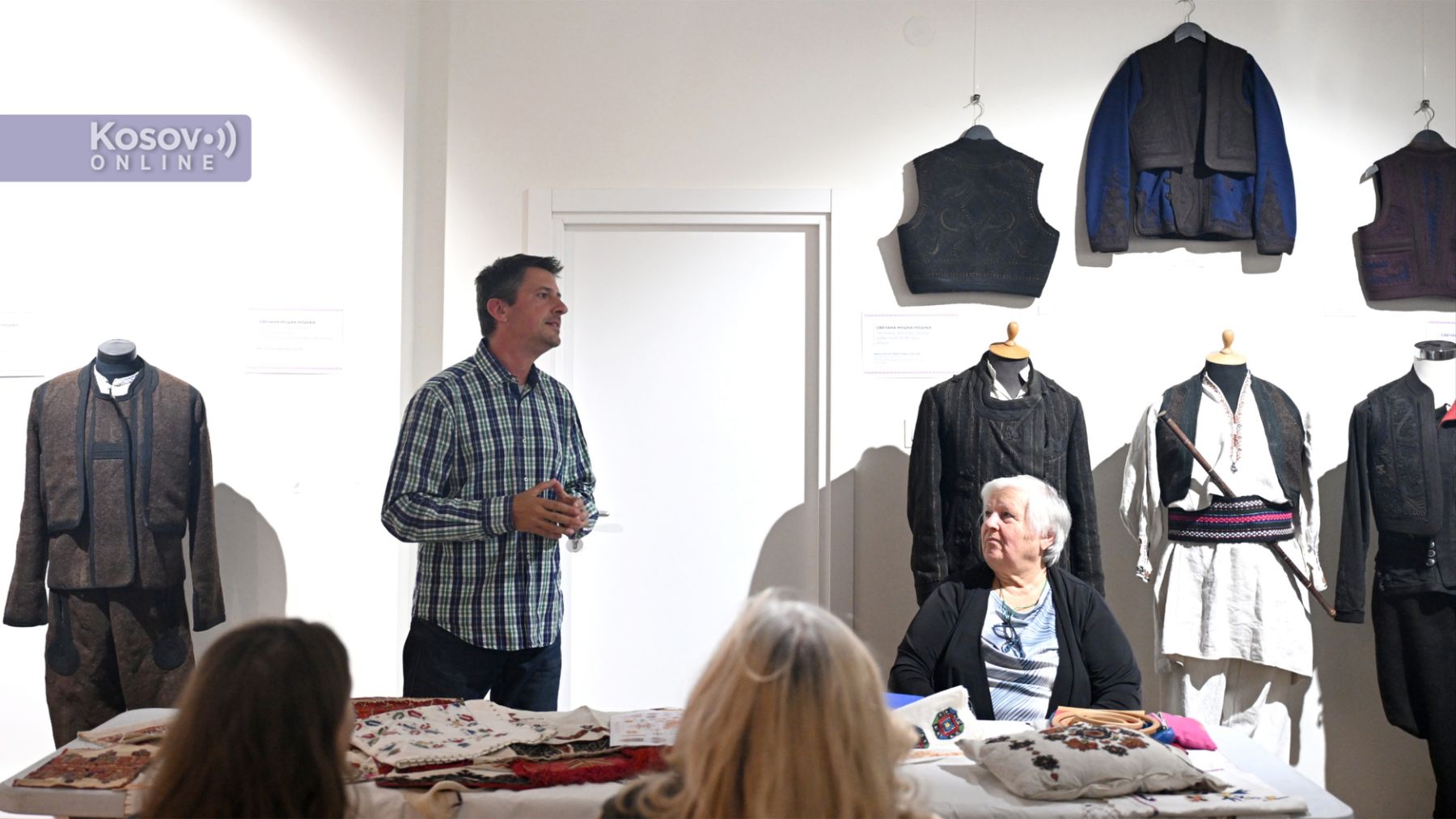
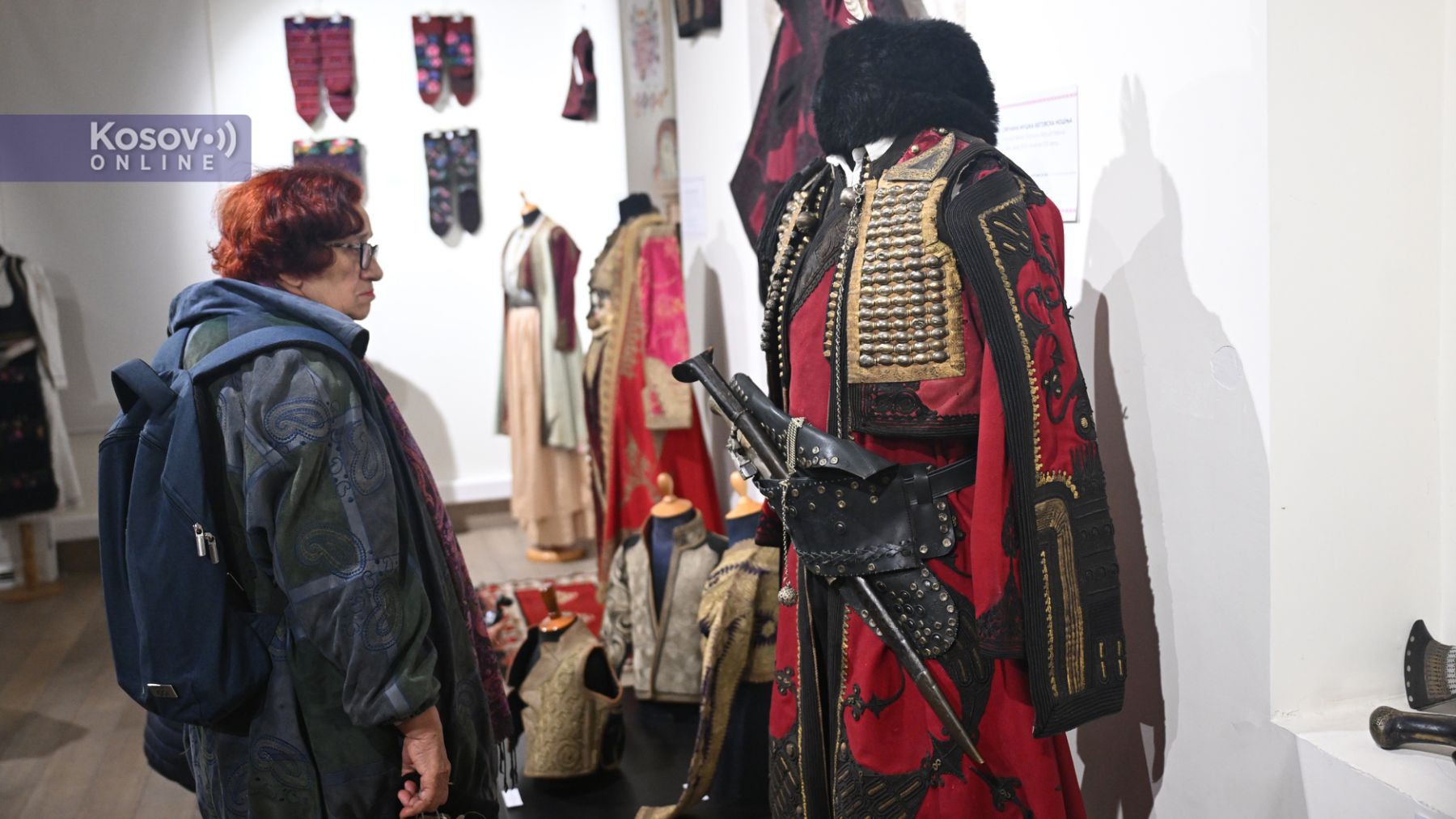


Utvar said that he began studying Kosovo embroidery in July 2003, when he acquired his first original details from Kosovo traditional costumes. At that point, he began assembling the ethnographic collection that is currently on display at the museum.
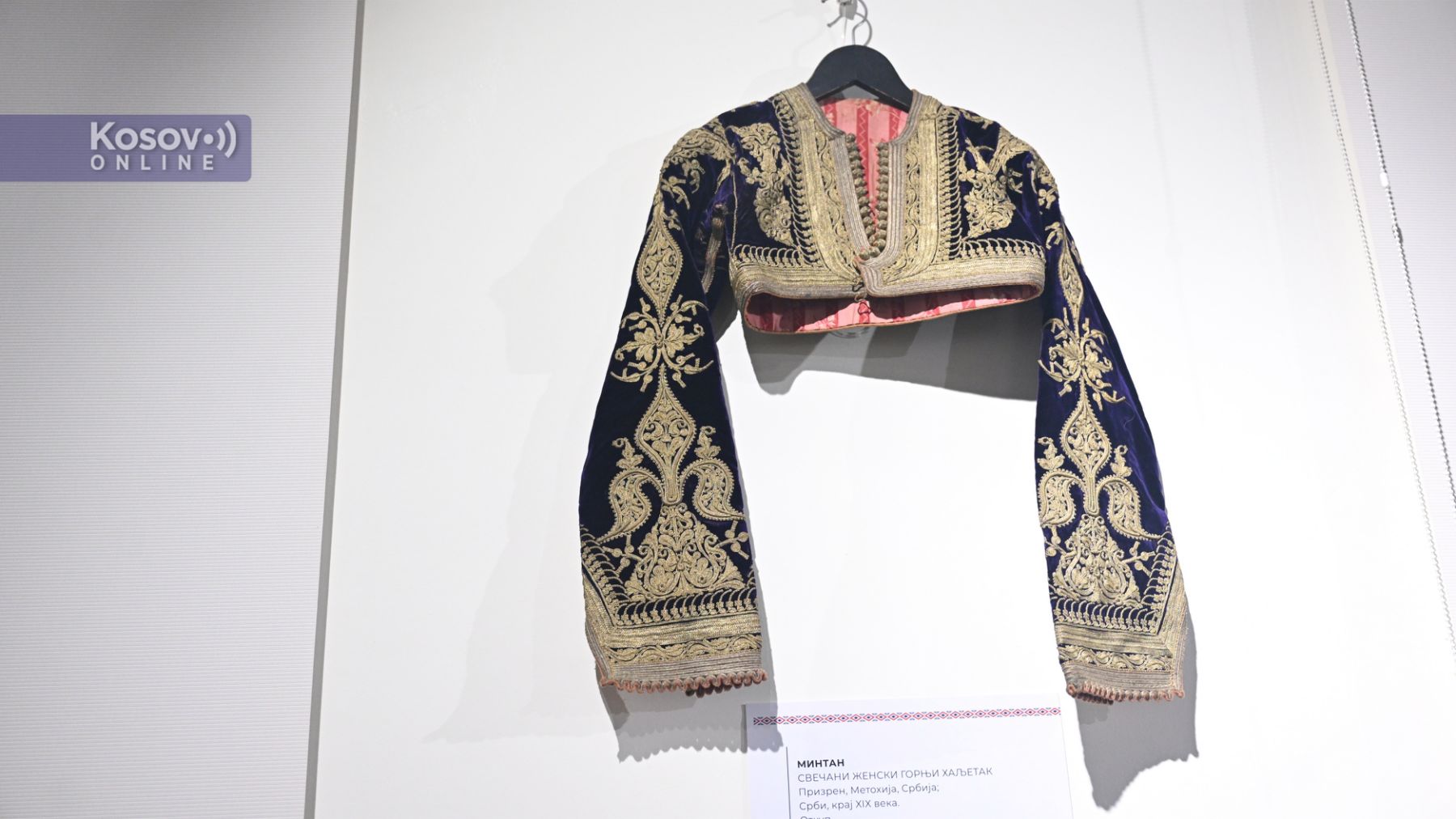
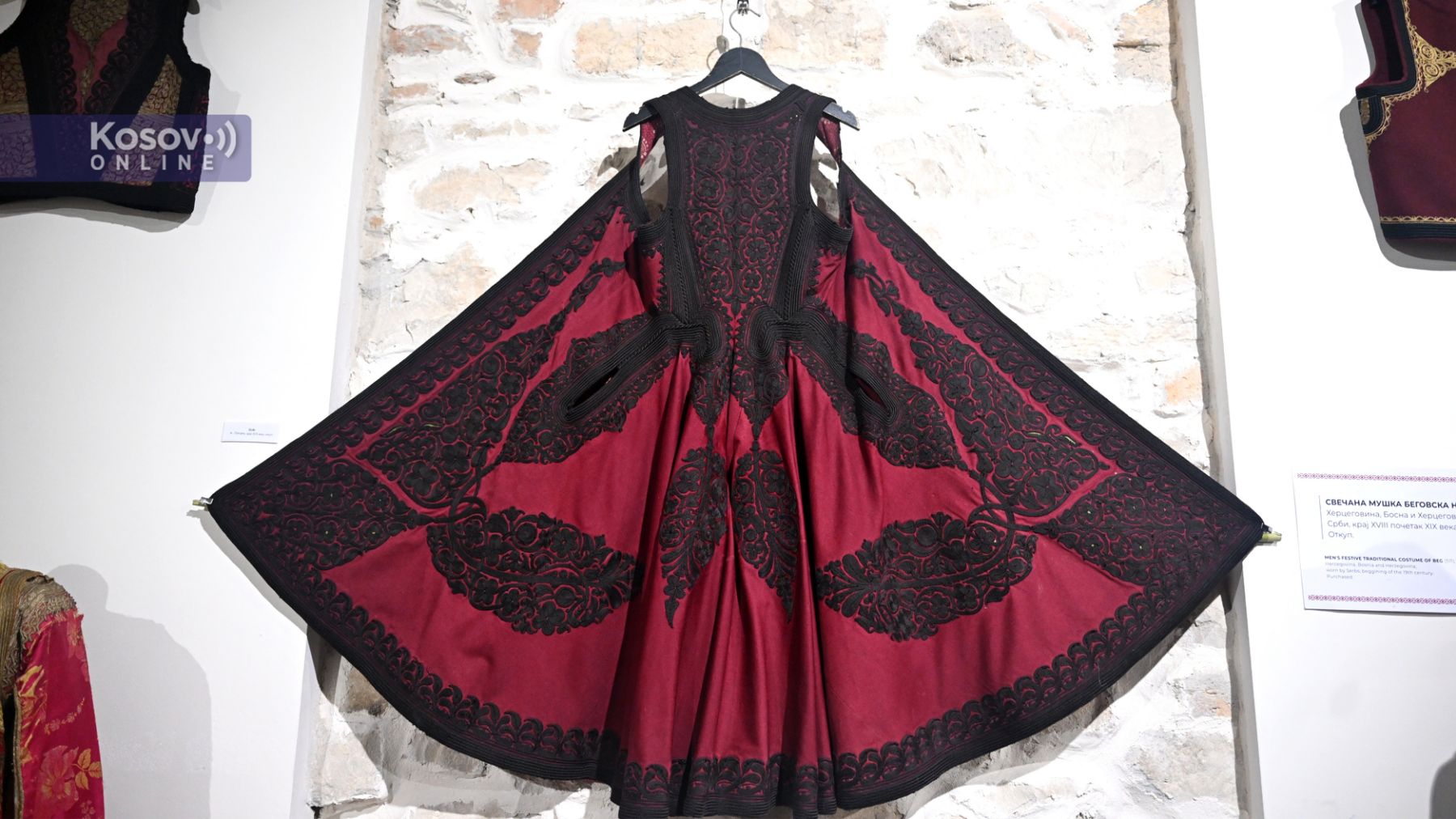
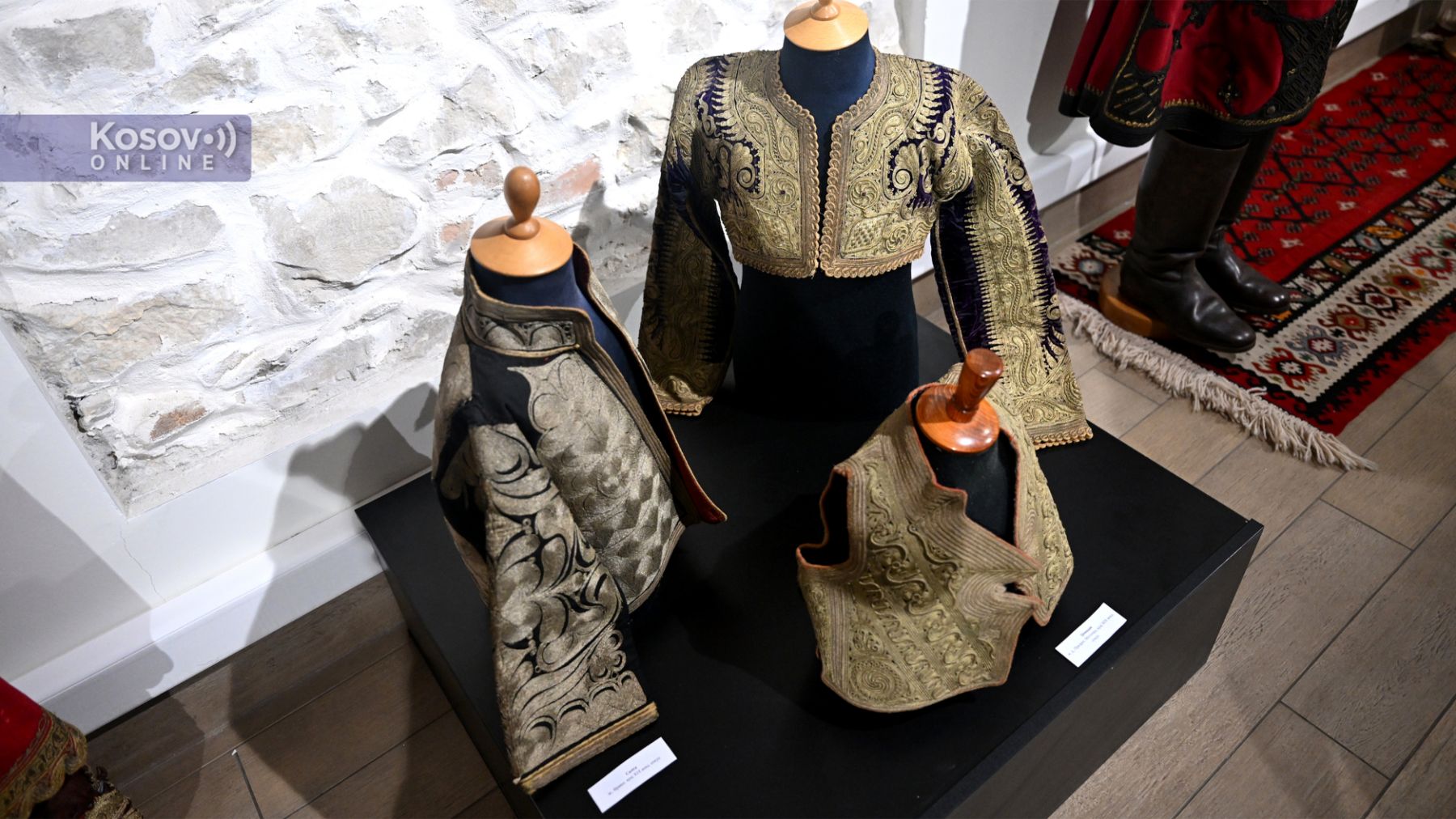
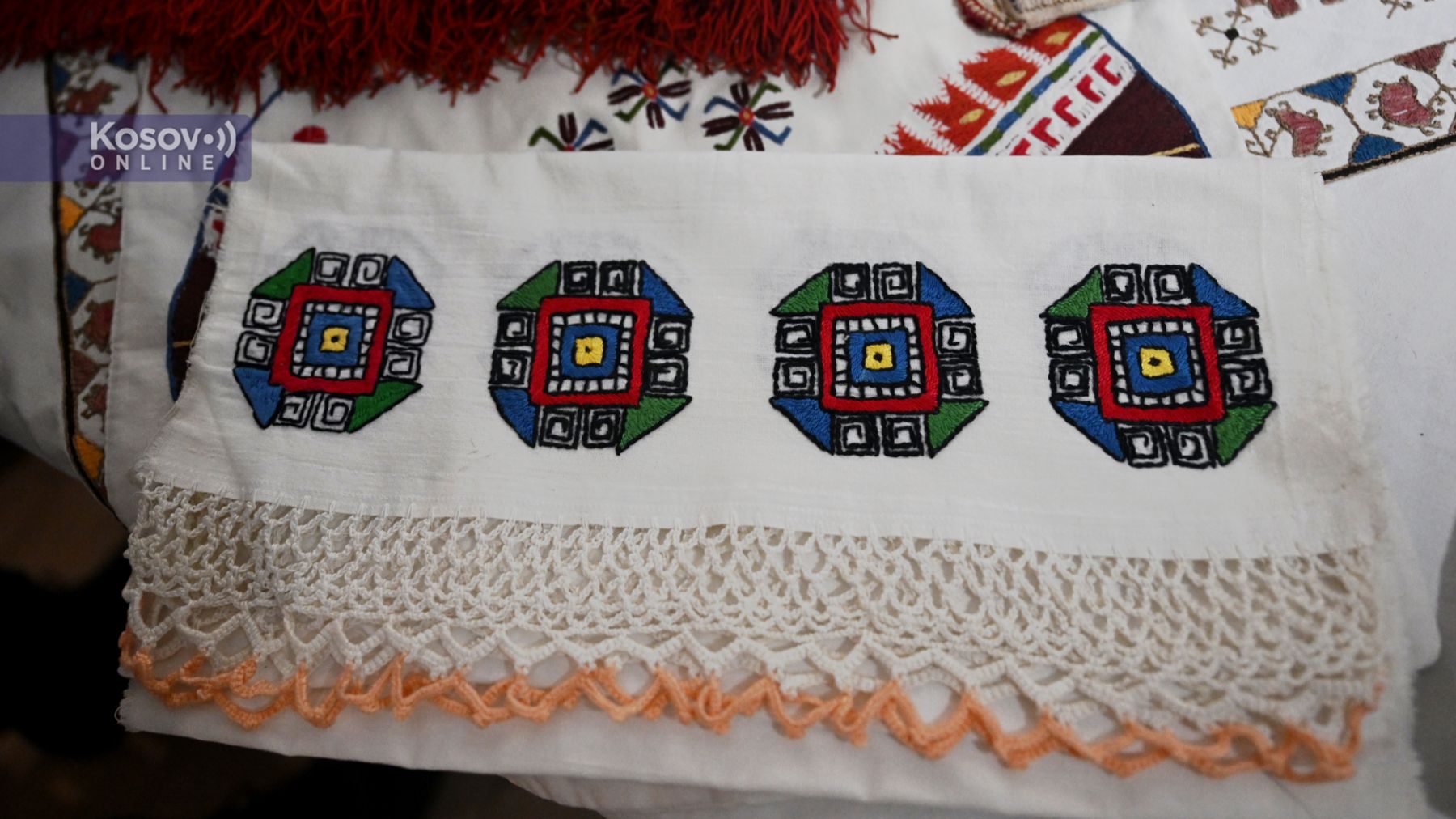
“On a single ceremonial handkerchief made by girls for a wedding, you can find as many as nine different types of stitches. At the same time, every example of Kosovo embroidery followed strictly defined geometric forms. Curved lines were generally absent, particularly in older Kosovo embroidery from the late 19th and early 20th centuries. The geometric forms were mostly outlined in black thread and filled with solid stitching, predominantly in cherry red or dark red, with additional vivid shades of pink, green, blue, purple and yellow, along with the obligatory use of metallic thread—gold or silver srma—which from time immemorial was extremely expensive both to produce and to use in garments,” Utvar explained, adding that srma was brought to the Balkans mainly through trade with the Turks.
He said that in the past women embroidered at night, after completing all their household chores, working by candlelight.
“That alone speaks to the richness and resourcefulness of our women and, above all, their physical strength. They would turn to embroidery only during the winter and at night, after finishing all the work around the house, tending to the livestock and taking care of everyone in the household. Only then would they sit down and, by the flame of a candle or kerosene lamp, create embroidery worthy of a museum. Unfortunately, such work cannot be replicated today, which is why I have enormous respect for those women from Kosovo,” Utvar said.
Utvar also highlighted the distinction between Kosovo and Metohija embroidery, noting that the latter was more traditional and incorporated fewer innovations.
“What is particularly interesting is that although, in terms of technique and terminology, it falls within the broader category of Kosovo embroidery, Metohija embroidery is distinctive in its own right because it comes from the Metohija region, which is home to our medieval monasteries. Because of the understanding of land ownership under the monasteries, women introduced fewer innovations into their embroidery and adhered to the old, earliest monastic embroidery traditions, which date back to the earliest prehistory. The examples of Metohija embroidery we have date from the 17th to the 19th centuries and are purely Byzantine. Owing to the influence of the monasteries and monastic life, they remained unchanged through the centuries, whereas the eastern part of Kosovo and Metohija was somewhat more open to the West, to the Baroque and to the blending of styles, embroidery techniques and forms from the coastal regions. This allows us to distinguish Kosovo embroidery from Metohija embroidery, which is characterized by extensive use of exclusively red thread,” Utvar said.
He added that Kosovo embroidery was worked on sheer fabrics, particularly silk, with velvety forms, while embroiderers sought to render all motifs as geometric patterns.
“The embroidery is full of branches, birds and symbols intended to ward off the evil eye and is, I would say, much more lavish in both color and materials, including silk, wool and cotton thread, and even srma, which we do not find in Metohija embroidery,” Utvar said.
He noted that today very few women in Serbia practice Kosovo embroidery and preserve the tradition in this way.
“The small number of museums entrusted with the role of educating, so to speak, women in the serious practice of Kosovo embroidery are not doing so. There are women who produce outstanding Kosovo embroidery—I know them from the various ethnic heritage fairs held in Belgrade and across Serbia—but unfortunately, you could count them on the fingers of one hand. That is an extremely small number considering the richness you can see for yourselves at this exhibition and the wealth of Kosovo embroidery that we possess. Unfortunately for our tradition and culture, our people today neither research it sufficiently nor do we have enough original pieces that could be properly replicated,” Utvar concluded.
Embroiderer Ljiljana Kokovic demonstrated embroidery techniques to interested visitors at the event. Many were particularly interested in the authentic patterns used for Kosovo embroidery. Kokovic told Kosovo Online that she had been embroidering for 70 years, having learned the craft as a young girl from her mother and grandmother.
“I am 77 years old, and I have been embroidering for 70 years. From a very early age, alongside my mother and grandmother, I learned the basic stitches. Throughout my life, during my studies and my working years, and particularly since retiring, I have devoted myself intensively to embroidery. For the past 30 years, I have worked exclusively with motifs from manuscript books and the monumental architecture of the Morava School. I apply them to functional and decorative objects—whether pictures, curtains, tablecloths or table runners does not matter; what matters are the motifs I work with,” she explained.
Kokovic said she became interested in Kosovo embroidery as soon as she encountered it.
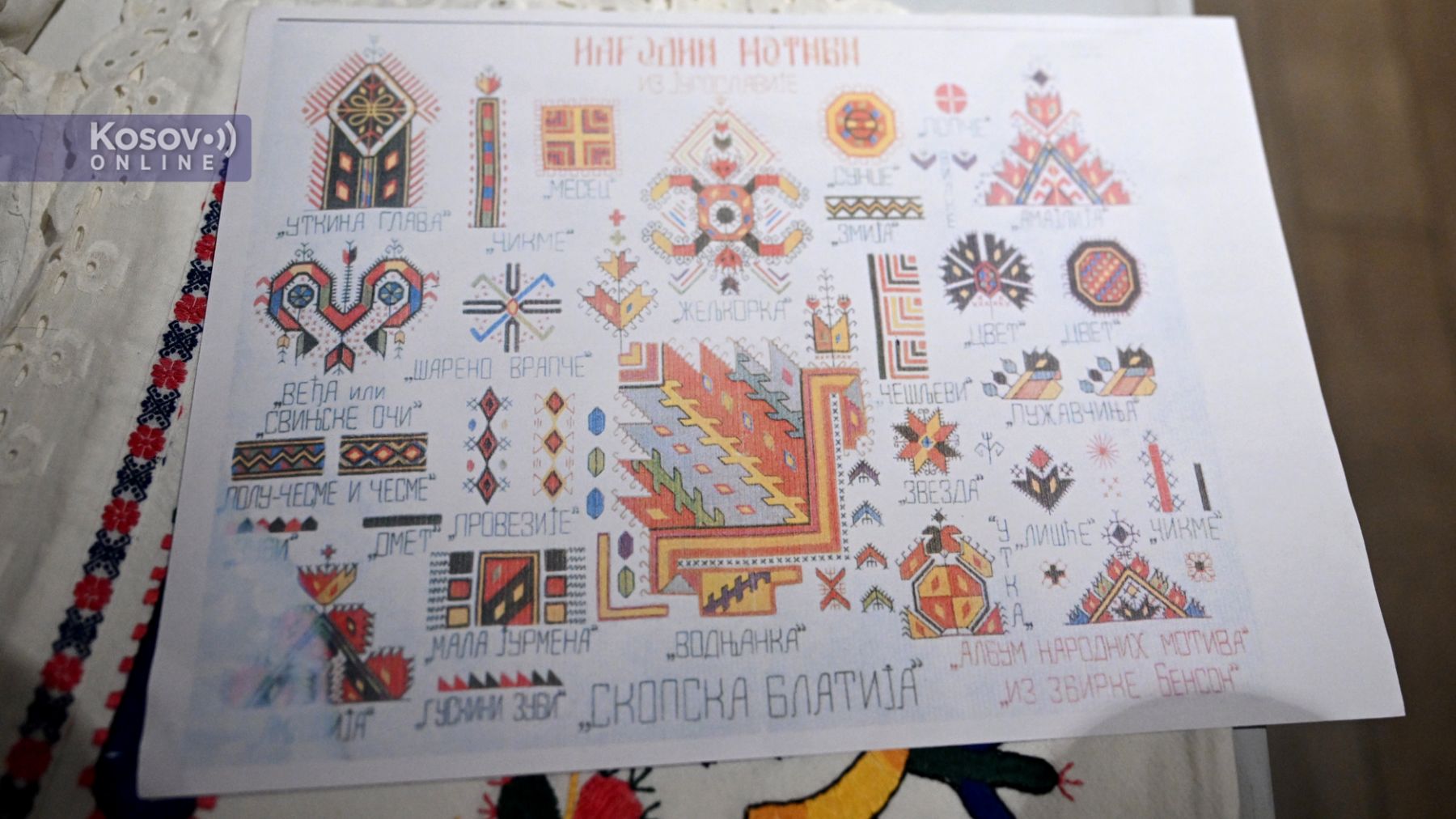
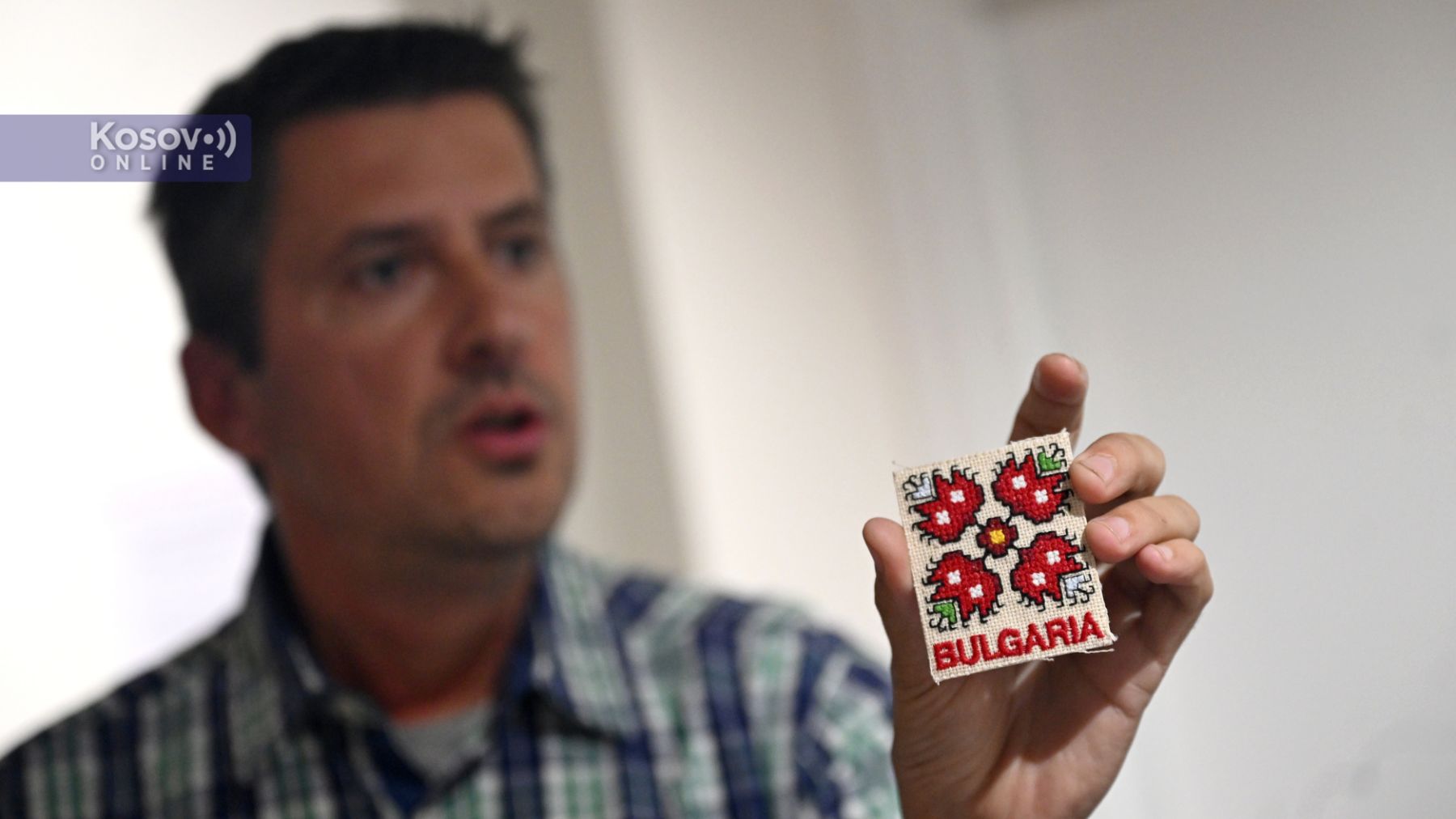
“I did not make traditional costumes, but whenever I found anything about Kosovo embroidery, I always kept it and, of course, made an effort to embroider it myself. Here, for example, I have patterns from small cushions that I made as miniature gifts. I found it very interesting to work with them, just as I do with initials and monograms from manuscript books. I particularly enjoy collaborating with someone who is passionate about embroidery and comes from Kosovo,” she said.
She added that there was interest in Kosovo embroidery and that a number of students had chosen it as the subject of their graduation theses.
“I love embroidering and use every free moment I have for it. Even when I come home tired, I put my feet up on a chair, pick up my needles and thread, and simply enjoy it,” Kokovic said.

0 comments