
Kosovo Pomoravlje – Rich tangible and intangible cultural heritage
Kosovo Pomoravlje is a region of rich history, tradition, and natural beauty. With the aim of introducing as many people as possible to the landmarks of this area, the Tourist Organization of Novo Brdo has launched a campaign to promote the tourist offer of Kosovo Pomoravlje.
Tourist guide Aleksandar Trajkovic said that the Tourist Organization was established in 2023 and that they have been working on promoting their region, while their success is reflected in the growing number of visitors recorded in recent years.
“We have exceptionally rich tangible and intangible cultural heritage. There is Saint Bosiljka of Pasjane, the Church of St. Nicholas, the Draganac Monastery, the place where Prince Lazar was born, and the village of Kmetovce where he was baptized. We had the feeling that our municipality had been overlooked alongside Gracanica, the Patriarchate of Pec, and Visoki Decani, and that this part of the region had not been sufficiently utilized, which is why we started this initiative. Over the past three years, we have managed to change that, as we are seeing increasingly frequent tourist visits. We now have buses arriving from North Macedonia and Montenegro, which for us as an organization represents great success. We receive between two and five buses every week, and it would be good if, in addition to pilgrimage tourism, people could also come to enjoy the local food and music,” Trajkovic said.
Places that pilgrims invariably visit during their stay in Kosovo Pomoravlje include the Draganac Monastery, the Church of St. Nicholas in Gnjilane, as well as the Church of the Transfiguration of the Lord, which is among the oldest preserved churches in this region.
Tourist guide and historian Nenad Ivanovic said that the Church of the Transfiguration of the Lord in Pasjane is of particular importance because it houses the relics of Saint New Martyr Bosiljka of Pasjane.
“Bosiljka was a young girl from the Rajcic family, who live in Pasjane. While going into the forest with her brother and father, she was abducted. Although women who had converted to Islam advised her to do the same, she refused despite being subjected to torture, and was later killed. Following her death, the people began venerating her as a saint, and in 2018 she was canonized by the Serbian Orthodox Church and proclaimed Saint Great Martyr Bosiljka of Pasjane,” Ivanovic said.
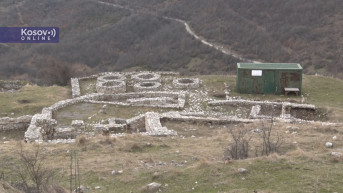
Ivanovic also emphasized that the medieval town of Novo Brdo is another landmark tourists should visit when coming to this region.
“The first mention of Novo Brdo dates back to the beginning of the 14th century, specifically to 1314, and it later appeared in the charters of Stefan Decanski. The most significant period in the history of Novo Brdo came at the end of the 14th and beginning of the 15th century, when silver and ore mining expanded considerably. The greatest credit for this belongs to the German Saxon miners, who came to introduce ore-processing techniques, which the local population readily embraced, leading to intensive mining activities. Novo Brdo was famous for its ‘glam silver,’ which contained traces of gold, in some cases up to 20 percent. Novo Brdo was also a renowned trading town where coastal cities such as Dubrovnik, Zadar, and Split conducted their commercial activities. From a strategic standpoint, Novo Brdo was an indispensable factor in medieval Serbia, as it represented the most important mining and economic pillar of the medieval Serbian Despotate. There is even a possibility that Despot Stefan Lazarevic himself had a court here,” Ivanovic said.
Kosovo Pomoravlje is becoming increasingly attractive to tourists seeking to experience the authentic culture, history, and natural beauty of the region, while all of this represents only a part of its rich offer.


0 comments