
Drecun: Kurti is trying to reduce the political capacity of the Serbian people
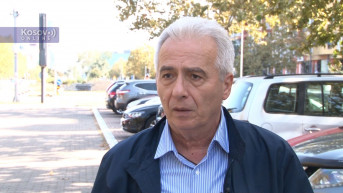
The Chairman of the Defense and Internal Affairs Committee of the Serbian Parliament, Milovan Drecun, stated that Albin Kurti is trying to weaken the Serb List in order to reduce the political capacity of the Serbian people to achieve maximum protection of their interests within the institutions.
Drecun told RTS that the behavior of Kurti and Self-Determination is characterized by two key features.
“One is nationalist populism, primarily based on a hardline stance toward Belgrade and institutional terror against the Serbian people, while the other is a continuous institutional crisis. When you look at it that way, you can see that it is important for him to continue the pressure on the Serbian people,” Drecun explained.
He recalled that young Albanians represent a significant voting bloc, as does the diaspora, among whom Kurti's actions against the Serbian population are particularly popular, which is why he plays that card before every election.
He pointed out that it is usually expected that elections will provide a way out of a political crisis, but that in Kosovo there is neither a solution nor institutional stabilization, and the crisis simply continues.
Drecun expects the same situation after Sunday's elections.
“Kurti's problem is that he does not have stable coalition partners and does not have a two-thirds majority,” he emphasized.
Regarding the Serb List, Drecun said that the incidents and arrests are aimed at causing as much political damage as possible to the party and discouraging Serbs from voting for it or from participating in the elections altogether, thereby creating space for Nenad Rasic, through whom Kurti seeks to secure as many parliamentary seats as possible.
“The Serb List is problematic for Kurti. It is a minority party, but the 10 seats allocated to the Serbian community are crucial for decisions requiring a two-thirds majority. That is why Kurti is trying to reduce the Serb List's result and is resorting to incidents,” Drecun explained.
He also stressed that an overwhelming majority of Serbs support the Serb List because of its ties to Belgrade.
“Kurti's intention is to secure one mandate through Rasic because after the elections he will need every single member of parliament to achieve his goals,” Drecun underlined.
One of those goals, he noted, is the creation of a Gendarmerie force, which would complete the maximum militarization of Kosovo and northern Kosovo.
“In this way Kurti intends to deceive the international community, because members of the Kosovo Security Force cannot be permanently present in the north without KFOR's approval. The Gendarmerie would be a military unit disguised as a police force, intended to enter the north and remain permanently stationed there without the approval of the KFOR commander. Its purpose would be to allow Kurti to establish complete control over the north through a coercive apparatus,” Drecun explained.
According to him, these special units are intended to prevent any opposition by the Serbian population to his unilateral moves.
He believes that yesterday's events in North Mitrovica also demonstrate that Kurti is completely ignoring the local self-government where Serbs hold power.
Historian Aleksandar Gudzic believes that the elections will not bring a solution and that another election will be held by the end of the year.
“Kurti and Self-Determination have nothing to offer voters except populism and a fight against an imagined Serbian threat. That produces results and allows Kurti to consolidate his electorate. This is something that will continue to be repeated, and Kurti has proven himself a master of governing in a caretaker capacity,” Gudzic said.
He stressed that the elections are taking place in an atmosphere of political pressure and arrests, which affects ordinary people.
He expects that Vjosa Osmani will succeed in taking a certain number of votes away from Kurti and that, after repeat elections, Self-Determination will not have a majority to form a government.
“I do not believe that the political crisis will be resolved through elections, unless representatives of the international community become involved in political life and impose a solution on Kosovo's politicians. That is something that has happened in the past,” Gudzic said.

0 comments