
Radojkovic: Kurti wants only “acceptable Serbs” in the elections; he is testing the West’s “red lines”
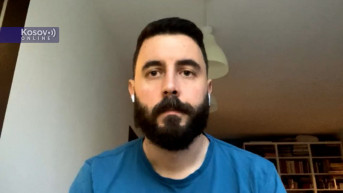
Historian Stefan Radojkovic assessed that the ban on the Serb List in the local elections is clear pressure on the Serb community and a message that only “acceptable Serbs” should take part in the elections. He emphasized that in this way Albin Kurti is also testing the West’s “red lines,” but that one should not expect any significant reaction from the international community.
“Similar announcements already existed and now they have been partially fulfilled. The pressure on the Serb community is obvious, and all of this is in line with the ideological orientation of the Self-Determination Movement. They have advocated that exclusively the local Albanian and Serb populations must decide on self-government in Kosovo and Metohija. What that really meant was that Serbs in Kosovo and Metohija can participate in elections, but cannot have any connection, real or perceived, with Serbia and, of course, its institutions,” Radojkovic told Kosovo Online.
He stressed the “particular irony” that the Serb List was branded a “terrorist organization.”
“What struck me as especially interesting is that they called the Serb List a terrorist organization, given the history of the Albanian struggle in Kosovo and Metohija against Serbian institutions. That carries a particular irony,” he said.
The Central Election Commission yesterday refused to certify the Serb List for participation in the local elections scheduled for October 12.
The decision was made with two votes “in favor,” two “against,” and seven abstentions.
“Against the Serb List were two representatives from Self-Determination, while representatives of the other Albanian parties simply abstained, which suggested several things. First, that the cause of such a CEC decision lies solely on the shoulders of the Self-Determination Movement, which is, of course, exactly what it wants. It wants to present itself as the party that is uncompromising when it comes to any influence or perceived influence of Serbia in Kosovo and Metohija,” Radojkovic said.
He interpreted the abstention of opposition parties, primarily the LDK and PDK, as an attempt not to be “associated” with being “allies of the Serbs.”
“But at the same time, they don’t want to join Self-Determination either, they want to keep their distance, in case there are certain reactions, primarily from Washington,” the analyst added.
He warned that such a CEC decision came after the meeting between US Embassy charge d’affaires Anu Pratipati and caretaker Prime Minister Albin Kurti, at which she “clearly made it known” that it was expected there would be “no obstruction” not only of the Serb List but also of other parties from the Serb community.
“This is a message to the Serb community that the only ‘good Serbs’ are those who rely exclusively on the Pristina provisional administration, and especially on Prime Minister Albin Kurti. But that simply will not convince the Serb community to vote for any sort of Kurti proxy. More likely, if this decision remains in force, they will vote for any other party that authentically represents the Serbs of Kosovo and Metohija,” Radojkovic was convinced.
Asked whether he expects a reaction from the international community to the ban on the Serb List, Radojkovic said that it wants to “see the back of” Kurti because he has proven to be uncooperative, especially for Washington, but still, one should not expect “harsh reactions or major condemnations.”
“I don’t expect any harsh reactions or major condemnations, and especially not any concrete moves by the international community, particularly Washington. But it will be interesting to see how far Albin Kurti can really push the ‘line’ and demonstrate his uncooperativeness,” Radojkovic argued.
He therefore sees the decision to ban the Serb List also as a kind of Kurti’s test of the international community.
“Albin Kurti is testing what the ‘red lines’ are for the international community, even though before this session the US Embassy charge d’affaires made it clear that such a thing was neither desirable nor would be tolerated,” Radojkovic emphasized.
He believes that concrete actions, including sanctioning certain politicians, would be the proper response from the West.
“That would be a concrete step, but I am not overly optimistic,” Radojkovic concluded.



0 comments