
Stojanovic: The Renewal of Dialogue depends on the International Community, important to form the Community of Serb Municipalities
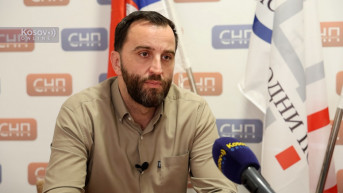
Branimir Stojanovic, a candidate of the Serbian People's Movement in the parliamentary elections, emphasized that the dialogue between Belgrade and Pristina will only make sense if previous agreements are first implemented and the Community of Serb Municipalities (CSM) is formed. He also stated that the renewal of dialogue depends on the international community.
According to him, Serbian MPs must return to the Kosovo parliament to fight for Serbian interests.
In an interview with Kosovo Online, Stojanovic stressed that, regarding the security of Serbs, an operational plan must exist at the level of local self-governments.
What is the fate of the dialogue, and how can it be revived?
The dialogue must be renewed, but this does not depend on either side alone—it primarily depends on the international community. The dialogue will only make sense if previous agreements are implemented first. Any further continuation of the dialogue is meaningless until the CSM is formed and until the provisions that benefit our people are fulfilled. So far, only the provisions that threaten our functioning and operations have been implemented. Until that moment, it truly makes no sense to renew the dialogue.
Additionally, before any of this, the situation on the ground must stabilize so that people feel at least somewhat safe. How can we talk about dialogue when people live in fear and cannot function normally?
Is it time for the return of Serbs to institutions (police, judiciary)? What are the prerequisites, and with which potential candidates for Prime Minister could this be realized?
I believe that the most important issue for us is the return of Serbian MPs to parliament—unlike the ten invisible MPs we have had so far. Serbs should have representatives who are present there and who fight for Serbian interests. That is the most important thing. The structure must change, and trust in Serbian representatives must be restored.
Today, our people have no trust in those holding office. That is the first and fundamental issue. Unfortunately, in the past two or three years, during all these crises, many of these representatives hid, were not among the people, were not where the situation was most critical, remained silent when institutions were shut down, avoided their responsibilities, and now they should pay the political price. We need to identify those who made these flawed decisions and assess their consequences.
The consequences for our people are catastrophic. A huge number of people have emigrated and no longer live here, while many others are already halfway out, just looking for financial and logistical means to leave. This situation is unacceptable.
As a people, we must reach a point where decision-makers are held politically accountable. Those who made the wrong political decisions must lose the privilege of making decisions. The current practice—where, despite numerous mistakes, under the pretext of maintaining unity, the same practices continue without accountability—must stop. Those who made bad decisions must no longer be in a position to decide.
For us, this is the greatest catastrophe because, at the end of the day, the only thing we can decide on is how we organize ourselves internally. That, today, is our biggest problem.
How to Improve the Security of Serbs in Kosovo?
The issue of security is not solely a matter of political stability. A significant portion of the insecurity stems from the policies implemented at the central level in Pristina. It is evident that Albin Kurti, through his aggressive rhetoric, has fostered an atmosphere of widespread hatred toward Serbs. In this context, decisions must be made rationally, rather than aiding Kurti—something that, unfortunately, has been the practice of those who have made decisions so far. Instead of counteracting him, they have inadvertently supported him in his political decisions, with the best example being the situation in northern Kosovo. Had the Serb List not made flawed decisions, we would not be facing the current state of affairs.
At the same time, the issue of security should not be left to the goodwill of Albanians and Kosovo’s institutions, depending on what they are willing or unwilling to do.
We must develop operational plans at the local self-government level to improve basic technical conditions. This includes:
• Better video surveillance—many Serbian areas lack proper surveillance systems.
• Public lighting—ensuring well-lit streets to reduce crime and threats.
• Increased pressure on institutions—both local and international bodies responsible for security.
A recent example of inadequate planning was in Gracanica, where it was known in advance that Albanians would celebrate Flag Day. Yet, no one from the Municipality of Gracanica considered it necessary to convene a Security Committee before the event. Instead, after the unfortunate incidents and acts of vandalism in Gracanica, local leaders simply reacted by complaining.
Preventive action is crucial. There should be proactive pressure on institutions and security apparatuses—especially the international community—before incidents occur, not just afterward.
________________________________________
Kosovo Online invited all six Serbian parties participating in the upcoming elections to answer several essential questions concerning the Serbian community in Kosovo. By the deadline, representatives of three lists responded, while the Party of Kosovo Serbs, Serb List, and the Civic Initiative "People’s Justice" did not provide answers to our portal.



0 comments