
Krasniqi: Constitutional Court has clarified most procedures for forming institutions and electing the president
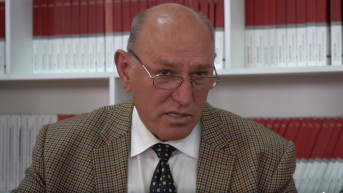
University professor Kolë Krasniqi has stated that the Constitutional Court has clarified most of the procedures relating to the formation of Kosovo's Assembly, the Government of Kosovo and the election of the President through its rulings, stressing that a distinction must be made between legal uncertainty and the lack of political will.
Explaining the procedure for establishing the new institutions, Krasniqi told Kosovo Online that although the legal dilemmas have largely been resolved, the risk of political deadlock remains because the Constitutional Court cannot compel political parties to reach a compromise.
"A distinction must be made between legal uncertainty and the lack of political will. Through its rulings, the Constitutional Court has clarified most of the procedures for constituting the Assembly, forming the Government and electing the President. It is now established that the Assembly is considered constituted only after the election of the Speaker and the five Deputy Speakers; that the first candidate for Prime Minister is nominated by the winning party; and that the Government is elected by at least 61 votes. Likewise, when the country does not have a President serving a full mandate, the procedure for electing a new President must begin after the Assembly has been constituted and must be completed within the constitutional deadline of 60 days. Otherwise, the Assembly is dissolved. Therefore, the principal legal dilemmas have been resolved. However, the risk of deadlock remains because the Court can determine procedures and deadlines, but it cannot compel political parties to secure a parliamentary majority or reach a political compromise," Krasniqi said.
According to him, the Assembly of Kosovo should first be constituted in order to pave the way for the formation of the Government and the election of the President. He added that, under the current circumstances, the presidential issue should be treated as a priority.
"The institution that must first be constituted is the Assembly of Kosovo. Without its constitution, neither the presidential election procedure nor the vote on the Government can take place. Once the Assembly has been constituted, the Constitution does not clearly establish an absolute order between the election of the President and the formation of the Government. The Acting President may grant the mandate to a candidate for Prime Minister. However, under the current circumstances, the election of the President should have institutional priority because the office of President is currently being exercised only on an acting basis and for a limited period. The incumbent Government continues to perform certain functions, whereas the absence of a President serving a full mandate affects the country's representation, constitutional appointments, foreign policy and security," Krasniqi said.
Nevertheless, Krasniqi added that the best solution would be a political agreement encompassing both the election of the President and the formation of the Government simultaneously.
Explaining the presidential election process, Krasniqi stressed that the freedom of members of parliament to vote must be distinguished from a boycott of the process.
"According to the Constitutional Court's current interpretation, at least 80 members of parliament must participate in the first two rounds of voting. A candidate must receive 80 votes to be elected. In the third round, the participation of at least 61 members is required, and the candidate is elected with a minimum of 61 votes. Therefore, mere physical presence in the chamber is not sufficient; participation in the vote is required. Legally, this is a mandatory requirement. In practice, however, it can be used as a mechanism for obstruction because, if 41 members refuse to vote, the procedure cannot proceed to the third round. Members of parliament cannot be compelled to vote for a particular candidate, but they do have a constitutional obligation to participate in the procedure. The freedom to vote against a candidate must be distinguished from boycotting the electoral process," Krasniqi stated.
Krasniqi further noted that one of the most serious unresolved issues concerns the expiry of the six-month mandate of the Acting President of Kosovo.
As he explained, if a new Speaker of the Assembly of Kosovo is elected, the office of Acting President would pass to the new Speaker. However, the Constitutional Court has not clarified whether the six-month period would continue to run or would begin anew.
"This remains one of the most serious and least regulated issues under the Constitution. Article 90 provides that the acting exercise of the presidential mandate may not exceed six months. In this case, that period expires on 4 October 2026. If a new Speaker of the Assembly is elected in the meantime, the office of Acting President may pass to that individual because it is attached to the office rather than the person. However, changing the Speaker should not trigger a new six-month period, as that would allow the temporary arrangement to be extended indefinitely. The Constitution does not specify who assumes the office once the six-month period expires. Therefore, if a President is not elected in time, a constitutional vacuum could arise. In such circumstances, an urgent interpretation by the Constitutional Court would be required," Krasniqi said.
He concluded that the most sustainable solution would be to elect a President within the constitutional deadline and to amend the Constitution by introducing clear provisions governing the continuity of the presidential office.



0 comments