
Hill: The Serbia–Kosovo dialogue must be reassessed, progress has been too slow
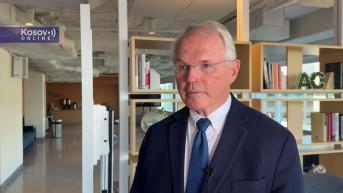
Former U.S. Ambassador to Serbia Christopher Hill has stated that the dialogue between Belgrade and Pristina needs to be reassessed, given that progress to date has been very slow, stressing that a process focused on achievable results is the right path forward.
In an interview with Kosovo Online, Hill said that differing approaches have led to a certain degree of confusion, adding that he would like to see a process that genuinely leads toward normalization—one that enables people living in Mitrovica or elsewhere to wake up in the morning knowing what their lives will look like.
Asked whether the Peace Committee initiated by Donald Trump could offer a solution to the Kosovo issue, Hill candidly said he does not know, noting that it is a complex problem. He added that he knows both Serbs and people in Kosovo and that dialogue is necessary.
“They need to get to know one another, rather than remain on opposite sides of the table shouting at each other, and I do not think the process should continue as it currently stands,” Hill said.
In the context of the new National Defense Strategy, how could U.S. defense and security initiatives affect efforts to normalize relations between Serbia and Kosovo, and what are the risks and opportunities for regional stability?
First of all, I think we are entering an era in Europe where it is no longer just about economics. There are many security issues. Ukraine has truly changed the game. I believe it is very important for countries not only to be able to defend themselves, but, frankly, to seriously consider collective defense. North Macedonia, of course, is a member of NATO. Serbia is not. And at some point, everyone has to consider what kind of collective defense they need.
Serbia, for example, has a very capable military and should consider how it can cooperate. My view—and I know this may sound extreme—is that Serbia should look toward NATO, and NATO should look toward Serbia. It is a somewhat different way of thinking, but I believe we are living in a different and dangerous era, and we need to understand how to navigate this together.
What risks and opportunities does such an approach create for long-term regional stability in the Western Balkans?
The risk, of course, is that when you try to change things and do them differently, you may have a population that becomes very concerned about what you are doing. People do not like driving on a highway where they constantly turn left and right—they prefer to go straight. That means you have to explain things to the public.
The public is very nervous—across countries and across the world. That is why it is so important today for governments to explain to their citizens what they are trying to do to keep the country safe and ensure security. That is the first point.
The second point is not to say that we are heading toward war—because I do not believe we are—but I do think the best way to prevent conflict is to be prepared. When you are prepared, the chances are that you will not have a conflict.
How might this approach affect the Serbia–Kosovo dialogue compared with earlier, more process-driven U.S. and EU efforts?
I believe the dialogue truly needs to be reassessed. Progress has been far too slow. There have been different approaches that have caused a certain amount of confusion. Personally, I would like to see a process that genuinely aims at normalization and clearly demonstrates that people—whether they live in Mitrovica or elsewhere—can wake up in the morning knowing what their lives will look like.
A normalization process—one focused on achievable results—is, in my view, the right path forward.
Could pressure for a “quick deal” lead to an unstable or incomplete solution—or, alternatively, break a long-standing deadlock?
Quick deals are often not well thought through. The result can be that someone believes a deal is acceptable, then thinks about it overnight and decides they do not want to go through with it.
Whether you are buying a house or negotiating a peace agreement, you have to look very carefully at what you are buying. That is why I believe quick deals—which may work when purchasing a company or something similar—do not work when it comes to relations between countries.
To what extent can security guarantees, deterrence, or U.S.- and NATO-related initiatives influence the Belgrade–Pristina dialogue?
Security guarantees are very important in many circumstances, but they must be real guarantees and they must have the support of the population involved. Asking the United States to assume additional security guarantees without actually consulting the people involved creates the risk of having guarantees without the necessary underlying support.
As with many things, this must be approached very carefully, with the understanding that if such an arrangement is reached, it has to genuinely work.
The Kosovo issue remains unresolved—initially under UN auspices and now unsuccessfully mediated by the EU. Can Trump’s Peace Committee offer a solution?
I have no idea. I know it is a complex problem. I know Serbs well, having lived in Serbia, and I know they have very strong views on this issue. I also know that people in Kosovo have very strong views. What they need is dialogue.
They need to work on this—also on another level. They need to get to know one another, rather than remain on opposite sides of the table shouting at each other. And I do not think the process should continue as it currently stands.
Does the Trump administration have a completely different approach to the Western Balkans?
I am skeptical of people who take a very quick look at a problem and believe there is an easy solution.

0 comments