
Radakovic: Negotiations with Belgrade a bitter pill for every Kosovo government; no Albanian party interested in dialogue
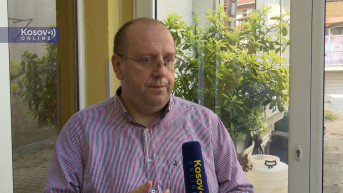
Dušan Radakovic, Executive Director of the non-governmental organisation Advocacy Center for Democratic Culture (ACDC), believes that none of the Albanian political parties is interested in negotiations with Belgrade or in making the Brussels-facilitated dialogue part of discussions on the formation of Kosovo’s future institutions.
“Neither the opposition nor the ruling camp—in this case, Self-Determination as the governing party—is genuinely interested in those negotiations. They have other issues to deal with, such as the situation in the north, while the dialogue is simply not on their agenda. If there are any developments in that process, they will be handled by the governing structure, whereas the parties that end up in opposition certainly will not concern themselves with the dialogue,” Radakovic told Kosovo Online.
He points out that the dialogue with Belgrade is, to some extent, clinically dead and is not a priority for the government. However, everyone is aware that once a new government is formed, a president elected, and the institutions begin functioning normally, one of the first issues the international community will raise will be the Community of Serb Municipalities (CSM), namely the submission of the European draft CSM Statute to the Constitutional Court for review.
“At this moment, the balance in the Constitutional Court is five to four, which means that Kurti does not have a majority. It is therefore not in his interest to initiate the issue of the Statute because that would subsequently require the establishment of the CSM, which Self-Determination opposes. The opposition also currently has no interest in discussing negotiations with Belgrade because they have been a bitter pill that every Kosovo government has had to swallow in order to make certain concessions. They do not want to talk about it because they hope to gain a few more votes if new elections are held,” Radakovic said.
In his opinion, the three conditions for the continuation of the dialogue that Self-Determination has repeatedly mentioned are being put forward solely as a pretext to avoid negotiations.
“We can always set conditions when we do not want dialogue, but if we look at it from the perspective of the Serb community in Kosovo, every day of dialogue and every conversation is better than the current situation, in which only the Serbs living in Kosovo continue to suffer,” he said.
He added that he strongly supports returning the negotiations to the highest political level, resolving issues through the CSM, addressing the issue of missing persons and railway links, and possibly reactivating the Washington Agreement.
“These are issues that would make life easier for all citizens in Kosovo, including the Serb community. The current situation, with a clinically dead dialogue, is primarily harming the Serb community in Kosovo,” Radakovic concluded.


0 comments