
Jevtic: I heard from Escobar that the American administration is not interested in Kurti's conditions for the CSM
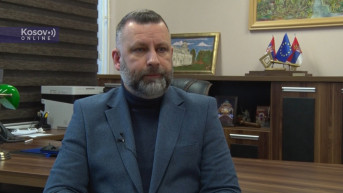
The president of the Strpce municipality and the vice-president of the Serb List, Dalibor Jevtic, said that during his visit to Washington, he had received assurances from American officials that the CSM would be formed, as well as that he had heard from the US envoy for the Western Balkans, Gabriel Escobar, that the American administration had not been interested in the conditions set by Kosovo Prime Minister Albin Kurti.
In an interview for Kosovo Online, Jevtic stated that he had informed his interlocutors in Washington about the position of the Serbs in Kosovo and about the increasingly frequent incidents and attacks on the Serbs.
He emphasized that America's approach to Serbia had changed significantly, which he said was thanks to the Serbian ambassador to the US, Marko Djuric, and the Serbian president, Aleksandar Vucic.
Jevtic added that the formation of the CSM was a prerequisite for the return of the Serbs to the institutions.
You recently visited Washington and met with officials as well as with the envoy for the Western Balkans, Gabriel Escobar. Did you tell the interlocutors about the position of the Serbs in Kosovo? What is their position on the CSM issue?
Certainly, I used this opportunity to talk not only about the difficult situation of the Serbs in Kosovo and Metohija today, but also to point out the possibility of solving certain problems from the point of view not only of the political party to which I belong, but also from the point of view of ordinary people, and in the light of all what has been happening lately, with the incidents that happened in the municipality of Strpce when a boy and a young man were shot, attacks on Serbian young men in Klokot and Suvi Do and in general, how we have come to a situation where there is no trust and that because of the rhetoric of the authorities in Pristina, we have the attacks on the Serbs, attempts to criminalize the Serbs and Serbian representatives and everything that threatens the life and survival of the Serbs in Kosovo and Metohija. I must emphasize that I have encountered attention and understanding. Specifically, at the meeting with Escobar, we talked about the formation of the CSM, which for us Serbs is not political, but a life issue and the reason we are not able to solve problems today is that we do not have the mechanisms that would enable us to do so. Escobar reacted in a positive way to what I had to say, on the other hand, I could hear a clear opinion that the CSM would be formed.
How much has America's approach to Serbia changed in recent years?
In the conversations I had in Washington, I could tell that the relationship was far different than it was some time ago. I think that this is largely the merit of Mr. Marko Djuric, and of course, President Aleksandar Vucic, who contributed to such a situation with his policies and the respect he has in Washington. The Embassy of the Republic of Serbia is at a higher level today. On the other hand, I could hear very positive opinions about Djuric's work from my colleagues. People have to understand that we have to work with great powers.
A session of the Assembly of Serbia on Kosovo was held. How do you comment on the events during those two days?
I must say that I am sorry for the scenes we saw. Some people from the opposition have shown irresponsibility on this issue at a time when we should all be united, and I would like to emphasize my full support for President Vucic. I think he showed how important the life of the Serbs in Kosovo and Metohija is to him. and it is no coincidence that a large percentage of the Serbs vote for and support Vucic because we know how much he fights for our life in these areas. And while other topics were important to others, Vucic remained the only one who showed that he was interested in the life of the Serbs in Kosovo and Metohija and the future of Serbia.
Kosovo Prime Minister Albin Kurti set the conditions for the formation of the CSM. How acceptable are those to the Serbs?
We are not interested in those conditions. We are interested in what is written in the Brussels Agreement. He needs those conditions for daily political use. The thing he is trying to do by stating the conditions, he wants to justify himself or perhaps to avoid doing what the representatives of the "five" asked him to do. I personally have no expectations, and I would like him to reassure me that he will form the CSM. But his terms are not only of no interest to us, but I also heard from Escobar that it is not of interest to the American administration either.
Elections in the north of Kosovo are scheduled for April 23. What needs to change by then, so that the Serb List decides to participate in the elections?
The formation of the CSM is a prerequisite for holding elections, for the return of Serbian representatives and the Serbs to Kosovo institutions. It has been unequivocally said many times.
Is there a possibility of that happening?
I doubt anything will be done about it, what gives me a glimmer of hope is the determination in the US when it comes to the CSM. They are very determined on this matter.
With the withdrawal of the Serbs from institutions and Goran Rakic from the post of Minister for Communities and Returns, Kurti took advantage of the opportunity and named those Serbs with whom he wanted to talk and cooperate. Did he thereby violate the law and the constitution of Kosovo?
Mr. Kurti does not care much when it comes to the rights of the Serbs. He will do everything to violate those rights that are in the Kosovo law. And that was the topic of my meetings in Washington, and I could hear from my interlocutors that they did not want representatives of the Serbs who were not elected by the citizens.
Also, Kurti repeated several times that he was interested in a dialogue with the Serbs in Kosovo, not with Belgrade. Did you, as representatives of the Serbs, notice his interest?
No, on the contrary; I can testify that I had one meeting with Kurti last February. a meeting where I was more than direct, and Kurti was silent. We discussed a number of topics, from the institutional violence that Pristina perpetrates, to some technical issues, for which we did not find any solution, which only speaks in favor of the fact that Kurti is not interested in dialogue with the Serbs. He would talk to the Serbs from whom he would hear what pleases him, but not about the reality when it comes to the life and position of the Serbs in Kosovo and Metohija.
Attacks on the Serbs are becoming more frequent, and children are often the target. What is the current security situation in Strpce? What can you hear from the conversation with the citizens?
There is a lot of fear, citizens are worried, and we all worry about our children. It reflects on everyday life. There is no trust in Kosovo's institutions. This morning I held meetings with citizens who said that during the weekend a large number of Albanians had been passing through Brezovica, provoking. We could not see that before Kurti came to power, and it is the result of Kurti's rhetoric when he talks about the Serbs as criminals, and thus creates an atmosphere that those Albanians who do not live in the Strpce municipality, because we have excellent relations with the Albanians from Strpce, come thinking that the Serbs who live here should be provoked and attacked. One bad atmosphere, this government in Pristina took us back decades and destroyed the bridges we built.
Let's go back to your visit to Washington, where you talked about the Brezovica Ski Center and your initiative to have it under local self-government. What would that mean for the municipality of Strpce?
Brezovica Ski Center is an example of the fact that the resources available to us are not being used. My initiative is well-known, from the moment I became the mayor of the municipality, I have been saying that the management of the Public Enterprise of the Brezovica Ski Center should be transferred to the local self-government, as the first step in opening the door to investments. the interlocutors I spoke with in Washington were very interested and said they supported such an initiative. Given that the Serbs and Albanians live in the Strpce municipality, it would be a good way to send a clear message that it would be a benefit for everyone. This is precisely why the CSM is needed; those who talk about it as a mono-ethnic institution are wrong - many examples deny them. Brezovica Ski Center is a resource that will enable the development of the economy and the opening of jobs. As a mayor, I was able to bring a potential investor to open a factory here. But we could not implement that initiative, because the current government in Pristina was not listening.

0 comments