
Lajcak: Unnecessary escalation; it is not NATO's role to resolve this; we need a political solution
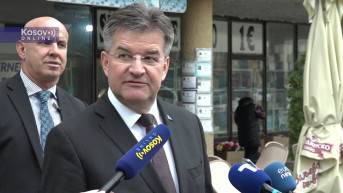
The EU Special Representative for Belgrade-Pristina Dialogue, Miroslav Lajcak, says that the events in northern Kosovo are an absolutely unnecessary and illogical escalation, emphasizing that only a political solution is possible through the existing dialogue, Deutsche Welle reports.
Kosovo and Serbia accuse each other of fueling tensions in northern Kosovo. What is the actual reason behind this escalation?
The reason is deep mistrust between the two communities, the majority Albanian and the minority Serbian. Secondly, Serbs have withdrawn from Kosovo institutions. Elections were held in four municipalities, with a turnout of 3.4 percent. So, these newly elected mayors have met the legal criteria, but when it comes to legitimacy or representativeness, there is a big question mark. Then, last Friday, when the Kosovo government decided to bring these mayors into municipal buildings in Serbian-populated areas, Serbs attempted to block it. And that's the situation we've had up to this day.
How much of a blow is this to the efforts you've been making on the ground to establish peace between the two sides?
I have to say that this is an absolutely unnecessary and illogical escalation because, after months and months of negotiations, we reached two important agreements: the February agreement on the path to normalization of relations between Kosovo and Serbia, and then in March, the implementation annex in Ohrid. This means that we have a path toward normalization, we have a program that clearly addresses all open issues, and we have started implementing that document. And then this happened, which is completely unnecessary but unfortunately creates serious obstacles. We cannot have normalization and escalation at the same time. It is necessary to de-escalate and return to work on normalization and document implementation. If we didn't have a document, I would understand if people believed that such actions would achieve something. But we have an agreement, which has never been the case before, so we should really focus on implementing that agreement and achieving normalization.
NATO is deploying additional forces to the region. Will that help de-escalate the conflict? Because, as we hear from you, a political solution is needed, right? And according to the European Union, it should come from Pristina.
It is evident that this can only be resolved politically, and that means through the existing dialogue. That's the right platform. NATO has played a very important role, primarily in maintaining peace on the ground. Even in this current heated situation, KFOR units have been separating the Kosovo police from the Kosovo Serbs. Unfortunately, many of them have been injured in that conflict. Therefore, by strengthening NATO, guarantees to prevent further escalation are also strengthened. But it is evident that NATO cannot resolve this - with all my respect for NATO. It is not NATO's role to solve this; we need a political solution. And it is clear that both sides need to do their part.
There is another dynamic here, that Russia and China have also supported Serbia's stance. What does that mean for Serbia's relations with the European Union?
I see those statements as having no real significance for the situation on the ground. The situation on the ground is that we have a dialogue led by the European Union, strongly supported by all 27 EU member states, and also strongly supported by the United States. Both sides are part of this dialogue. So, I would say those are statements that truly have no impact on the situation on the ground. What we truly need is a return to the negotiating table.
0 comments