
Rastovac Siamashvili: UNESCO does not question whether the cultural heritage in Kosovo and Metohija belongs to Serbia
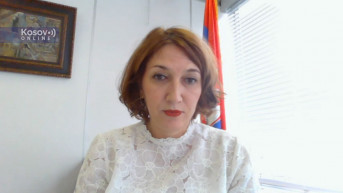
Ambassador of Serbia to UNESCO, Tamara Rastovac Siamashvili, who has presided over the UNESCO Executive Board for the past two years, has assessed that Serbia has a great chance of being reelected to that body. She mentioned that the official Belgrade's candidacy for membership in the UNESCO Executive Board has received a favorable reception among member countries.
Rastovac Siamashvili emphasized in an interview with Kosovo Online that the endangerment of Serbian cultural and religious heritage in Kosovo was one of the absolute priorities of Serbia's permanent delegation in that organization. She added that UNESCO did not question the ownership of cultural heritage in Kosovo, affirming that it belonged to Serbia.
"It's very clear, and if you visit the UNESCO and World Heritage Centre websites, you will see the countries whose heritage is on the list of endangerment, and our heritage in Kosovo and Metohija is clearly listed alongside Serbia's name," Rastovac Siamashvili emphasized.
Serbia has submitted its candidacy for re-election to the UNESCO Executive Board, as recently announced by the Foreign Minister during discussions with foreign diplomats in Belgrade. Given the standing ovations you received at the last Executive Board meeting, it appears you have been very successful during the past two years. What are the chances of Serbia being re-elected?
Serbia has submitted its candidacy to be re-elected to the membership of the UNESCO Executive Board. The elections will be organized during the upcoming UNESCO General Conference. We are one of the candidates from the Eastern European region. Lobbying for our re-election is happening at all levels, both here within UNESCO and on the margins of major international gatherings and bilaterally. The Minister of Foreign Affairs organized a very well-attended briefing for the diplomatic corps in Belgrade. What is especially evident on our side in conversations with colleagues and representatives of UNESCO member states is that Serbia is a balancing factor in UNESCO, including the Executive Board. In other words, we are a country that absolutely insists on dialogue, seeking compromise, consensus, and multilateralism. This is something that characterizes our foreign policy and is also manifested in our approach here at UNESCO. It is something I insisted on as the Chair of the Executive Board. Our candidacy has been very positively received by UNESCO members. I can honestly tell you that in the conversations we have, our balanced approach and our strong insistence on depoliticization and focus on UNESCO's mandate are recognized. It's not always easy to avoid politicization, given the very complex situation currently in the world, and of course, UNESCO as a specialized agency of the United Nations cannot be immune to that. However, Serbia's approach always emphasizes depoliticization. Our re-election would confirm this recognition of the constructive role Serbia plays within UNESCO.
We are very active and closely collaborate in all areas within UNESCO's mandate, from culture to science and education. We had highly successful participation, and the Minister of Science was actively involved in the recent Executive Board meeting, considering that Serbia had a fantastic and highly successful initiative within the United Nations regarding the Decade of Science. This is something that is highly recognized within UNESCO. We also had discussions with the Assistant Director-General for Science, where Serbia's role was recognized and appreciated. Science is one of the areas where we are active, and, of course, we are very active in the field of education as well. UNESCO is the leading UN agency in this regard, especially concerning Sustainable Development Goal 4, where the focus is on education, and UNESCO has demonstrated its leading role even during the pandemic.
Culture is of exceptional importance to Serbia, considering our cultural and religious heritage in Kosovo and Metohija. We collaborate very closely with UNESCO in this regard. So our re-election, which is of great significance to Serbia, would represent confirmation of the vital role that Serbia plays. Additionally, the fact that I chaired the Executive Board signifies recognition of Serbia's active role in UNESCO. My chairmanship took place in exceptionally complex circumstances. I was elected in November 2021, and my first session, which I presided over, was an extraordinary session of the Executive Board concerning Ukraine, requested by a group of countries. This marked the first time in UNESCO's history that the Executive Board held a session on a political issue. Besides the situation in Ukraine, which is one of UNESCO's focal points, we organized a highly significant event where our chairmanship played a critical role, and the agenda of the extraordinary General Conference of UNESCO went through our chairmanship and the Executive Board. This last session of the Executive Board during our chairmanship, which concluded just two days ago, also reflected the complex political situation worldwide, with various views expressed on numerous issues. What makes me exceptionally pleased, as the chairperson, and supported by Serbia, is that the spirit of compromise and consensus prevailed again, something I emphasized in my concluding remarks. It was quite moving, I must say, at the end when delegations expressed their farewells and commended our chairmanship, and it was genuinely touching.
Serbia's cultural and religious heritage, which includes approximately 1,300 monuments of material culture in Kosovo, has been subject to attempts to revise history and historical interpretation by Pristina, aiming to present it as Albanian cultural heritage. How does UNESCO view these attempts?
The exceptional endangerment of our cultural and religious heritage in Kosovo and Metohija is one of the absolute priorities in the actions of the permanent delegation, as well as in discussions at all levels of our officials. This is something that is known and recognized. In September, we had a regular session of the World Heritage Committee, which was held in Riyadh, where I participated with our delegation. The decision to retain our monasteries in Kosovo and Metohija, which are on UNESCO's World Heritage List, in danger, passed without any debate. Of course, we lobbied before the Committee's meeting and held discussions with all 21 Committee members. There was absolute support for retaining our properties on the list of World Heritage in Danger. At no point did the Committee members raise questions about whose properties these were. It is very clear, and if you visit the UNESCO website and the World Heritage Center, you will see the countries whose properties are on the list of danger, and our properties in Kosovo and Metohija are clearly listed under Serbia's name.
We are aware of Pristina's attempt to fabricate history and present these properties as not belonging to us, and in our discussions, we always emphasize that if they are ready to fabricate history and deny the ownership of these properties to the Serbs, the Serbian Orthodox Church, and Serbia, then how are they willing to protect them, as they claim. But I must say that in all our discussions, including the latest one for the Committee, this issue has not been raised. Our properties that have been on UNESCO's World Heritage in Danger List since 2006, have been retained. The Republic of Serbia, as a contracting state of the World Heritage Convention and a member state of UNESCO, regularly submits reports on the state of these properties.
Serbian medieval monuments in Kosovo are also on the List of World Heritage in Danger, and many of these monuments are physically endangered. Some of them are physically protected by the international KFOR mission, but we continue to witness frequent desecration of some monuments.
The role of UNESCO should be understood very clearly. There is a List of Cultural Heritage, and there is a Representative List of Intangible Heritage. These are two different mechanisms. UNESCO is an organization that advocates for the protection of cultural world heritage, and listing a property always means that it is recognized as a universal value of that property and that property becomes a world heritage. At the same time, UNESCO expects the member states that have listed the property to protect it. So, UNESCO does not have a mandate to provide physical protection for properties. You are absolutely correct; generally, our cultural and religious heritage is in exceptional and constant danger. This is something we emphasize in all our discussions. UNESCO's current focus is on properties listed on the list, and we always keep UNESCO officials closely informed about all events that occur in our province's territory, such as the case of attempting to build a road around the Decani Monastery, to which our officials reacted in several ways, seeking international community intervention.
UNESCO, as an organization, generally does not have the mandate to physically protect properties. The UNESCO list includes Jerusalem and many other properties, and the list of world heritage in danger is quite long. Besides public statements and its expertise, UNESCO is not capable of providing physical protection for properties. Also, as a state, we are obliged, which we do, to inform UNESCO about every restoration or conservation activity on our properties. When we talk about monasteries in Kosovo and Metohija, we inform UNESCO about every type of activity. However, the state that has listed a property, whether it is on the List of World Cultural Heritage or the List of Cultural Heritage in Danger, is expected to take care of those properties.
In 2015, Kosovo submitted a membership request to UNESCO, but it ended unsuccessfully for Pristina, with Serbia coming out as the winner in that situation. Two years later, despite previous announcements, they withdrew the request. At the beginning of this year, Kosovo's Minister of Culture, Hajrulla Ceku, announced that they would submit a request at the upcoming General Conference. Are there any signs that this issue can be raised again by Pristina?
Procedurally, the acceptance of membership is done at the General Conference. In ideal conditions, a request is first submitted and sent to the Director-General, and then the decision should first be made by the Executive Board. The Chair of the Executive Board should be informed. We do not have any indications that "so-called" Kosovo will submit a request. That's how things stand procedurally. In fact, they absolutely do not have support among the members here for admission to the organization. I can responsibly say they do not have support. Even though UNESCO does not deal with issues of territorial integrity and sovereignty, that issue is frequently mentioned in the statements of numerous members, including EU members. So, it would be very difficult to explain the narrative that calls for the protection of territorial integrity and sovereignty of some states without doing the same for Serbia.
At this moment, there are no formal or factual indications that "so-called" Kosovo might apply for membership at the upcoming General Conference. Of course, this is one of the absolute priorities in the work of our delegation, and in all conversations, we emphasize the unacceptability of such a unilateral act. We point out all the problems UNESCO would face as an organization, and I think Pristina is aware of that. UNESCO is not an organization that deals with territorial status; it is a specialized agency of the United Nations. I will tell you honestly that the Director-General, with whom we, as a country, have exceptional cooperation, is aware of this. She advocates the idea of depoliticization and is aware of all the problems that such a request would create for UNESCO. So, at this moment, there are no steps by Pristina towards membership in the organization.
Next month, the 42nd General Conference of UNESCO will be held in Paris. What can we expect?
It should be kept in mind that the upcoming General Conference will actually be the first one in which the United States will participate. It will be a very interesting session with the involvement of a large number of ministers. There will be discussions within the commissions of the General Conference, focusing on budget, and numerous decisions related to education and culture. So, the overall atmosphere is such that everyone hopes for constructive discussions.
It won't be easy because discussions on Ukraine are expected, and there will also be issues in the Middle East. Despite all the complexity of the situation that we are all aware of before the upcoming General Conference, I am confident that there is no desire or support to complicate the session with a request from so-called Kosovo.


0 comments