
US General Hokanson: We have a fantastic partnership with Serbia
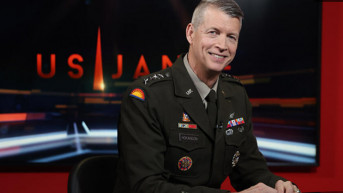
General Daniel Hokanson, Chief of the National Guard Bureau of the United States, says that some areas in which Serbia and the US collaborate are peacekeeping operations and combating cyber threats, and that Serbia is very active in this fight worldwide, not just in the region.
In an interview with Kurir, Hokanson stated that the National Guard of the United States has a fantastic partnership with Serbia.
"Our soldiers exercise and train with the Serbian Armed Forces, which enhances their professionalism. We can share what we have learned from each other, and ultimately, we strive for good relations and the protection of our countries," Hokanson said.
Serbia and the US have a remarkable military cooperation. How can it be improved and expanded?
If we look at what has been accomplished in the last 17 years, we use some areas where we can be better. Some of the areas in which we cooperate include peacekeeping operations and fighting cyber threats. Serbia is very active in this fight worldwide, not just in the region. Every time we meet, we assess what we can learn from each other. The professionalism of our respective armies makes both sides better, and we can share the lessons we've learned. This is truly a fantastic partnership.
Could you tell us more about the importance of joint exercises?
When we train together, we strive to ensure that our equipment is interoperable, that we can communicate on that matter, and also learn, so that we can see what the advantages and disadvantages are. These are excellent opportunities when National Guard members train with the Serbian Army. It allows us to work together and use the same type of equipment. We also explore how we can employ that not only here but in peacekeeping operations worldwide.
What advantages does Serbia gain from procuring Western military equipment that is interoperable with the equipment of its military partners?
Serbia is part of Europe and, in a way, part of the West. If you look at the countries involved in peacekeeping operations or military exercises, those are the forces we will work with. If you have similar equipment that is durable and of good quality, it allows for joint work and cooperation. For example, if we are deployed to Sinai, it is possible to share the lessons learned. If we use the same equipment, then we can share knowledge on how to use it better. Typically, it is necessary to have similar equipment to those with whom you cooperate. When you consider peacekeeping operations, those are the forces that are most likely to come into contact with each other.
How do you assess the relations between NATO and Serbia?
These relations are developing every day. If we go back to the Partnership for Peace program in 2006, the relations have been continuously developing. If you look at Serbia's participation in peacekeeping operations, for a small country, the number of soldiers it contributes is at a very high level. Serbia is one of the countries that provides the largest number of soldiers per capita. At the end of June and the beginning of July, we will have a multinational peacekeeping exercise in Sinai, and the Serbian Armed Forces will work with the National Guard.
Regarding the war in Ukraine, from your perspective, what are the US assessments? Is a compromise possible, and when can we expect the end of this war?
I would love to have an answer to that question, but unfortunately, if you look at the unprovoked brutal invasion of Ukraine by Russia, the humanitarian catastrophe that has ensued, the number of injured and killed civilians, and the destruction of the country, it is clear that it will take years and billions of dollars to rebuild everything. The National Guard, specifically the state of California, has had a 30-year partnership with Ukraine, similar to Serbia, and we have been training with them for years. We continued to train Ukrainian soldiers when the war started to enable them to defend their sovereignty and territorial integrity. We are not sure how it will all end, but we hope that Ukrainians are able to regain their sovereignty. The decision lies with President Volodymyr Zelensky, and we would like to see the war end and this catastrophe comes to a close.
What can the US do to ensure regional peace and stability?
The most significant thing is to contribute to stability and peace in every possible way. The National Guard participates in KFOR, and in light of recent events, we realized that we need to work a little more on our capabilities, and also that work well together. For the US, it is an opportunity to train with members of the Serbian Armed Forces, and as we see not only our role in NATO but also Serbia's role in NATO peacekeeping operations, we strive to do everything we can to assist in de-escalation if a crisis situation arises. Secretary of State Antony Blinken has made it clear, urging all parties to calm down and de-escalate whenever there is a potential conflict so that we can resolve everything through political means.



0 comments