
Adem Demaci - the "armed prophet" of the Albanian national movement in Kosovo (9)
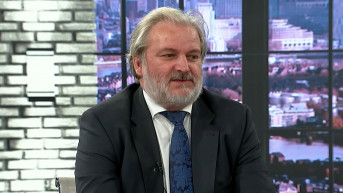
Writing for Kosovo Online: Dragan Bisenic, journalist
An unsuccessful symbiosis with the KLA
Rexhep Qosja describes Demaci as a strong advocate for the internal democratization of Albanian political life in Kosovo and thus as an inevitable opponent of Ibrahim Rugova. Additionally, Demaci is seen by him as the most prominent representative of the revolutionary faction, which essentially means a stronger influence of the "military factor", that is, the Kosovo Liberation Army. However, Demaci could not achieve either of these two major goals.
In his scholarly, historical, documentary, literary, journalistic, and philosophical works, as well as in his "Diary", Rexhep Qosja dedicated a significant place to Adem Demaci's unsuccessful attempt to acquaint "Zaifa" (as he referred to Ibrahim Rugova) with the idea of taking responsibility for Kosovo's future, forming a new political mechanism for "saving Kosovo from further deterioration and party futility", mobilizing the Albanians against Serbian violence, and ultimately creating a new party.
This pertains to the efforts of Adem Demaci, Pajazit Nushi, Rexhep Qosja, and Mahmut Bakalli to establish a new party in Kosovo and the idea of withdrawing former political prisoners from the Presidency and the Central Council of the Democratic League of Kosovo. Without the former political prisoners, Fehmi Agani and Ibrahim Rugova, they would have become suspicious in the eyes of the people, thought Professor Qosja, while Adem Demaci still believed that the political prisoners, who were still within the Democratic League of Kosovo, could keep Rugova "even further away from Serbia's traps" at a time when "Rugova will continue as he does today – doing nothing! This means maintaining Milosevic's peace in Kosovo!"
Demaci continued to be involved in political developments in Kosovo. He said that political culture demanded that those in power, even if it was power "in quotes", were accountable to the people. He had long requested this from Rugova, but he never agreed to meet, always postponing it to "not today, but tomorrow". Faced with a new situation and "without hope“, Adem Demaci tried to establish a new political party but failed. He also attempted to organize inter-party political consultations within the Parliamentary Party but without success. Meanwhile, the Democratic League of Kosovo, which maintained Albanian peace in Kosovo, conducted "free and democratic" elections under Serbian violence and terror, and had support, even patronage, from Slobodan Milosevic's regime. And as if this Democratic League of Kosovo was not enough, it had support from the despotic regime of Sali Berisha in Tirana," Qosja notes.
He concludes that Demaci did not choose "fighters for power" on his path but "fighters for freedom". The emergence of the Kosovo Liberation Army influenced Adem Demaci's position. It's not coincidental that international efforts were made to approach him, using both the carrot and the stick, to bring him into line with Ibrahim Rugova's positions. Referring to Demaci as "the author with the most empathetic political biography since the time of the League of Prizren and beyond", Qosja points out that he "would not agree to participate in party competitions, not even for the position of President of Kosovo". At the moment when the KLA took over "the throne of the Albanian struggle for freedom", Demaci "entered international diplomacy to defend the goals of this army, which were also his ideals". While some members of the KLA were eager to become key figures in this communication, convinced that their words would elevate their influence to a higher level, Demaci was much more cautious, emphasizing that international factors would primarily try to "pacify the Kosovo Liberation Army through him", as they could not do this with "the fakir - Rugova and his associates" at the time. This immediately led to a conflict between the leaders of the Democratic League of Kosovo, which Qosja calls followers of "Rugovism" - as the concept of peace and the attitude of members of the "war wing" of this party, who had already left their ranks. In the "war wing", Qosja, alongside himself, includes Adem Demaci, Hydajet Hyseni, Mehmet Hajrizi, and Rame Buja, and notes that individuals and structures within Albanian groups, clans, and parties threatened them with death.
Demaci and Qosja considered Rugova and Fehmi Agani as actors of the "philosophy of submission and misery in which the Albanians found themselves until the emergence of the Kosovo Liberation Army on the scene, as well as the philosophy of preachers of modest peace". This "Rugovist philosophy" held Kosovo hostage to political and state-building events in Kosovo in relation to Serbia (which Rugova redefined in terms of historical and religious heritage); in relation to Europe (in terms conditioned by his highly personalized relationship with the Vatican); and in relation to the US administration that Rugova established on the scale of party relations, on the scale of the relations of individual individuals and the US administration with the Democratic League of Kosovo.
In his "Diary," Qosja states that at that time, Serbian and Albanian newspapers were "united" in their fight against the KLA and published articles against the "nationalists Demaci - Qosja - KLA", while the Albanian press even published endless articles against "anti-Rugovists", "Enverists," "reds", and "groups that acted as an extended arm of Milosevic to disrupt peace in Kosovo“. Therefore, Qosja points out an enormous paradox that in the elections after 1999, it will not be the KLA but a party that was against the "war of liberation" that will triumph.
"Neither Adem Demaci's 28 years in prison, nor the many, many years of imprisonment for many young men and women from Kosovo over all these years, since 1912, not even the murders of our young men and women by police, soldiers, and Serbian and Yugoslav police, nor the migration of many Albanian families to Anatolia and other countries in Europe and the American continent, nor the many, many documents, many, many books written by a number of authors from Kosovo and the Republic of Albania against the Serbian and Yugoslav occupation of the Albanians, nor all my books and writings defending the right of the Albanians to be a people, not a national minority, and to have the right to create a state, not even many, many ideas, activities, actions, works, writings, prisons, sacrifices, persecution, has changed that mentality that disagrees with the KLA and the war of liberation," Qosja concludes.
However, Demaci parted ways with the KLA and did not want to return, even though he claimed that, thanks to them, "the Albanians are now close to being free". He also believed that the KLA should be "demilitarized".
"I am convinced that without their sacrifices, the Kosovo issue would never have been internationalized. The KLA is still the main force, the essential force of resistance against the Serbian regime. It's true that they have some weaknesses, but among all Albanian factors, they were and still are the main force. For me, it was enough. I am sure that Albanians are now close to being free. So, whoever wants to make political careers now, let them do so freely. Without me. I advised some friends that it would be good if the KLA was demilitarized. Very good. It's time to change the policy".
Demaci, like Gorbachev, emphasized that time was the most crucial factor for such actions. "I would be very happy if it happens. If their leaders accept it. They must understand what the time requires from us. In politics, the most important thing is always to understand the demands of the time. To do it without delay or ahead of time. I hope, but we will see. It's time for radical changes in the KLA," Demaci urged.
However, after the war, Demaci continued to advocate for his idea of a confederation. "For me, a confederation is better than independence. If we are independent, there are still many problems with the Serbs and Montenegrins in terms of how to achieve that. In a confederation, there are no such troubles. You could go from here to Belgrade, Belgrade could come here, and no one would feel isolated. It would be a better solution for our Albanians living in Presevo and Bujanovac in Serbia or in parts of Montenegro. We would be in the same state. That is a common interest. I repeat it is impossible to talk about the unification of Europe and keep the Balkans away from these integrations," Demaci stated.
After the war, he no longer saw his place in the political life of Kosovo, so he did not want to even consider joining the temporary Kosovo Government that was being announced at that time.
"I was against it when that decision was announced back in Rambouillet. Now I'm trying to distance myself from it. Why should I get involved; it's no longer my job. I have completed my part. I want to advise you to a certain point, but if you are going to continue on your own, why I should waste my energy anymore. Now, I repeat, I am just an observer in this political theater. I enjoy watching the numerous actors who appear there. During the war, I told my sister many times - if they kill us, it's fine because we will die for Kosovo. If we survive, it's still good because we will enjoy it with other people," Demaci said.
It will be shown that his, perhaps even coerced, refusal to participate in formal political life, to truly take power into his own hands and wield political power, was the key to preserving his moral capital on which he would base his influence in Kosovo for the next two decades.
Tomorrow: Slobodan in Belgrade as in Pristina

0 comments