
Cancelled culture
Written by Srdjan Garcevic
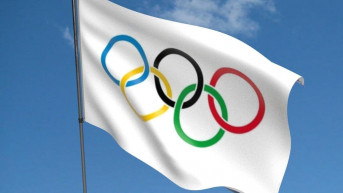
The first Olympic games I remember were the ones in Barcelona in 1992, especially the colourful logo, the opening ceremony and Montserrat Caballé singing. Then, there of course was the theme song, Barcelona, she recorded with Freddie Mercury, before he succumbed to his illness a few months before the games kicked off, which had a weirdly frequent circulation on Yugoslav airwaves back then.
The memory of these games – mostly coloured by my father, a youth basketball player who hoped that Yugoslavia would finally beat the USA in basketball in Barcelona - remains bitter, as Yugoslav athletes (or rather those from what are now Serbia, Montenegro and Northern Macedonia) were barred from representing their country in the competition, as the country dissolved.
The punishment, meted out in the Security Council resolution 757 (only China and Zimbabwe abstained) less than two months before the games began, was harsh as it included not only economic sanctions, but also sanctions on all political and cultural exchange between Yugoslavia and the world. This resolution was a response to the escalating conflict and dissolution of Yugoslavia, with specific measures targeting the sports and cultural sectors. Slovenia, Croatia, and Bosnia and Herzegovina, already then recognised as independent countries were allowed to participate, while our sportspeople were allowed to compete only in individual sports – 58 of them in 13 sports - with no trace of their country and were even excluded from the opening and closing ceremonies.
Yugoslav track and field star and sports historian, Tamara Malešev, whose career was virtually destroyed by the sanctions, remembered those days as 'the most miserable' in her life in an interview. She recalled excessive, humiliating searches, as well, most painfully, being snubbed by former compatriots from Slovenia and Croatia. Nevertheless, 'Independent Olympic Participants' still managed to squeeze out three medals: one silver and two bronzes. Their resilience in the face of such adversity is truly inspiring.
Similar experience befell a Serbian female chess grandmaster, Sanja Vuksanović, who honed her skill with the very best chess masters in Moscow in late 1980s, to prepare to represent her country in 1990s. In a podcast interview she recorded with me, Vuksanović recalled various humiliations from that era which made her career nearly impossible, and the ungentlemanly behaviour of her colleagues.
My father often bitterly recalls the relocated Belgrade FIBA 1994 Wold Championship (which he saw as yet another chance for Yugoslavia to beat the Dream team and which gave the Belgrade Arena), as well as the fact that, there was even a chance for the 1992 Olympic games to be hosted in Belgrade. The missed opportunities due to the sanctions are always a source of deep disappointment, even excluding their very human cost.
The sanctions felt unfair as Yugoslavia, though its history did see the games as apolitical. Even in 1936 Berlin, Yugoslav team refused to perform the Nazi salute (Malešev wrote an amazing book on the topic), while during the Cold War era of Olympic boycotts, in Moscow and Los Angeles, Yugoslavia decided to participate and show that sport is above politics.
On my part, besides the hyperinflation and general chaos, I remember the feeling of stuckness. Everything from the “World” had to come to us via pirated VHS tapes and cassettes, while any travel required a long trek to Budapest or Sofia.
The sanctions were lifted in 1995. While I happily remember our basketball squad beating Lithuania at Eurobasket finals in Athens and being enthused for the Atlanta 1996, there is still a specific trauma we have from the time of the sanctions – the one probably shared with all who had been “cancelled” in the past few years. It is the sense that the system is out there to crush you whatever you do: no matter if it is actually true or not. We all remember Milorad Čavić losing the gold medal out to Michael Phelps in a contentious butterfly 100m race in Beijing 2008, a few months after being disqualified from a European championship for wearing a “Kosovo is Serbia” shirt (Priština authorities declared independence that year). We certainly not forget the embarrassing spectacle of Australian authorities detaining Novak Đoković around 2022 Australian Open, a few weeks before the world seem to have forgotten the vaccination requirements.
Thankfully, at least in sports, showing quality is straightforward while in the much more necessary field of culture things are tougher. Most recently, our globally most successful actor Miloš Biković, was denied a chance of performing in the bitingly satirical hit series, the White Lotus due to politics. Almost everybody from our cultural and media milieu is aware of the purely political constraints on content, which have resulted in the pitiful regional cottage industry of culture which is basically propaganda (if interested please listen to this interview with the curator Aaron Moulton).
Watching the Paris games, I am saddened that the political pressures which divide the athletes are not easing up, and are due to cause even more resentment, undermining an event which is supposed to be the celebration of human greatness, not conformity or cultural fads.
0 comments