
On the deprivation of liberty of Igor Popovic
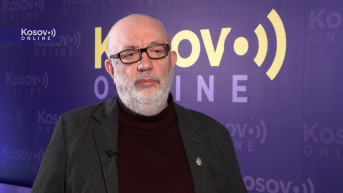
Written by Dusko Celic, Deputy President of the Coordination of Serbian Associations of Families of the Missing, Murdered, and Fallen from the Former Yugoslavia
The recent deprivation of liberty of Igor Popovic, Assistant Director of the Office for Kosovo and Metohija, due to a speech he gave at the commemoration for murdered and missing Serbs in Orahovac and its surroundings, held on July 18 this year in Velika Hoca, in which he mentioned the "KLA" in a negative context, prompts me, in my capacity as Deputy President of the Coordination of Serbian
Associations of Families of the Missing, Murdered, and Fallen from the Former Yugoslavia, to address the public.
First, let me clarify the term "deprivation of liberty." Although I am a lawyer (more precisely, a Doctor of Law and a university professor), what happened to Igor Popovic that day cannot be called either an "arrest" or a "detention," since these are procedural legal terms referring to actions within the framework of a legal (pre-)criminal procedure. This is not such a case, nor is it any kind of legal proceeding or action, despite its quasi-legal facade. This is, just like in the case of Ivan Todosijevic a few years ago, a blatant abuse of the monopoly on force by the "Provisional Institutions of Self-Government in Pristina," aimed at suppressing any notion of freedom of speech and public expression of the value judgments of Serbs regarding the recent tragic events in Kosovo and Metohija.
As a legal professional, it is difficult for me to admit and accept this, but unfortunately, as in many other cases in Kosovo and Metohija, this is about politics, not law!
What else can you call a ban on mentioning the "KLA" in any context other than as "just," "heroic," "victorious," or "liberating"? How else can one understand that this ban applies exclusively to Serbs? Is it forbidden to say that the majority of Kosovar society has yet to confront its past? That past, as is well known, is not black-and-white, idyllic, rosy, pure as a tear, childishly innocent, and just on one side, and the opposite on the other. Without any intention of relativizing or "weighing" anything, in the tragic events in Kosovo and Metohija, just before, during, and after the NATO aggression on Serbia, crimes were committed on both the Serbian and Albanian sides, there were victims on both sides, and criminals on both sides, and EACH of them should face judicial consequences. Confronting the past requires that everything, including the role of the "KLA," be discussed—sine ira et studio, as we lawyers say—without hatred or partiality, in order to help overcome this heavy legacy. Part of that legacy includes Serbian victims. According to research I conducted over a decade ago, since the end of the NATO aggression alone, 1,003 Serbs were killed in Kosovo and Metohija, 841 were kidnapped, and 960 were seriously wounded. The families of the victims have the right to truth and justice, but beyond that, society must address many difficult questions so that such tragedies are never repeated.
These people (among them my brother Ivan) did not simply disappear in the midst of armed conflict or shortly thereafter while on a picnic to pick flowers and got lost never to return. They were not murdered or kidnapped by some nameless "Martians." Of the 437 inhabited places south of the Ibar River where Serbs lived until June 1999, 312—71.396%—were ethnically cleansed. Over 242,000 Serbs and non-Albanians were expelled from Kosovo and Metohija (according to current UNHCR data, 221,319 still have displaced status). According to official UNMIK data, “after the cessation of hostilities” in June 1999, over 18,000 houses owned by Serbs were destroyed. These people did not exile themselves en masse or set fire to their own homes and property. Not to mention the destruction of holy sites—churches and monasteries of the Serbian Orthodox Church—during and after the conflict, including the March Pogrom of 2004.
This is an opportunity to recall key parts of the report by Chief Prosecutor of the EU Special Investigative Task Force, Mr. Clint Williamson, presented after a three-year investigation prompted by Dick Marty’s report to the Council of Europe: (that “certain high-ranking members of the former KLA ... bear responsibility for conducting a campaign of persecution directed at ethnic Serbs, Roma, and other non-majority populations in Kosovo... The information gathered by the Special Investigative Task Force indicates that... the persecution included unlawful killings, abductions, enforced disappearances, unlawful detention in facilities in Kosovo and Albania, sexual violence, and other forms of inhumane treatment... as well as desecration and destruction of churches and other religious sites.”
This ultimately resulted in the ethnic cleansing of a large portion of the Serbian and Roma population south of the Ibar River, with the exception of a few scattered minority enclaves...). That report served as the basis for war crimes indictments before the “Kosovo Specialist Chambers” based in The Hague, against several leading figures of the “KLA” (Hashim Thaçi, Kadri Veseli, Rexhep Selimi, Jakup Krasniqi, Salih Mustafa, and others). According to the indictments, they are being tried for multiple war crimes committed as part of a “joint criminal enterprise” in which hundreds of people were killed and/or tortured. The very fact that the “Specialist Chambers of Kosovo” are composed exclusively of foreign judges, prosecutors, and staff, and are based in The Hague, shows that even those who established these bodies under external influence—let us say it openly, under pressure—recognized that Albanian Kosovar society is not capable of facing these and other facts or the role of certain members of the “KLA.”
In numerous cases of forced disappearances and killings of Serbs and non-Albanians in Kosovo and Metohija, the Human Rights Advisory Panel—an independent body established by the UNMIK mission—received 248 applications and in 233 cases (93%) found violations of Articles 2 and 3 of the European Convention on Human Rights, recommending measures to address and mitigate these violations. The discrepancy between the number of requests and the number of disappearances and killings must be seen in the light of the fact that many families were unaware of the deadline for submission, as it was published in a "bylaw" that was never printed. In almost all cases, the Advisory Panel found that “the obvious lack of any response by UNMIK police, either immediately or in later stages, could have signaled to perpetrators that the authorities were unable or unwilling to investigate the disappearances. Such an attitude toward the most serious crimes in any society—especially post-conflict—inevitably creates a culture of impunity and only worsens the situation.”
In all its rulings, the Advisory Panel called, among other things, on “the competent authorities in Kosovo to take all possible steps to ensure that the criminal investigation into the abduction and killing continues in accordance with Article 2 of the ECHR and that perpetrators are brought to justice.” The Panel rendered its last decision on the abductions and disappearances of Serbs in Kosovo over a decade ago, and since then, the “Provisional Institutions of Self-Government in Pristina” have done nothing to implement the decisions of UNMIK and the Advisory Panel, although they have had full de facto authority since the end of 2008. Although the Panel’s members were selected from a list of judges of the European Court of Human Rights, its valuable legal legacy and the obligations arising from it have been cast into oblivion—by both the international community and Pristina, which ignored its existence and rulings from the outset. Sadly, even the authorities in Belgrade have not done what could have been done in this regard, despite public appeals from the Coordination and families of the victims.
Building any kind of shared future for Serbs and Albanians in Kosovo and Metohija requires mutual awareness not only of the scale and tragedy of even the recent past but also of the context in which it occurred (Yugoslav federalism, human rights of Albanians and Serbs, secessionism, armed rebellion, suppression of rebellion, NATO aggression, etc.), while respecting freedom of speech and the right to express value judgments—which, in any democratic society, are expected to differ.
This is also reflected in the extensive case law of the European Court of Human Rights under Article 10 of the European Convention on Human Rights, which the authorities in Pristina have unilaterally committed to apply. Instead, even today—26 years after the conflict ended—a large part of Kosovar society continues to uphold a kind of “monopoly on truth,” including an “exclusive right to victimhood.” According to this distorted “logic,” in both public discourse and practice, Serbs are second-class citizens, the “defeated enemy,” as one Albanian intellectual put it a decade ago, whose individual and collective human rights and dignity—national and personal—should be limited under the guise of the “rule of law,” but in reality through abuse of the monopoly on force, including the right to free expression and to express value judgments different from those that are deemed acceptable.
This, unfortunately, is what we are witnessing today in the case of Igor Popovic, instead of the much-needed rule of law.

0 comments