
Dinar by dinar – A new crisis
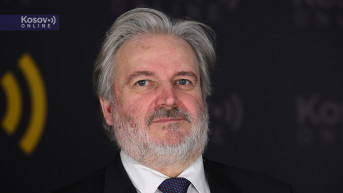
Writing for Kosovo Online: Dragan Bisenic
When it seemed that the announced abolition of the dinar as a means of payment in Kosovo would reopen yet another crisis, it appears that the timely response of the 'five' countries has come.
The Embassies of France, Germany, Italy, the United Kingdom, and the United States have called for the repeal of this regulation.
The Embassies stated that they were concerned about the impact of the regulation on schools and hospitals, for which there was no other alternative funding method. It is emphasized that the regulation will have a direct impact on the daily lives of the vast majority of Kosovo Serbs who receive payments and financial aid from Serbia. The ambassadors of the 'five' announced that they discussed this issue with Kosovo Prime Minister Albin Kurti on Friday and requested the suspension of the implementation of this regulation 'to allow a sufficiently long transition period, as well as clear and effective public communication on this matter'.
In addition, it is stated that 'this issue should be further discussed within the framework of the dialogue mediated by the EU', as announced a few days ago by a representative of the European Union.
Although at first glance, this move sounds reasonable and promises to meet the demands, several elements indicate that we may be at the beginning of a new crisis, similar to those seen several times before on various issues that were similar in nature to this one.
After the meeting of the ambassadors of the 'five' with the Kosovo Prime Minister, it was announced from the Pristina side that Prime Minister Kurti called on the representatives of the 'five' to respect the regulation. During the meeting, he emphasized the importance of respecting constitutionality and legality in the country by everyone and at the same time respecting independent institutions, in this case, the Central Bank.
According to the decision of the Central Bank of Kosovo, dinars can now only be held in bank accounts or exchanged for euros. For this decision, it referred to the definition in the Constitution of Kosovo for the 'single currency' as a valid means of payment. Kosovo's Deputy Prime Minister Besnik Bislimi, who is also the chief negotiator for Kosovo, after a meeting with the Czech Minister for European Affairs, Martin Dvorak, said that the Constitution was 'a law that must be applied' or 'we treat it selectively'.
Even the first look at both statements indicates that there was no agreement on how to proceed with this measure during the meeting, and the Kosovo side remained firm in its stance. The fact that the statement of the “five“ was delayed two days behind the statement of the Kosovo Government could be explained, perhaps, by the time needed to coordinate the stance of the 'five' or the fact that it was a weekend when European institutions do not work.
However, what both sides entered into this dialogue with seems to indicate another complication and hindrance to the overall process of dialogue and normalization of relations in Kosovo.
The mediators in the dialogue between Belgrade and Pristina assessed the beginning of the year optimistically. European mediator Miroslav Lajcak, after the dialogue on the Western Balkans in Davos, stated that there was 'momentum', while the US Deputy Secretary of State James O'Brien said there had been 'progress' in recent months. “During the traditional Diplomatic Dialogue of the Western Balkans, we talked about expectations and priorities in the region and the European Union regarding enlargement. As a co-moderator, I shared my observation that, although there is noticeable enthusiasm from our Eastern partners, it encounters skepticism from the Western Balkans. The current momentum for enlargement is real, but, as we are well aware, in politics, momentum never lasts forever. Therefore, the crucial question now is whether we will succeed in transforming this momentum into a new quality of enlargement or whether we will lose it altogether,“ Lajcak stated.
US Deputy Secretary of State James O'Brien assessed that “there has been progress in recent months when it comes to everyday issues, such as license plates and customs documents, allowing freedom of movement“.
Of course, the task of the mediators directly involved in the dialogue is to observe and support every sign of a positive trend in the relations between the two sides. Some steps have indeed been taken, but they were primarily the result of Serbia's cooperation. When it comes to what Pristina should fulfill, things already stand differently.
In that regard, it could be said that the process has been rolled back and is frozen in that state. What should be corrected and returned to its original state is progressing very slowly or not at all. The holding of elections again in northern Kosovo is still very distant, although it was clear when those elections were held that their results and legitimacy could not be confirmed. Petitions have been signed, but their fate is uncertain. All of this is just another pressure instrument on the Serbian community, without much consideration for how international actors deeply involved from the beginning will react to finding a solution to the Kosovo issue. Let’s recall that Pristina insisted that this issue must be resolved in accordance with the Constitution, as it is proof that the Serbs in Kosovo respect only the Kosovo Constitution and that evidence of loyalty is sought, but not paths of real dialogue and improvement of relations between the two communities. If the latter were the case, a shorter and simpler path would be chosen, and political processes would not be left to judges.
At the beginning of the month, James O'Brien called for avoiding provocations. As soon as he finished the sentence, the Government of Kosovo announced that from February 1, the dinar would no longer be a means of payment in Kosovo, but it would be the euro. Salaries are paid in dinars to employees in Serbian institutions, as well as pensions in the Serbian system, and child benefits or social assistance. Also, dinars are used in Serbian communities in retail stores, while in municipalities with a Serbian majority in northern Kosovo, prices are displayed in dinars. The Serbs in Kosovo perceived this measure as an attempt to be expelled 'without the use of weapons'.
This decision may not have been entirely unknown to everyone, as before New Year's, some Belgrade banks operating in the north announced the closure of their branches. The only banking institution still operating in northern Kosovo is the Postal Savings Bank, but it is under great pressure to suspend its operations.
The State Department called on Kosovo to reconsider the decision of the Central Bank to suspend the dinar in payment transactions, expressing concern that the regulation adopted on December 27 would negatively affect the Serbian community in Kosovo. The US Embassy in Pristina also urged the Kosovo Government to reconsider this decision.
"We call on the Government of Kosovo to reconsider this decision, consult with the affected communities, respond to the concerns expressed by the international community, and provide enough time to implement decisions to mitigate the impact on its citizens," the spokesperson for the US Embassy in Pristina said in a written statement.
The US has repeatedly warned the authorities in Pristina not to take unilateral actions, and to consult those affected by specific decisions or those that will be affected by those decisions. Instead, Pristina prefers an authoritative style accompanied by police actions, from occupying municipal buildings to removing billboards. The damage from such actions is not only directed at what was the pretext but extends beyond political issues, contributing to deepening the already almost absolute lack of trust.
The reaction of the European Union seemed visibly different. No individual calls to Pristina to reconsider, postpone, or repeal this essentially unnecessary decision had arrived before the "five" statement. The European Union only called on the authorities in Kosovo to "clarify the decision" to ban the use of the dinar, and EU spokesperson Peter Stano asked Pristina and Belgrade to "resolve open issues within the framework of the Brussels dialogue". It is striking that Miroslav Lajcak remained silent about this measure. Even the ambassadors of European countries did not demonstrate any dissatisfaction with Pristina's move in talks with representatives of Serbia. It seems that things changed significantly only after the State Department's reaction.
There were opportunities and a need for European countries to at least indicate how such a style, if nothing else, damages the dialogue they are leading. All this was happening simultaneously with the meeting of Western Balkan leaders in Skopje, where there was a desire to create a common regional market and four freedoms of movement. It is needless to say such a decision goes against the spirit of efforts to establish networks of economic and political cooperation in the Western Balkans, which will be essential for everyone in future mutual relations and relations with the EU and the US. In Skopje, an agreement within the Open Balkan framework on an open labor market was signed between Serbia, Albania, and North Macedonia, which would come into effect from March 1. This is a step toward creating a common regional market. The European Union envisaged the distribution of funds from the Western Balkans Growth Facility to start this spring, but all countries will need to adopt appropriate laws for this.
The European Union recently approved visa liberalization for Kosovo, treating Kosovo as an independent state, while Serbia made a concession to this measure by allowing vehicles with Kosovo registrations to move freely through its territory.
Essentially, this is a form of denial and unwillingness to form the Community of Serb-majority Municipalities. As envisaged, the Community of Serb-majority Municipalities could have direct relations with Belgrade and receive financial aid directly from Belgrade. This has also been a stumbling block in talks with Pristina, which insisted that all financial transactions go through Pristina institutions. Anything that distances the Community of Serb-majority Municipalities from reality also distances any possibility of reaching an agreement.
If Kosovo authorities, in line with their statement, again call for unquestionable respect for the constitution, then the "dinar issue" will become another open crisis.


comments