
Gogic: Diaspora was Kurti’s “golden vote”; PDK seeking to attract some of those voters
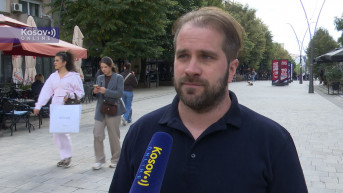
Political scientist Ognjen Gogic said that the diaspora had been an important source of support for Self-Determination leader Albin Kurti in the previous two election cycles and that its influence had been particularly pronounced because of relatively low turnout among the local population. He added that, for now, there were no indications that this could change despite the conviction of the KLA leaders in The Hague.
Gogic recalled that, at the end of December last year, large numbers of members of the Albanian diaspora had traveled to Kosovo for the holidays and that some had used their stay to vote for Kurti.
“The diaspora was the golden vote for Kurti in the previous two election cycles. In December, the diaspora gave Kurti a huge, convincing victory. In June this year, it did not come to Kosovo in such large numbers, but it sent its support from abroad, either by voting at diplomatic and consular missions or by mail,” Gogic told Kosovo Online.
He said that, although the number of diaspora voters in June had been lower than during the holiday period, when large numbers of people traveled to Kosovo, their significance had once again been disproportionately high because of low turnout among the local population.
“When the diaspora votes were counted in June, Kurti’s support and his relative strength compared with the other parties increased, so in the end the diaspora enabled him to form a government on his own, together with the minority parties. Before that, it had been believed that he would not be able to form a government without another Albanian party,” Gogic said.
According to him, diaspora support for Kurti was not limited to the holiday period, as the June elections had also demonstrated.
“If elections are held in November, which is not a time of year when the diaspora comes to Kosovo in large numbers, it can still support Kurti by voting by mail or through diplomatic missions. Kurti’s campaign therefore counts on the diaspora in any case,” Gogic assessed.
He added that it was possible that the diaspora would once again be more interested in voting than the local population, which, in his assessment, was more disillusioned and apathetic toward political processes.
Speaking about the impact of the Kosovo Specialist Chambers’ judgment in The Hague on the relationship between Kurti and the diaspora, Gogic said there were currently no indications that the judgment had negatively affected the support the Kosovo Prime Minister enjoyed among Albanians abroad.
“For now, there are no indications that this judgment has harmed Kurti in any way when it comes to the diaspora. The diaspora is holding protests in various countries, but they are directed against the judgment and against the governments of those countries, which are believed to have supported the work of the Specialist Chambers. So far, criticism of Kurti’s government has not been heard to the same extent from the diaspora,” Gogic said.
He pointed to a distinction between diaspora protests abroad and those taking place in Kosovo, noting that demonstrations in Pristina and other cities also had an anti-government dimension.
“The protests taking place in Kosovo, in Pristina and other cities, are simultaneously protests against the judgment and against the Specialist Chambers in The Hague, but they also have an anti-government connotation because the Kosovo Government is being criticized for not having done enough to prevent such an outcome. We have not seen that in the diaspora so far,” Gogic said.
According to him, the question remains open as to whether, in the event of new elections, the Hague judgment could generate greater solidarity among the diaspora with the Democratic Party of Kosovo (PDK), and whether support for the party’s former leader Hashim Thaci and the other convicted KLA leaders could influence the voting preferences of some members of the diaspora.
“If, for example, new elections are held, could this judgment create a degree of solidarity with the PDK among the diaspora, leading the diaspora to shift toward the PDK out of solidarity with Thaci and the other leaders? That is the question now. We will see,” Gogic said.
He stressed that Kurti still had arguments with which to respond to any criticism from the diaspora concerning the judgment, recalling his previous position on the Specialist Chambers.
“Kurti has repeatedly said that he was always opposed to the Specialist Chambers. He voted against establishing the Court in the first place and against its operation, so the diaspora cannot accuse him of having contributed in any way to the outcome with which they are dissatisfied,” Gogic said.
Nevertheless, he assessed that the question remained whether the PDK could mobilize support, both in Kosovo and among the diaspora, by using the judgment and dissatisfaction with it as a basis for political support.
“The major question is whether the PDK can mobilize electoral support on the basis of that dissatisfaction and channel it toward itself. We will only see that when the elections are held,” Gogic concluded.



0 comments