
How do I see your freedom of movement?
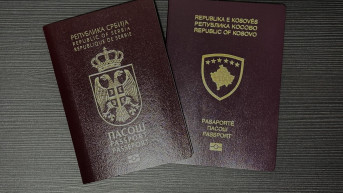
The entry of Serbia into the Schengen white list in 2009 was welcomed with celebration and relief in Belgrade. It meant the freedom to travel through Europe, an end to nightmares of long queues and harassment at the thresholds of consulates – so that citizens with Serbian passports could finally feel like humans.
While politicians triumphantly waved the decision that came at the end of a long process of fulfilling the famous "roadmap", few noticed in that enthusiasm the simple fact that citizens living in Kosovo with Serbian passports would still not be able to travel without visas.
The media paid little attention to this issue, and even today, 13 years later, if you conduct a survey on Knez Mihailova Street, few would know that there are Serbian passports issued by the Coordination Directorate and that these are travel documents with different visa status.
From then until now, this humiliating visa ordeal equally applies to everyone in Kosovo, the Albanians as well as the Serbs, whether with a coordinating Serbian or a Kosovo passport. The difference is that with a Kosovo passport in Pristina, at least you know where you can apply for and obtain a visa, but with a coordinating Serbian passport, embassies don't know what to do with you. Experiences vary, from being encouraged in the embassy to obtain a Kosovo passport to being shrugged off or being directed to Belgrade or Skopje for a visa.
As Serbian passports entered the "Europe without borders" in 2010, politicians in Pristina began making promises, and Albanian-language media began speculating on when and how this opportunity would reach Kosovo.
The then-daily newspaper "Zeri" gave the most optimistic forecasts. While their states blocked the process, foreign ambassadors in Pristina, quoted by them, knew how to "wink" with empty promises, with the obvious goal of retaining the "good privileges" of their diplomatic stay.
Regardless of the media headlines, diplomats, and politicians, those living in the Balkans know very well how much they have lost in life to dangerous and painfully deceptive trades with false expectations and hope. Thus, the demand for Serbian passports, and those without visas, reached unprecedented levels.
The media were full of headlines about Kosovo Albanians buying apartments or registering addresses in Nis to obtain a Serbian visa-free passport.
From that time, I remember talking to the then British Ambassador, Andy Sparks, who, when asked when the visa-free regime could reach Pristina, said, "Don't quote me, but in ten years, maybe not even then". It turned out that this forecast is correct, but not because of the British, who are not a part of the Schengen cooperation, but because of countries like France, Belgium, and the Netherlands, which were the most reluctant to give the "green light", among others.
In the final stretch, when counting down to the Kosovo passport without a visa, the European Commission remembered that even citizens who still receive passports from the Coordination Directorate of the Ministry of Internal Affairs of the Republic of Serbia have the right to the scent of Europe.
Tragically, in record time – as many as 21 civil society organizations of Kosovo Albanians in Kosovo have dismissed the proposal to the European Commissioner for Internal Affairs, Ylva Johansson, demanding its withdrawal.
They claim that this will "seriously challenge the progress in the integration of Serbian citizens in Kosovo by providing Kosovo documents" and "encourage and motivate criminal structures operating in the northern part of Kosovo to continue threatening and intimidating Serbian citizens of Kosovo who intend to integrate into the social and political life of the country".
Even more tragically, the signatories of the letter are those who have received foreign support for years as prominent fighters for human rights and against discrimination: Group for Legal and Political Studies, Kosovo Institute for European Policy, Kosovo Institute for Law, COHU, Institute for Development Policy, Kosovo Institute for Democracy, Kosovo Center for Gender Studies, Pristina Institute for Political Studies, FOL Movement, Democracy Plus, Kosovo Women's Network, Kosovo Stability Initiative, GAP Institute, Democracy for Development, Progress Initiative, Kosovo Center for Security Studies, Community Development Fund, Organization for the Advancement of Quality Education, and Germin.
At the forefront of the list is the renowned KCSF – Kosovar Civil Society Foundation, which prides itself on awarding grants to others and supporting the development of civil society and initiatives promoting the culture of democracy with a special focus on EU integration, and DokuFest, a well-known international documentary and short film festival held annually in Prizren, also with strong support from foreign embassies.
"We react with great disbelief and disappointment. This is symptomatic of the growing gap between communities and the constant narrowing of the space for any kind of social dialogue, including among the most progressive parts of society", Serbian NGOs in Kosovo responded.
They explained that the Coordination Directorate had been established by the Ministry of Internal Affairs of Serbia in 2009 precisely at the request of the European Commission so that the visa-free regime would not apply to Serbian citizens living in Kosovo.
Serbian NGOs highlighted several important facts.
Firstly, the Kosovo Citizenship Law allows dual citizenship, and many citizens of Kosovo, not just Kosovo Serbs, hold Serbian citizenship.
Furthermore, obtaining a passport is impossible without an ID card, and many Kosovo Serbs, due to the non-recognition of the Serbian civil registry (birth, death, and marriage) as well as the non-recognition of court decisions, cannot be registered in the civil registries of Kosovo. Therefore, even though they live there, Kosovo institutions will not issue documents to them.
They added that Albanian NGOs had been raising their voices against the unjust isolation of Kosovo citizens for more than a decade and are now calling for the "isolation of a small number of people who either want to maintain their status as displaced persons in Serbia or cannot obtain Kosovo citizenship".
The signatories of this statement are: New Social Initiative NSI, Institute for Territorial Economic Development InTER, Aktiv, Advocacy Center for Democratic Culture ACDC, Communication for Social Development CSD, Avenija, Center for Social Initiatives CSI, Black and White World CBS, Center for Affirmative Social Action CASA, Center for Peace and Tolerance CPT, Alternative Cultural Center Gracanica, Santa Maria, Youth Partisan Activity, Institute for Public Research IJI, Network for Civic Activism, Kim Radio.
Kosovo has about 1.8 million inhabitants, and for decades, the most important political topic has been the relationship with official Belgrade and the Serbs. Alpha and omega, are the beginning and end of every political broadcast on every television channel in Pristina.
Paradoxically, the Albanian-speaking public is not informed and serious issues facing the Serbian community are not seriously addressed. Albanian-language media do not provide space for it. The same media that Kosovo President Vjosa Osmani recently praised for having "a central role in achieving independence", but apparently not in promoting human rights for all communities.
The problems are indeed mentioned at meetings and conferences attended by representatives of the Serbian and Albanian non-governmental sectors and journalists. However, for human rights activists, these issues remain confined within four walls. Like the influential Kosovo Foundation for Open Society, which initiated writing to the European Commission and is an organization that convincingly receives the most donor money and controls its distribution. Therefore, foreign embassies trust KCSF so much that with a stroke of a pen, it has the power to decide whether a Serbian partner, i.e., a small Serbian non-governmental organization, will financially survive.
With the aim of overcoming this information gap, the Peaceful Changes Initiative (PCI) based in London launched a project three years ago that aimed to have Albanian-language editorial teams write about the Serbs, and Serbian-language editorial teams write about the Albanians. In a complicated atmosphere, the project pushed through two years and produced several award-winning articles. However, this third one is no longer available.
At the end of the visa saga, Albanian non-governmental organizations accused their Serbian community colleagues of inaccurately representing the facts regarding passports issued by the Coordination Directorate and stated that all organizations had been founded, registered, and operated in Kosovo.
They also announced that they would invite their colleagues from Serbian non-governmental organizations to a joint meeting to openly discuss all contentious issues, but this meeting has not taken place yet. It was planned for December 20, but there is still no agreement on the Serbian NGOs' proposal to make the meeting public with the presence of the media.
In early November, another multimedia exhibition with the symbolic title "How Do I See You?" was opened in Belgrade. This exhibition represents the culmination of a multi-year cultural exchange project for young Serbs and Albanians conducted by the Fond B92 and the film festivals Free Zone from Belgrade and Dokufest from Prizren.
The main part of the exhibition consists of video interviews with young participants of the cultural exchange camp in Prizren, where they talk about how this experience led them to reconsider their attitudes and the way they perceive each other. Although DokuFest in Belgrade told one story that day, an honest answer to the question "How do I see you?" was given a week later when they signed a letter addressed to the European Commission.
Written by: Jelena L. Petkovic
comments