
Kurti is testing the US authority to the very end on the bridge; 'convinced' them about the CSM
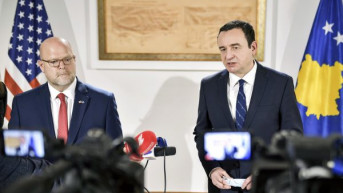
It has been more than a year since Gabriel Escobar warned that the Community of Serb Municipalities (CSM) would be formed with or without Kurti. In the meantime, many things have been overlooked, and that is why Kurti now believes that his persistence and arrogance will ultimately prevail regarding the bridge over the Ibar.
Prepared by: Milos Garic
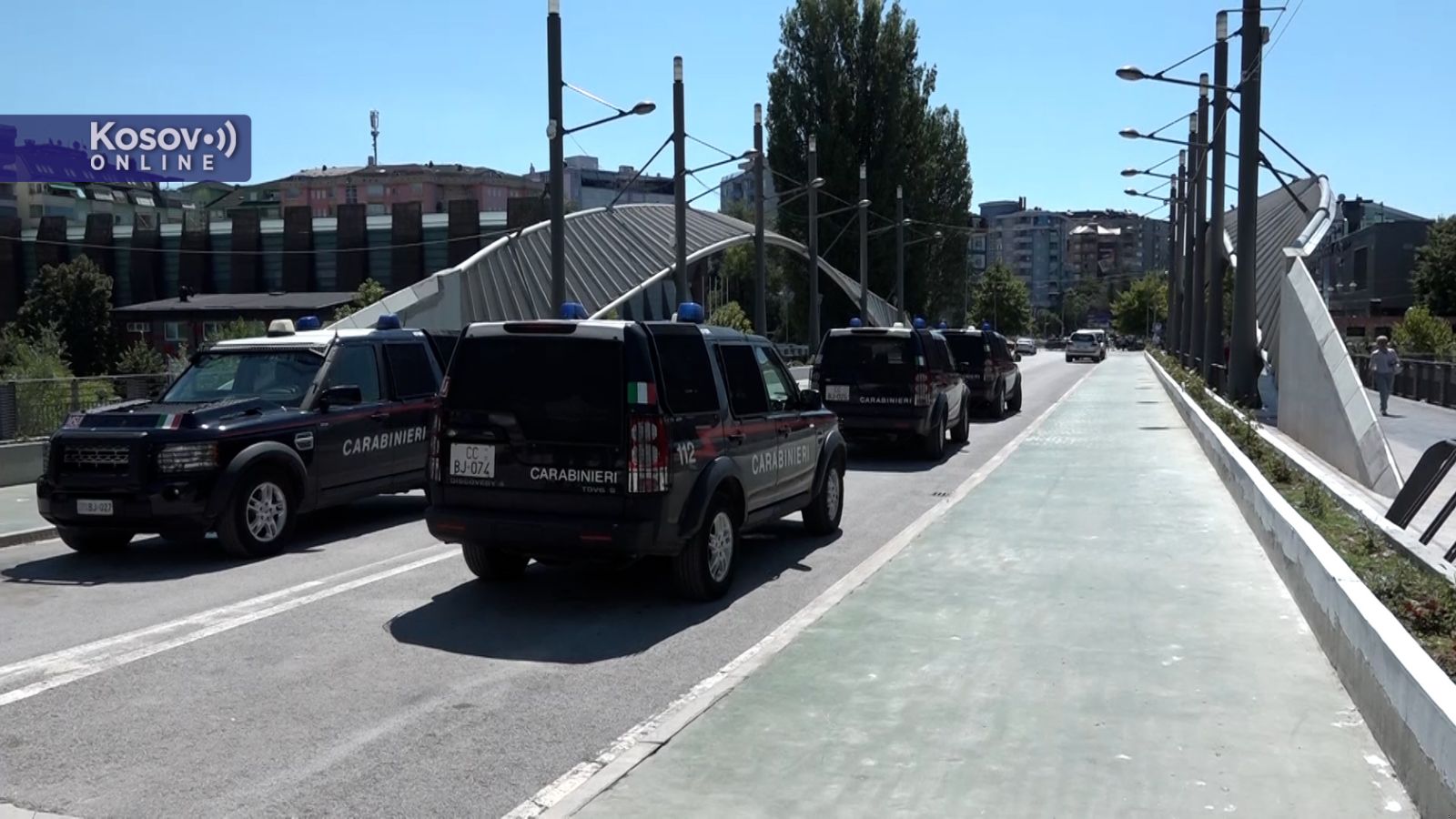
At a moment when enormous tension is rising in northern Kosovo due to Albin Kurti's government's intent to open the main bridge over the Ibar between South and North Mitrovica for traffic, despite all appeals and existing agreements, a significant part of the Albanian public, particularly the most extreme elements, hopes that their leader will remain steadfast in his stance, regardless of the consequences this may produce. At the same time, the Serbian side relies on KFOR and their determination to prevent Kurti's plan, while political observers, in addition to expressing concern, are also showing a degree of confusion over the expressed resolve of the Kosovo authorities to directly confront international representatives on the issue of the bridge.
It is not easy to explain the exact logic guiding Kurti, but from all his previous actions against the interests of peace and the normalization of life in areas predominantly inhabited by Serbs, it can be concluded that, aside from the desire to maximally mobilize and satisfy his voters ahead of the elections, the main goals of the Kosovo Prime Minister are constant pressure on the Serbian community with the aim of their expulsion, the practical nullification of the obligation to form the Community of Serb Municipalities, and consequently, putting additional pressure on official Belgrade both domestically and internationally.
Therefore, Kurti’s idea is not about creating conditions for a normal coexistence of Serbs and Albanians, free movement of people, and other phrases he repeats daily. It seems that even the U.S. Embassy in Pristina, which has been the main supporter of all the desires of the Kosovo authorities for the past 25 years, has finally realized this. Accustomed to such privileged treatment, extreme Albanian politicians, led by Kurti, now believe that Washington will yield to their insistence on opening the bridge.
However, U.S. Ambassador Jeffrey Hovenier made a perhaps crucial statement, indicating that there is a real risk related to the opening of the bridge in Mitrovica at this moment, which could affect not only the local community but also the security of NATO soldiers, including American soldiers.
"We hope that the Government of Kosovo will listen and take these concerns into account. Kosovo says it is our partner. Kosovo tells us it is the country with the most pronounced pro-American stance in the world. Therefore, I hope that the country with the most pronounced pro-American stance in the world will heed the specific requests of the United States government," Hovenier issued the most direct warning from the U.S. to Kurti so far.
Washington's Move
Will the USA pass the test of its own authority set by Albin Kurti, and what will happen afterward? We will see in the coming days, but what has been clear for a long time, and what has become even more evident during the current crisis over the bridge, is that the formation of the Community of Serb Municipalities (CSM), which was envisioned as a framework for protecting the rights of Serbs from Pristina's encroachments, lies solely in the decision and intent of the U.S. administration to implement it. Will this happen, and when? Only Washington can answer this question.
Diplomat Zoran Milivojevic does not believe that the USA will force Pristina to implement the formation of the CSM according to the original format of the Brussels Agreement.
"If the USA does exert pressure to form the CSM, it will be according to the goals and interests proclaimed by Pristina—as an informal group, a non-governmental organization without powers, something that has no impact and does not align with what was agreed upon and signed in the 2013 Brussels Agreement. That's one thing. Another thing is that with these measures taken by Kurti, the CSM is being rendered meaningless in a substantial sense. All these elements he is disputing, while simultaneously eliminating Serbia's presence in Kosovo, are fundamental to the CSM. If after the bridge, he opens the issues of health care and education, then the formation of the CSM is nullified, and at some point, it can be considered that there are no elements for its establishment simply because the factual situation on the ground is different since the Pristina authorities have taken over all those competencies and jurisdictions that the CSM was supposed to have," Milivojevic points out for Kontekst.
Milivojevic believes that the nullification of the Community of Serb Municipalities (CSM) is a key reason for the behavior of the current Kosovo Prime Minister, as well as a key interest of the West.
"They want to render the CSM meaningless and to raise the issue of its formation outside of what was outlined in the Brussels Agreement of 2013 and 2015. That's the essence of the story. Accordingly, the U.S. will exert pressure on Pristina to form the CSM only if the dialogue is jeopardized and if the situation on the ground gets out of control, but not in the manner outlined by the agreements from 2013, rather in a way that would confirm Kosovo's independence. That means without influence and without mechanisms that fully protect Serbian interests," Milivojevic asserts.
According to him, the CSM is currently not even a topic in the USA, given that the presidential election campaign is underway.
"It is possible that they will address this after the elections. The raising of this issue depends on two things. It depends on internal developments in Kosovo itself; if they manage to challenge the majority that Kurti holds in the next elections and thereby resolve the issue of Kurti, then this issue could become more relevant. If not, it is uncertain when the CSM might be formed. They might expedite this process if it becomes necessary to maintain some stability and to further pressure Serbia for additional concessions. There is no other reason; they haven't exerted pressure to form the CSM so far. It's clear that the dialogue is dead, and the CSM, which was the preceding issue, is being ignored. Therefore, I don't think this is likely to happen anytime soon, least of all in a way that aligns with Serbian interests," Milivojevic concluded.
"The Last Move Mechanism"
Historian and political analyst Ognjen Karanovic emphasizes that Albin Kurti has no say in whether or not to approve the Community of Serb Municipalities, as it is established in the Brussels Agreement and clearly formulated there.
"It is well known what the CSM is supposed to represent. The United States is not against that institution, as long as it does not entail the status enjoyed by the Republika Srpska. Now, even that might not be a problem for the U.S., which is definitively the mentor and creator of the false state on the territory of Serbia’s southern province, if Pristina were to become a full-fledged member of the international community, that is, if it were to achieve true independence and statehood, which it does not have. Then, some sort of internal organization in the southern Serbian province could be tolerated by the U.S. in accordance with the Brussels Agreements," explains Ognjen Karanovic.
He pointed out that the issue of the Community of Serb Municipalities is being used by the political West and Pristina's institutions as a "last move mechanism."
"Therefore, if Belgrade recognizes the false independence and the false state in the southern Serbian province, then they will form the Community of Serb Municipalities, thereby rendering the Brussels Agreement and the entire dialogue, which has been fruitlessly ongoing, meaningless. This, of course, is not due to Belgrade's fault or irresponsibility, but due to the fault of the West and Pristina over the past 15 years. The Community of Serb Municipalities truly represents an institutional framework that would allow, or could allow, the Serbian people in Kosovo and Metohija, in those ten municipalities where they constitute a majority, protection and direct institutional connection with Belgrade, with the state of Serbia, as well as the maintenance of Kosovo and Metohija as part of the Republic of Serbia, in accordance with international public law, United Nations regulations, and, of course, in line with the Constitution and will of Serbia. Now, how the political West or the Albanian terrorists and separatists from Pristina view this is a completely different matter, which is well known to us," Karanovic notes.
Therefore, Kurti is doing everything he can to avoid the possibility that Serbs remain in Kosovo and Metohija with any autonomous rights.
"Let's not have any illusions. Kosovo and Metohija is perhaps the last ghetto for a particular national community, in this case for Serbs, in Europe. Even in Ukraine, regardless of whether we are talking about Ukrainians, Russians, or other peoples living there, we cannot say, despite the wartime circumstances, that any national community there is in some sort of ghetto. Of course, we are speaking within the coordinates of the wartime situation, but in Kosovo and Metohija, there is no state of war. However, over the past 20 years, we know that it is a camp for Serbs. And only they know how they live there. Of course, the state of Serbia is the only one that can help them and that is helping them. Thanks to the wise statesmanship of President Aleksandar Vucic, who protects and preserves the integrity of Serbia in Kosovo and Metohija, and Serbia's sovereignty, but also the Serbian people, their physical and biological survival in Kosovo and Metohija, which has been absolutely threatened in recent years by Albin Kurti's terrorist actions," Karanovic concludes.

comments