
Messages from the 17th BRICS Summit in Rio: Calls for reform and warnings of global divisions
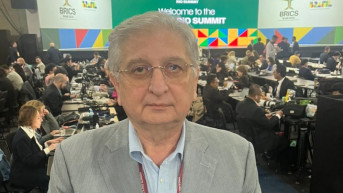
Written by: Zeljko Sajn, special correspondent of Politika from Rio de Janeiro – for Kosovo Online
The 17th BRICS Summit, the first since the organization’s formal expansion to 11 member states, was held at a time when the international order is undergoing rapid and profound changes. It served as a platform for clear messages about the urgent need to reform key global institutions and highlighted the potential weakening of traditional military-political alliances such as NATO and the European Union, should they fail to adapt to new global realities.
Attending press conferences from the front row, I witnessed key assessments of the state of international relations. The most significant and provocative speech came from Sergei Lavrov, the Foreign Minister of the Russian Federation, whose words pointed clearly to internal tensions within NATO and the need for deep reforms in the global order.
Speaking in a calm, irony-free, and strictly diplomatic tone, Lavrov forecast internal turmoil within the North Atlantic Alliance, using a striking metaphor:
“Within NATO, disagreements are deepening. A mild mutiny is brewing on the ‘ship,’ as more countries are choosing to follow their own national interests instead of ideological guidelines imposed by the ‘captain.’”
This metaphor of a ship sailing into a storm reminded many present of the historical moment in 1989 when Mikhail Gorbachev, aboard a ship anchored off Malta, announced the dissolution of the Warsaw Pact. The parallel was clear: if NATO fails to find mechanisms to reconcile internal differences, it may follow the path of its former adversary.
Lavrov also alluded to the growing tension between European allies and the United States, especially regarding strategy on Ukraine and the EU’s pursuit of strategic autonomy. It was evident that he sought to underscore the fragile cohesion within Western alliances, especially in light of potential political shifts in Washington after the upcoming elections.
While Lavrov did not explicitly predict the collapse of NATO or the EU, he emphasized that without serious reform, they risk losing cohesion and functionality. He implied that the EU, too, could face a crisis if it continues to insist on ideological unity, ignoring the increasing pluralism of political interests among its members.
Though some in the West may interpret these remarks as propaganda aimed at destabilization, Lavrov maintained a diplomatic register, leaving room for discussion on whether NATO and the EU can adapt to a world where single-power dominance is no longer viable.
On the other hand, the 17th BRICS Summit left no ambiguity regarding the organization’s self-perception: BRICS is not a military alliance, nor does it seek to become a political bloc that threatens others. Despite lacking a formal statute or permanent secretariat, the leaders’ meetings demonstrate a growing level of coordination—particularly in economic matters. From following the discussions, I got the impression that this very structure is BRICS’s greatest strength: flexibility, mutual respect, and balanced relations without hegemonic ambitions.
Plenary sessions were naturally dominated by the crises in Ukraine and the Middle East. Speeches were carefully measured—avoiding open confrontation with the West, while demonstrating increasing understanding of Russia’s security arguments. Lavrov noted the emergence of a “more objective analysis of the root causes of the crisis,” which includes criticism of NATO’s eastward expansion and what he described as “the construction of a military machine along Russia’s borders.”
A central part of the summit was the discussion on reforming the United Nations—a long-standing topic in diplomatic circles that until now has yielded few concrete outcomes. This time, according to Lavrov, the debate on Security Council reform was more serious than ever, focusing on expansion and greater representation for Asia, Africa, and Latin America. From a journalistic standpoint, it was evident how seriously the BRICS members were engaging with the issue, highlighting the growing disconnect between the outdated order shaped by Cold War victors and the reality of a world where the Global South comprises the majority of the population and an increasing share of the global economy.
The summit in Rio was also marked by a strong message from UN Secretary-General António Guterres. Addressing BRICS leaders, Guterres described the UN, the Security Council, and global financial institutions as “designed for a world that no longer exists, based on former power dynamics.” He stressed that deep reforms are essential to building a fairer global order.
Guterres also warned that the world is facing increasingly serious crises that threaten humanity—climate change, environmental degradation, and weakening capacities to meet sustainable development goals.
He especially emphasized that the poor and vulnerable bear the highest cost of these disruptions.
In a rapidly changing world, Guterres didn’t miss the chance to address the revolution of artificial intelligence. In a special speech on multilateralism and technological transformation, he called for reducing risks and maximizing the potential of AI technologies—ensuring that artificial intelligence benefits all, not just a privileged few.
“Artificial intelligence cannot become a club for the few,” he warned, urging that developing countries be included equally in shaping global rules. This is a particularly relevant topic for BRICS, considering that some members—especially China and India—are heavily investing in AI development, while others seek to avoid new forms of digital dependency and inequality.
Guterres concluded his address by emphasizing the importance of cooperation and trust:
“At a time when multilateralism is being undermined, let us remind the world that cooperation is humanity’s greatest innovation,” he said, calling for a joint response to the challenges of the modern world:
“Let us rise to this challenge—by reforming and modernizing multilateralism, including the UN and all systems and institutions, so they work for everyone, everywhere.”
The summit in Rio was the first in its expanded format, following the admission of Egypt, Ethiopia, Iran, Saudi Arabia, and the UAE. The group now includes eleven countries, together representing more than half of the world’s population and roughly a third of global GDP. Despite this, BRICS remains without centralized structures or a command hierarchy—serving as a model of cooperation without hegemonism. India will assume the presidency in 2026, having already positioned itself as a potential mediator between divergent interests within BRICS, and as a promoter of a balanced approach to global issues.
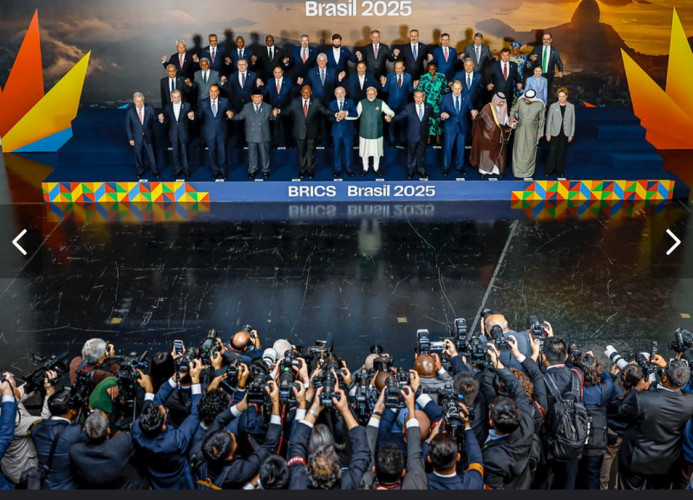
The 17th BRICS Summit did not answer all the questions about the future of a multipolar world, but it clearly showed that old models of power are losing legitimacy, while foundations are being laid for a new, sustainable international order. Lavrov delivered a provocative message about NATO and the EU standing at a crossroads between reform and disintegration. Guterres appealed to all—both BRICS and the West—to redefine multilateralism and the United Nations so that they genuinely reflect the interests of all, not just the privileged few.
The 17th BRICS Summit in Rio reminded us of the fundamental dilemma of the 21st century: Will the international system evolve toward a more just and inclusive order, or will it fragment into competing blocs and unstable alliances? Whether BRICS will manage to position itself as the platform that tips the balance in favor of the former—or be forced to transform itself—remains an open question. One thing is certain: as Ian Hamilton Finlay once said, “You cannot step into the same revolution twice.”


0 comments