
Ibar Bridge poised to open: KFOR withdrawing, questions over security of Serbs remain
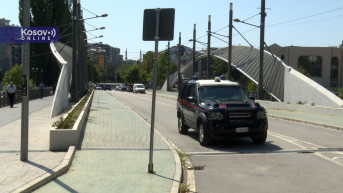
The announced opening of the main Ibar Bridge between North and South Mitrovica has raised questions over whether the security and political conditions for its opening have been met, as well as over the roles of the European Union, KFOR, and EULEX. While the EU says that decisions must take into account the interests and concerns of all communities, Kosovo Online's interlocutors and experts familiar with the situation point to a number of contentious issues—from security assessments and the responsibility of international actors to political conditions, consultations with the local community, and potential consequences.
Written by: Jovana Jovanovic
The European Union's position on the Ibar Bridge has always been clear and guided by the need to ensure that it serves all the communities and municipalities it connects and contributes to cooperation and good relations among them, an EU spokesperson told Kosovo Online.
"All decisions concerning the bridge should take into account the interests and concerns of all communities. As part of Kosovo's three-tier security response mechanism, the European Union Rule of Law Mission in Kosovo (EULEX) was duly informed by KFOR of the gradual transition of its permanent presence," the spokesperson said, adding that the Mission would continue its close cooperation with the Kosovo Police and KFOR to ensure adequate security for all communities throughout Kosovo.
These positions were subsequently reiterated by European Commission spokesperson Anitta Hipper while answering journalists' questions at today's regular press briefing at EU headquarters.
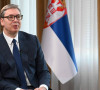
Serbian President Aleksandar Vucic also reacted, announcing today that he would write to NATO Secretary General Mark Rutte and appeal for the Ibar Bridge not to be opened to traffic, adding that the process was being carried out without the consent of North Mitrovica Mayor Milan Radojevic.
"The Turk, the KFOR commander, is doing this. I will write to Mark Rutte today. I hope he will respond to my letter and accept my request that this not be done. I will do that today or tomorrow. For me, this is a great disgrace and disappointment. It tells us that nervousness has set in among them; they do not know how to force Serbia to accept an independent Kosovo. A people is being harassed every day and driven from their homes. We will see what their response will be," Vucic said.
Who prepared that analysis?
The Serb List sent an open letter to the European Union Office in Pristina the previous day regarding an earlier statement from Brussels to Gazeta Express saying that the conditions had been met for opening the main Ibar Bridge between North and South Mitrovica. In the open letter, the Serb List expressed disappointment and requested clear and unequivocal answers from the European Union to questions directly concerning the security of the Serbian people.
"On the basis of which specific security analysis did the European Union conclude that the conditions for opening the bridge had been met? Who prepared that analysis, when was it drawn up, and which security parameters were taken into account, bearing in mind the dozens of meetings at which we provided you with detailed information about violations of the rights of the Serbian people?" the letter stated.
The Serb List specifically requested an answer as to how it was possible to assess that the security of Serbs could be guaranteed by relying on the Kosovo Police, given what it described as numerous serious allegations and complaints concerning the conduct of its officers toward Serbs, including allegations of mistreatment, excessive use of force, and violations of procedures and service regulations. It stressed that people's security must not become the subject of a political experiment.
"We expect accountability from the European Union, not statements of concern after the fact. We expect issues arising from the Dialogue to be resolved through dialogue, not unilateral decisions, and the security of the Serbian people to take precedence over day-to-day political interests," the Serb List stated.
"Irresponsible policy of Western representatives"
Journalist Milos Garic told Kosovo Online that the European Union, KFOR, and EULEX were shirking responsibility over the opening of the Ibar Bridge, as they maintained that the security situation was conducive to its opening even though, he said, this was by no means the case on the ground. Garic believes that the situation is unfolding on two dangerous levels.
"The first is Albin Kurti's objective of completely breaking Serbian resistance and sending a message to his own public that the takeover of northern Kosovo and Metohija is a fait accompli and that the Serbs are incapable of resisting him. That is what keeps him in power and gives him popularity among the extremist segment of the Albanian population. The second level of the problem is that it is evident that the European Union, KFOR, and EULEX are shirking responsibility and want to create the space and conditions for Albin Kurti to achieve his objectives," Garic told Kosovo Online.
He said that the European Union's statement that the security situation had now reached a level at which the Ibar Bridge could be opened after 27 years, at a time when, according to Garic, the necessary security conditions effectively did not exist on the ground, best demonstrated how poorly and inadequately the European Union was approaching the entire issue.
"In such an environment, after everything that has happened over the past several years, and particularly over the past several days and weeks, you receive a statement saying that the EU and KFOR security assessment is that there is no longer any reason for their presence and that they are handing this responsibility over to the Kosovo Police. That in itself shows just how unserious and irresponsible the policy of certain structures within the EU is," he said.
Garic believes that EU and KFOR representatives are attempting to portray the situation as though tangible results have been achieved on the ground and all the necessary conditions have now been created for them to modify or reduce their role and presence, or subordinate their activities to those of the Kosovo Police. He said that the issue of the bridge unquestionably should have been resolved through the Dialogue.
He assessed that Kurti would continue pursuing a policy aimed at preventing the Dialogue.
"This truly represents enormous irresponsibility on the part of Western representatives, and at this moment it genuinely appears that many difficult times still lie ahead of us," Garic concluded.
Political scientist from Gracanica Ivan Tomic said that the announcement of the opening of the Ibar Bridge and the lack of a response from international representatives raised the question of why the political component of the agreement on its opening had been disregarded.
"The 2024 report clearly states that the decision to open the bridge itself would be made through a political agreement, but in accordance with the situation on the ground—that is, the security situation—and through consultations with all those responsible for that security. The 2025 report merely states that the technical conditions have been met, that the bridge has been completed and that, as far as the EU is concerned, all the conditions for opening the bridge are in place, and that this will take place in coordination with international partners," Tomic explained.
He said that the question remained as to why the political component had disappeared during this reporting period and what had happened in the meantime.
Executive Director of the New Social Initiative Milica Andric Rakic assessed that, although the European Union considered the security condition for opening the main Ibar Bridge to have been met, the question of political conditions remained, including consultations with the local community and implementation of obligations arising from the Brussels Agreement.
"The political conditions remain. Previously, one of those conditions was that North Mitrovica should have a legitimate mayor, which has now also been fulfilled, but it was also required that this be done in consultation with the local community and that the Brussels Agreement concerning the opening of the bridge be implemented for that purpose. I think this is primarily a task for the media—to put additional questions to the European Union about what happened to those political conditions relating to the agreement on opening the bridge, because there was also discussion of a memorandum of cooperation between South and North Mitrovica to carry out the demarcation of the cadastral municipalities, as well as consultations with the local authorities, which are now legitimate," Andric Rakic told Kosovo Online.
According to her, the key issue was to determine whether something had changed in that regard as well, although she did not believe that the European Union had done anything, as she put it, on its own initiative.
Constitutional law professor Mazlum Baraliu assessed that the news of the possible opening of the Ibar Bridge was positive, stressing that security conditions on the ground were now better, which, he said, was also the conclusion reached by the European Union.
Baraliu stressed that instead of helping bring citizens together, the EU had contributed to their separation through its policies.
"That was primarily a misguided policy of the European Union, and not only in this respect. To divide a city and the citizens of a city who had lived together for centuries—instead of bringing them together, they separated them. That is the result of the European Union's short-term policy, its foreign policy, and unfortunately not only during one term. Citizens have always lived together. That coexistence has, as I said, existed for centuries and still exists today. I think this is good news, and it is obvious that the situation there is better. Anyone who wants to see and understand that can see that it is much better than it was. As a result, it is obvious that the EU, probably as has already been stated, has concluded that there is no longer any need for this and that people should not be separated," Baraliu concluded.

0 comments