
New Caledonia and Kosovo: “Independence Without Independence” and a “Special Case” (3)
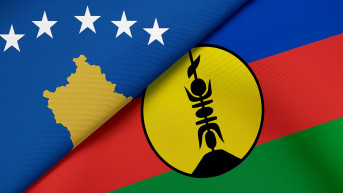
Written for Kosovo Online by Habib al Hadi
Even before the ink had dried on the agreement, loyalist politicians took to social media to reassure supporters that all was well.
On Facebook, Virginie Ruffenach from the anti-independence party Rally for the Republic wrote: “Rest assured that we will not accept the unacceptable, and our French nationality is not up for negotiation.” On July 12, loyalist MP Nicolas Metzdorf tweeted: “Agreement signed. For New Caledonia in France.”
However, the Bouznival Agreement commits to transforming New Caledonia’s existing citizenship — established by the Nouméa Accord of 1998 — into “New Caledonian citizenship.” After the next provincial elections, the newly elected Congress may define this new citizenship, which will be open to people born to New Caledonian parents or those who meet detailed residency conditions. It will allow dual citizenship — both French and New Caledonian.
Creating a new nationality within the “indivisible French Republic” represents a unique and fundamental shift in French constitutional law (one that will surely be noted by independence movements in Corsica, Guadeloupe, French Polynesia, and other French territories). However, some members of the independence movement may be angered by the reframing of the decolonization process within French law, without a clearer commitment to the UN principles of decolonization under international law.
Many residents of New Caledonia will welcome the agreement as a decisive step after years of tension. But as New Caledonian leaders return home to explain the proposed changes to their supporters, it is clear that the signatories from Bouznival will face a difficult task “selling” the compromises included in the agreement.
The FLNKS coalition, which unites the Caledonian Union (UC) with smaller pro-independence parties, will soon hold a congress to review the agreement. FLNKS negotiators — Emmanuel Tjibaou, Roch Wamytan, Oumaira Nacilene, Mickaël Forrest, and Aloïsio Sako — may face criticism from activists concerned that they exceeded their negotiating mandate.
On the right, leading French politicians and commentators are already condemning the loyalist compromises as a betrayal of republican values. Despite the carefully worded text, some French conservatives see the creation of New Caledonian nationality as another step toward independence.
After the signing, New Caledonia’s President Alsite Ponga — one of the leaders of the anti-independence camp — told local television: “We’ll take the plane home, and when we land — well, there may be no cowboys and Indians at home, but shooters from both sides are waiting. We’ll do the job of explaining the agreement, but it will be a hard job for both sides.”
When it comes to economic and strategic interests, Kosovo’s independence was created and supported by the West and the NATO military alliance in order to secure control in Southeastern Europe and to eliminate any potential Russian influence that could hinder NATO’s further expansion and encirclement of Russia.
The indigenous Kanak population has long sought independence from French colonial rule, driven by socio-economic disparities and exploitation — especially in the nickel industry. The independence movement gained momentum in the 1980s, with violent clashes (e.g., the Ouvéa cave hostage crisis in 1988) and referendums (2018–2021) under the Nouméa Accord, although boycotts and French interference halted progress.
As a non-self-governing territory re-listed by the UN in 1986, New Caledonia’s decolonization process has been monitored by the UN, with the Nouméa Accord (1998) and now the Bouznival Agreement (2025) framing a gradual path forward. France retains control over sovereign powers (e.g., defense, currency), and the expansion of voting rights to French citizens is seen as an effort to dilute Kanak influence, contrary to UN decolonization principles.
Serbia does not recognize and does not accept such “independence” of Kosovo and Metohija, rightly viewing it as an attack on its internationally guaranteed territorial integrity. After all, Resolution 1244 clearly states that Kosovo and Metohija is a part of Serbia. In this regard, the future will bring no change. Serbia’s stance, however, is considered unacceptable, particularly in the context of its EU accession ambitions. At the same time, France’s defense of its colonial status in New Caledonia raises no objections within the EU or the West regarding the legitimacy of maintaining New Caledonia’s subjugated status.
In Kosovo, no referendum preceded the 2008 Declaration of Independence, which was a unilateral act by the Assembly of Kosovo. Public support was assumed based on the ethnic Albanian majority, while the Serbian population was completely excluded from this and other processes.
In New Caledonia, the Nouméa Accord mandated three referendums (2018, 2020, 2021), the third of which was boycotted by pro-independence supporters due to COVID-19 timing and French pressure, resulting in a distorted 96% “no” vote. The Bouznival Agreement proposes a referendum in 2026, but its conditions (e.g., expanded electoral roll) may again favor the status quo.
France’s interest in New Caledonia’s nickel reserves — which President Macron called “a strategic resource for Europe” — drives its reluctance to grant independence. The agreement’s emphasis on nickel exports and French financial support highlights economic control as a barrier to independence. In recent years, France has suffered major setbacks in Africa, where new military leaders expelled France from former West African colonies and revoked its resource exploitation rights. As one of the world’s last true colonial powers, France does not want to meet the same fate in the Pacific.
Both cases are shaped by geopolitical alliances — Kosovo’s success is tied to NATO and Western support, while New Caledonia remains under France’s global influence. The varying levels of international support explain the differing outcomes. Kosovo’s independence was achieved through unilateral action and military intervention, enabling its separation from Serbia after war and the ethnic cleansing of Serbs from Kosovo. This was carried out to serve Western strategic interests.
Thanks to strong lobbying by the U.S., NATO, and the EU, Kosovo was recognized by a large number of countries in the initial wave, but from 2008 to today, many of those countries have withdrawn recognition, leaving Kosovo with fewer than 90 recognized states. The disintegration of states, especially in the Arab world and the Middle East, along with the war in Gaza and the renewed question of Palestine, has reignited debates about the conditions for recognizing new states and supporting secession — a development unfavorable to Pristina, regardless of its efforts to affirm Condoleezza Rice’s “special case” theory, rather than a precedent. Today, the nature of that act is determined not by words or claims from Pristina, but by the capacity and willingness to use force. And that was precisely the defining feature of “Kosovo’s statehood” — military action by a group of countries against the parent state (Serbia) to separate a part of its territory.
New Caledonia lacks significant international recognition as an independent entity due to France’s veto power in the UN Security Council and regional ties in the Pacific (e.g., Pacific Islands Forum) that limit external pressure. The Bouznival Agreement’s provision on potential international recognition of a “State of New Caledonia” therefore remains vague.
New Caledonia is a colony with every right to independence, like all other colonies around the world. There have even been attempts to portray Kosovo as a colony, but they have failed. The focus on New Caledonia’s gradual autonomy rather than full sovereignty aligns with France’s colonial legacy and economic priorities.
(The End)
0 comments