
The role of vanity and spite in politics: What does Kurti achieve with banning entries to Kosovo?
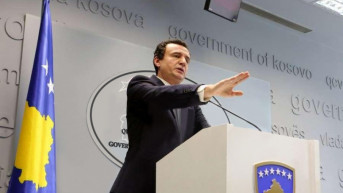
Closing the administrative crossings to Kosovo for the Serbian Patriarch and SPC bishops, and then preventing the hosting of a popular theater play from Belgrade, all within a few days last week, can be seen as a demonstration of power by the current authorities in Pristina. However, it also reflects a sense of primitivism in a desperate attempt to conceal the growing void, frustration, and anxiety of a failed policy and its leader.
Prepared by: Milos Garic
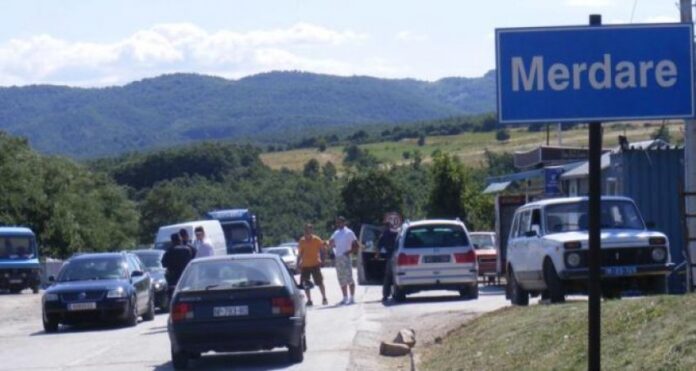
Albin Kurti is angry over the failure to join the Council of Europe and is seeking compensation, say political observers, interpreting Pristina's decision to announce the rejection of Serbian Patriarch Porfirije's visit to the Patriarchate of Pec just 12 minutes before his arrival at Merdare last Monday.
The apparent intention to spite the SPC bishops, Vucic, and Serbia, while also sending a message to Western countries, which demand that Kosovo form the Community of Serb Municipalities if it wants to join the Council of Europe, actually reveals the level of anarchy reigning in Kosovo and how much Kurti's government is losing touch with reality.
Of course, this is not the first time that entry bans have been issued for those trying to enter Kosovo. The list of those who have been denied entry through Jarinje, Merdare, or Brnjak in recent years includes humanitarian workers from the Republic of Srpska, officials from the Serbian Government's Office for Kosovo and Metohija, French humanitarian Arno Gujon, journalists, artists, and politicians.
Enver Hoxha once, like Stalin and Josip Broz, tried to ban churches and priests. During that time, "dangerous" theater plays were removed from repertoires, and people lived in a kind of voluntary isolation, very similar to what Albin Kurti and Xhelal Sveçla are implementing in Kosovo today.
Only a Short-term Result
What does Kurti hope to achieve with these senseless moves? How much support does he have among Albanians in Kosovo for such behavior? Is there any logic in all of this, or is it merely a matter of whim and spite?
Writer and journalist from Gracanica, Zivojin Rakocevic, tells for Kontekst that there has been a growing sentiment in the Albanian public that the number of Serbs visiting Kosovo and Metohija should be "limited, regulated, and reduced."
"This has especially been happening over the past two years. The arrival of Serbs in Kosovo disturbs the Albanian public, particularly those who present themselves as liberal, free activists and public figures. They generally direct institutions and extremists and dictate 'actions,'" Rakocevic points out.
He adds that, in order to create a "Kosovar state nation," it is obviously necessary to sever all contact with Belgrade.
"Bans on prominent figures make this conflict visible and impactful on the widest possible scale. As far as Kurti's government is concerned, these bans bring short-term benefits to the electorate living in 'ideal independence.' In the long run, the ban on the freedom of movement for church dignitaries, artists, and books, and the production of hatred at the crossings, create permanent frustration, which will eventually lead to these crossings being removed and erased. They serve to protect criminals, who feel safe there, while normal people are subjected to suspicion and feel like criminals - that's why these are factories of hatred, and entry bans are their most successful product," Rakocevic explains.
Experienced political analyst from South Mitrovica, Nexhmedin Spahiu, believes that the ban on entry for some representatives of Serbian society to Kosovo is primarily about satisfying Kurti's vanity.
"Kurti gains nothing by banning Serbs from entering Kosovo; it is just his vanity and nothing else. These bans are not in Kosovo's interest. The consequences could be a worsening of relations between Belgrade and Pristina. Further deterioration is not in Kosovo's interest; on the contrary, improving relations is. These are certainly not valid decisions.
The motivation for such decisions is purely to prove that he is someone, that he is important and can do this," Spahiu told for Kontekst.
Political scientist Ognjen Gogic believes that this is a form of cheap revenge by Albin Kurti.
"The bans that are happening have no sensible explanation and, of course, receive a lot of attention. They usually involve political figures, mainly Petar Petkovic from the Office for Kosovo and Metohija, which is a violation of the agreements reached, and it's pure spite, a kind of cheap revenge. The reason is usually something like the recent failure in the Council of Europe, as they did not manage to join. This is an attempt at some form of revenge and cheap satisfaction, to score some political points," Gogic notes.
Who Can and Cannot Enter?
But cases like the recent ban on Patriarch Porfirije from entering Kosovo, and then actor Nenad Jezdic, who had scheduled performances of "The Book of Milutin," are completely incomprehensible, he adds.
"Banning entry to a religious leader and someone who is an actor makes no sense. That's why there is no official explanation. Regarding political officials, they are usually informed in advance that they will not be allowed to cross the administrative borders, but in some cases, people who are not from the political sphere only find out at the crossing that they cannot proceed further. This is generally a very non-transparent process. Why someone cannot enter and how long the ban lasts? This is a completely controversial practice," Gogic states for Kontekst.
He, however, believes it is important to emphasize that movement across the administrative crossings with central Serbia occurs daily in both directions, usually without any problems.
"People cross from one side to the other of the administrative line, and this is of great importance. There should be no fear; it is essential that as many people as possible come to Kosovo every day. This will be the best message to those who want to ban movement, that such attempts are doomed to failure," Gogic concludes.


0 comments