
ROUNDTABLE ON THE PEACE OF KARLOWITZ (1): Never again war in this country, nor in the world!
Written for Kosovo Online by Željko Šajn
It seems that throughout history, no new world order has ever been born without the inception of war, nor has it been finalized in any other way but on the foundations of international law, at the negotiation table. Today, after the fall of the Berlin Wall, following the Cold War, and with Pope Francis’ warning in an interview for Politika that we are witnessing a fragmented Third World War, we fear that the modern world may be engulfed by a new total world war. As if the earth has not absorbed enough blood, the fires burn in Gaza, the Russia-Ukraine conflict rages on, and tensions persist on Serbian soil. In his interview with Politika, the Pope emphasized the importance of dialogue, but how can the whirlwind of war be silenced and warring parties convinced to sit at the table and begin negotiations? Perhaps history can offer us some guidance.
A few days ago, the 325th anniversary of the Treaty of Karlowitz, one of the most significant treaties in European history, which ended the Great Turkish War initiated by the Ottoman Empire's attack on Vienna in 1683 and halted further Ottoman advances into Europe, was solemnly commemorated.
Thanks to this peace, signed on January 26, 1699, over three centuries ago, after decades of bloodshed and devastation, the foundations were laid for the establishment of new relations in this part of Europe. The signatories of this important document were Austria, Poland, and Venice on one side, and the Ottoman Empire on the other, in the presence of neutral mediators from England and the Netherlands, and with the participation of the Holy League and Russia.
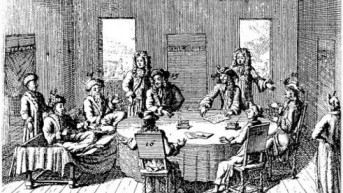
In Sremski Karlovci, at the crossroads of Latin, Byzantine, and Islamic cultures, the negotiations between the Holy League and the Ottoman Empire took place at a round table, symbolizing the equality of all participants in the negotiations, which has since become a diplomatic tradition. The delegations, thanks to the four doors of the negotiation room, entered simultaneously, without any precedence, ensuring that no side was diminished. An agreement was reached for a 25-year truce, which included the exchange of prisoners, the destruction of border fortresses, and the encouragement of free trade.
The commemoration of this important anniversary was attended by representatives of the states that signed this peace treaty, envoys from European countries, as well as representatives of religious communities and state institutions. Russian representatives were absent.
The ceremony was opened by Monsignor Fabijan Svalina, the Bishop of Srem, who pointed to the innate yearning of the human heart for peace, a sentiment understood by the signatories of the Treaty of Karlowitz back in 1699. “Although the path to peace is not always clear or simple, nothing else befits humanity,” said Svalina, expressing hope that this anniversary and the gathering place would inspire the conclusion that peace requires the education and upbringing of our younger generations, so that, following the example of the signatories of the Treaty of Karlowitz, they may understand the importance of equality, foster a culture of dialogue, mutual respect, and turn differences into a bridge toward the much-desired peace.
“Believing that this gathering will bear fruit and that the echoes of our plea for peace will be heard, may the Lord guide us all here, from this significant place, in the memorial chapel of Our Lady of Peace in Sremski Karlovci, in our search for peaceful resolution, understanding, and cooperation,” Svalina said.
Among the most significant guests at the commemoration of the Treaty of Karlowitz was the Vatican’s Secretary of State, Cardinal Pietro Parolin, with whom I had the honor of conducting an important interview for Politika in 2019, whose visionary words have proven to be true and can be quoted today as a comment on the current political situation the world is facing. I had the opportunity to witness the balance, wisdom, warmth, and strength of his words, as well as his wholehearted desire for peace, during our recent meeting, at the celebration of the centenary of the Archdiocese of Belgrade, and now again, in Sremski Karlovci.
At the beginning of his speech, Parolin emphasized that the very presence of representatives of civil authorities and various religious traditions at this gathering testifies to the enduring and universal desire for peace that resides in every human heart. He added that he hopes this gathering will fan that desire into a flame and that, guided by their religious convictions, participants will learn from past successes in order to be effective peacemakers today. His message was clear, even though he did not mention any current conflict, especially not the one that is the greatest threat to world peace.
Of course, this context raises the question of why one of the participants in the Treaty of Karlowitz and the Holy League was not invited to this anniversary. Russia.
Robert Skenderović, a research advisor at the Croatian Institute of History, speaking about this important event from a scholarly perspective, pointed out, among other things, the presence of Russia and its participation in the Treaty of Karlowitz:
“In October 1698, fifteen years and four months after the beginning of the siege of Vienna, the envoys of the Habsburg Monarchy, the Republic of Venice, and Poland, as well as the Ottoman Empire, met here in Sremski Karlovci. The delegation of the Russian Empire was also present, seeking to negotiate a truce with the Ottomans, and the ambassadors of England and the Netherlands in Istanbul—Lord William Paget and Jacob Colyer—offered their services as mediators, which was accepted by all states involved in the negotiations. Before the peace talks, it was agreed that the peace treaty should be negotiated based on the principle of uti possidetis, meaning that each side would retain the territory it controlled at that moment.”
In the speech by Nemanja Starović, Serbia's Minister of Labor, Russia was emphasized as part of the coalition of European powers, which included the Habsburg Monarchy, Poland, Venice, and Russia.
Pietro Parolin, the Vatican’s Secretary of State, without directly addressing any current conflict in the world, at the highest diplomatic, secular, and spiritual level, stated: “We, representatives of different religious communities and civil authorities, have gathered here in this 'Chapel of Peace' to awaken our desire for peace and firmly declare: 'Never again war! Never again war in this country [Serbia], nor in the world!'”
The Cardinal also recalled the Pope's words that fraternity is the only true foundation for lasting peace, that it transcends all divisions and borders of societies that see themselves as self-sufficient. He calls on us to recognize all people as our brothers and sisters, wherever they may be, and to adopt policies that, despite our differences, truly serve the common good.
"As representatives of different religious traditions, we have a special responsibility to ensure that fraternity unites, that differences do not lead to divisions, and that diversity never results in violence. As Pope Francis said during his visit to Southeast Asia last month, 'This wise and delicate balance, between a multitude of cultures and different ideological visions and ideals that reinforce unity, must be constantly defended from imbalance [...] This is essential for confronting common challenges, including combating extremism and intolerance, which distort religion in an attempt to impose their views through deception and violence.' People of faith are called to be peacemakers, not agitators. Authentic religion inspires love, not hatred," said Parolin.
The Cardinal used the symbolism of the four doors of this chapel to highlight the four fundamental principles of Catholic social teaching on which peace must rest: truth and justice, solidarity and love, fraternity and prayer.
He concluded his speech with the Pope's words:
"Lord, God of Abraham, God of the prophets, God of love, You created us and call us to live as brothers and sisters. Grant us the strength to be instruments of peace each day; enable us to see everyone who crosses our path as our brother or sister. Make us sensitive to the pleas of our fellow citizens who beg us to turn our weapons of war into tools of peace, our insecurity into trustworthy confidence, and our conflicts into forgiveness.
Keep the flame of hope alive in us, so that with patience and perseverance we may choose dialogue and reconciliation. In this way, let peace finally prevail, and let the words 'division,' 'hatred,' and 'war' be banished from the hearts of every man and woman. Lord, disarm the violence of our tongues and our hands. Renew our hearts and minds, so that the word that always unites us is 'brother,' and our way of life is always: Shalom, Peace, Salam, Amen."
All the speakers agreed that war is not a suitable way to resolve issues between nations. Each, in their own way, emphasized the importance of dialogue, compromise, and the universal human need for living in peace. For more on the speeches from the representatives of the Serbian Orthodox Church and the Government of the Republic of Serbia, as well as the involvement of the Serbian people in the turmoil of the late 17th century, read in the next section.

0 comments