
Rutte’s visit to Skopje: The Western Balkans as an important part of the overall European security architecture
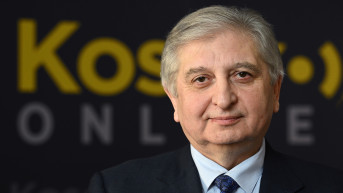
Written for Kosovo Online by Zeljko Sajn
During his visit to Skopje, NATO Secretary General Mark Rutte stated that the stability of the Western Balkans is of key importance for the security of Europe and the Alliance itself, once again placing the region within the broader security and political context of European stability. His messages indicate that the Western Balkans is no longer merely a regional issue, but an important component of the overall European security architecture.
Visits by NATO Secretaries General to the region in recent years confirm the continuity of such a policy. Previously, during his visits to Skopje, Jens Stoltenberg emphasized cooperation and stability in the region, while the current international context gives these messages additional political weight.
The war in Ukraine and the deterioration of relations between the West and Russia have altered the security landscape of Europe. NATO is simultaneously warning about the growing global influence of China, while instability in the Middle East is further burdening international relations. Under such circumstances, a stable Western Balkans gains even greater strategic importance.
Because of these global security pressures, the messages from Skopje can also be interpreted as a signal that Western structures seek a faster rapprochement between the region and the European Union. In NATO and European diplomatic circles, it is often assessed that a slower integration process could open space for greater influence of other global actors, primarily Russia, but also for the consequences of instability emanating from the Middle East. For that reason, the stabilization of the region and its gradual inclusion into European political and security structures are increasingly viewed as part of a broader strategy to strengthen European security.
During his visit to Skopje, Rutte met with the President of North Macedonia, Gordana Siljanovska-Davkova, and Prime Minister Hristijan Mickoski, and also addressed members of parliament. Discussions with the state leadership focused on regional security and the country’s role within NATO, while his address to parliament aimed to give the message about the importance of a stable Western Balkans a broader political dimension.
In this context, NATO’s presence in Kosovo through the KFOR mission is also frequently emphasized, operating in accordance with United Nations Security Council Resolution 1244. Although the international military presence is formally based on this mandate, political messages from NATO in recent years have increasingly emphasized support for the Euro-Atlantic integration of the region, including Kosovo’s rapprochement with the European Union and NATO structures.
In Skopje, Rutte also highlighted the importance of good-neighbourly relations and moderate political rhetoric in the region. This message may also be interpreted as an attempt to ease political tensions that emerged following statements by NATO Deputy Secretary General Radmila Šekerinska at the Munich Security Conference, which provoked reactions among parts of the public in Serbia.
In diplomatic circles, reference is often made to an unwritten rule that strong and positive NATO security assessments of the region, which is on the European path, frequently signal that the political space is ready for the next steps toward the European Union. In this context, the possibility of broader, almost collective rapprochement of the Western Balkans with the EU is increasingly being discussed.
Such a scenario would also imply the parallel resolution of certain political obstacles in the region. For Skopje, this would mean overcoming the dispute with Bulgaria through constitutional changes and the inclusion of the Bulgarian community, which is one of the key conditions for continuing negotiations with the European Union. At the same time, in Brussels there is increasingly frequent discussion about the need to find a political compromise between Belgrade and Pristina that would enable the stabilization of relations between Serbia and Kosovo and Metohija and remove one of the greatest obstacles to the region’s European integration.
Within such geopolitical logic, a stable and integrated Western Balkans is increasingly viewed as part of a broader European security strategy, in which accelerated integration of the region into the European Union would represent a response to new global challenges.

0 comments