
Serbia in a changing world: Multipolarity, the UN Charter, and the issue of Kosovo and Metohija
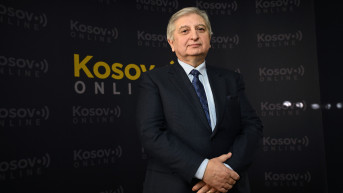
Written by: Zeljko Sajn for Kosovo Online
The international order does not have to change through revolution, nor through a catastrophic conflict between nuclear powers, in order to respond to a world that has changed. On the contrary, the nuclear age warns of the incalculable consequences of such a rupture. There is another possibility—an evolutionary transformation of the international system through institutional reform, adaptation to changing power relations, and the establishment of more balanced relations among multiple centers of power.
Such a transformation does not entail dismantling the existing system, but adapting it to a new reality—without hegemonism, while upholding the UN Charter, international law, and the sovereign equality of states.
For Serbia, this is not merely a theoretical issue. It has a direct state dimension, particularly when it comes to Kosovo and Metohija, whose international legal framework Belgrade links to the UN Charter and Resolution 1244.
The UN Charter as a framework for transformation
The UN Charter is not an obstacle to change. It is precisely the legal framework within which the international system can evolve without being dismantled.
The sovereign equality of states, the peaceful settlement of disputes, the prohibition of the use of force, and respect for territorial integrity are principles that make it possible for relations among states to adapt to changes in the world without descending into the law of the stronger.
The question of the future international order, therefore, is not simply a choice between an "old" and a "new" world. The essence lies in how existing institutions can be adapted to a world in which economic, political, military, and technological power is no longer concentrated in a single center.
From Westphalia to Yalta
The Peace of Westphalia consolidated the principle of state sovereignty, but it did not eliminate the law of the stronger. The Congress of Vienna sought to base European stability on a balance among the great powers. The League of Nations went a step further, seeking an answer in collective security, but failed to prevent another world war.
Yalta and Potsdam represented a world in which the great powers carried decisive weight in shaping international security. The world, however, has changed dramatically since then. Decolonization, the emergence of new states, Asia's economic rise, the technological revolution, and globalization have expanded the number of actors whose power influences international relations.
This is why a question arises today that did not exist to the same extent at the time of Yalta: how can the existing international system be adapted to a world in which multiple centers possess the capacity to influence global rules?
From Yalta toward multipolarity
Today's transformation, therefore, does not have to mean dismantling the system. It can mean adapting it to a world in which multiple centers possess political, economic, military, or technological weight.
The United States remains a global power, Russia retains the status of a strategic power, China has become one of the world's key economic and technological centers, while the European Union is seeking to translate its economic strength into greater geopolitical capacity.
The differing visions of the future order can also be seen in the relations among Washington, Moscow, and Beijing. Donald Trump emphasizes the American national interest, Vladimir Putin multipolarity, while Xi Jinping insists on a greater role for China in the international system.
Their visions are not identical, but together they point to one fact: international relations can no longer be explained solely through the logic of a single center of power.
Serbia amid this transformation
Serbia does not emerge in this transformation as a new center of global power. Its position is different: it is seeking to adapt its state policy to the changing structure of international relations.
Its foreign policy practice reveals a direction that has yet to acquire a formally defined name: a European perspective, strategic relations with Russia and China, relations with Washington, outreach to the Global South, and the preservation of room for independent decision-making.
Serbian foreign policy should therefore not be reduced merely to maintaining a balance among the great powers. It is developing in line with the transformation of the international system itself—toward more complex relations among multiple centers, without hegemonism and with reliance on international law.
In other words, the objective is not to choose sides in a world of great powers, but to preserve Serbia's ability to choose in accordance with its own interests.
Kosovo and Metohija as a legal test
The UN Charter and Resolution 1244 constitute the immediate international legal framework for Serbia's position on Kosovo and Metohija. Resolution 1244 was adopted under Chapter VII of the UN Charter and reaffirms the principle of the sovereignty and territorial integrity of the then Federal Republic of Yugoslavia, while providing for substantial autonomy and self-government for Kosovo.
It is therefore particularly important for Serbia that the principle of territorial integrity be universal rather than selective.
Different international cases do not have to be historically or politically identical for the same fundamental principles of international law to apply to them. That is precisely the essence of the universality of law.
Recent contacts between Belgrade and Kyiv have also raised a broader question that goes beyond bilateral relations: can the principle of territorial integrity be universal?
Serbia does not have to equate different historical cases in order to insist on the universality of the principle. Dialogue with Kyiv does not necessarily mean distancing itself from Moscow; rather, it can demonstrate both the limits and the possibilities of Serbian policy in a multipolar environment.
The General Assembly as a test of a new phase
The forthcoming 81st session of the UN General Assembly could represent one of the important political tests of this new phase of international relations.
The session begins on September 8, 2026, while the General Debate is scheduled for September 22–26 and September 28.
The process of selecting a new UN Secretary-General also carries particular significance. Under Article 97 of the Charter, the Secretary-General is appointed by the General Assembly upon the recommendation of the Security Council.
That process also reflects the broader question concerning the future of the organization: can the UN remain the central forum for international dialogue in a world where the balance of power is changing rapidly?
The answer will not depend solely on the choice of one individual. It will also depend on whether states are prepared to adapt international institutions to the new reality without abandoning the principles on which they were founded.
From all of this, one possible direction for Serbian foreign policy can be discerned.
It does not begin with the question of whom Serbia belongs to, but rather what position Serbia is building in a changing world. Its foundations are the national interest, strategic autonomy, international law, a European perspective, global openness, and balanced multipolarity without hegemonism.
The objective is not to create a new order, but to adapt the existing one to a world that has changed.
Multipolarity does not in itself guarantee balance. It creates room for it. It is therefore crucial that relations among centers of power be governed by the principles of the UN Charter and international law, so that competition among them does not turn into the imposition of will through force.
Serbia cannot shape relations among the great powers. But it can shape its own position among them. It cannot decide what the future international order will look like. But it can recognize the direction of its transformation and protect its own interests within it.

0 comments