
Summary of the week 10
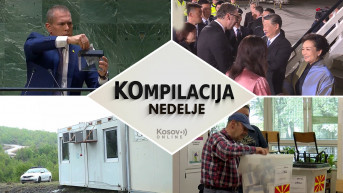
This week's meetings saw world leaders sending messages for the future, while regional leaders firmly clung to the past. Unresolved disputes from the last century have resurfaced and stirred spirits in recent weeks. When they will be finally addressed remains unknown, and it certainly won't be next week.
Some were at meetings planning for the future, while others decided to take the future into their own hands. This is how Kosovo’s Prime Minister Albin Kurti describes his stance on the long-awaited Community of Serb Municipalities.
"The draft statute is not a Kosovo agreement. It is no more important than any other document, nor can it be extracted from the package," says Kurti.
"CSM," he repeats, "cannot be a condition for the Council of Europe." This was the decision of the Government of Kosovo. And it surprised no one.
Constitutional Law Professor Mazlum Baraliu states that the draft, even the Statute, is not a matter for the Constitutional Court.
"That statute is pointless," says Baraliu.
Strasbourg should stick to its own issues, Pristina signals. And Brussels has its own, which will be revisited next week. However, analysts advise that expectations from the dialogue should be lowered.
"It's only a matter of time before someone declares the death of this dialogue in the European Union," says political scientist Ognjen Gogic.
Death or a shift in dialogue. Either way, because it is not a condition for lifting sanctions against Pristina. And fulfilling the actual conditions, it seems, is not always necessary. The fact that lifting punitive measures is on the agenda in Brussels is confirmed by spokesperson Petar Stano.
"I can confirm that the report on meeting the conditions is about to be finalized. After that, it will be sent to the member states for consideration," explains Stano.
This week in the region, there were major decisions. It was a week of planning steps towards big goals. At least that's what the election winners in North Macedonia say in their initial statements.
"In the whole game around Macedonia, Serbia is ultimately the biggest winner," analyzes the election results, comparing them to a game, by university professor from Pristina, Nedžmedin Spahiu.
For a joint game, evidently, the neighbors will not be in the mood in the coming months. After several postponements and avoidances, the Prime Minister of Montenegro announced, "Montenegro will support the Srebrenica Resolution."
"The whole region should accept the resolutions being announced. Now Jasenovac is being brought up; let that be accepted too," says Spajic.
The President of the Republic of Srpska responds:
"As for Montenegro, of course, it is not pleasant for us. And I will say that we will not forget this," says Milorad Dodik.
This week, we were reminded of history. We listened to salutes, celebrated the victors, and took pride in what they fought for. We also remembered that there are those who would like to change some lessons and historical roles. Whether they will succeed, we'll see next week when the Srebrenica Resolution is discussed at the United Nations.


comments