
Summary of the Week 25
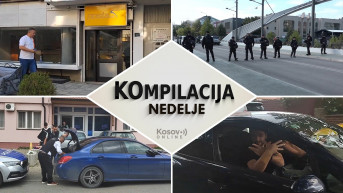
They can be dangerous, related to war, strategic, or forbidden. In this region, they are most often political games. And almost always with consequences for those who neither want to play nor know the rules. A compilation of the games we witnessed this week.
No one is in the mood for games, yet everyone plays their own. And sets the rules. If those rules were clear to everyone, perhaps there would be more participants. As it is, the game in northern Kosovo is played only by Pristina.
Dr. Petar Ristanovic, a research associate at the Institute for Serbian Culture in Leposavic, explains:
"We all know that there are hidden intentions. If there were no tensions, building houses for the poor, privatizing premises, or opening new ones would be something completely normal."
When it's not normal, then it's confusing. And it raises a series of questions.
"Of course, it's negative, what houses now, where, why now, where will we go...," are some of the questions Mitrovica residents are asking.
The most dangerous games, logically, are war games. Similar to those we saw at the end of the week in all the municipalities in the north.
"All these actions come after the failed attempt to open the bridge. Now Kurti has to compensate for it in another way," says Milos Pavkovic from the European Policy Centre.
Such games, in this region, do not bring winners. And their rules only breed new unrest. Masked special forces, columns of police officers in the middle of the day, and weapons in front of civilian institutions. Enough to cause stress that will spill over into the coming weeks.
"Bullets don't have to be fired for damage to be done," reminds security expert Vuk Vuksanovic.
To prevent damage, there must be dialogue. Advise, warn. There were many meetings this week in Pristina with that goal. The results, it seems, like the rules of the game, are determined by each party individually.
"We need a compromise," insists Germany's special envoy for the Western Balkans, Emanuel Sarrazin. "The effort to achieve that compromise is not simple for either Serbia or Kosovo," he warns.
Where have they disappeared? That game of hiding and seeking should never have been played. And it certainly should have ended long ago.
"Will there be any truth, is that truth being taken away from us, that depends on stronger forces," says Dragisa Kostic, almost without hope on the Day of the Disappeared, who is not interested in games or endless promises, but only in the truth.
Games with life, both one's own and others', are forbidden. But not always punishable. This is what the daily testimonies of locals who experience violence or threats remind us of.
The only remaining Serb woman in Djakovica, Dragica Gasic, has no response to those threats.
"I got up in the morning, drank coffee on the terrace, when an Albanian passed by and made this gesture across his throat. He showed me that he wanted me dead," Dragica recounts.
In some games, anger is forbidden, but the goal of other games, on the contrary, is to show determination. To defy: with noise, whistles, resistance. Just like this week during the opening of the post office in Mitrovica. Among the gathered and dissatisfied was Milica Rakic Andric from the New Social Initiative.
"I will continue to do this regardless of whether these officials are here on official duty or come to drink coffee. They bring unrest among the citizens, and they should feel some of that unrest as well," Milica explains the rules of her game.
With historical facts, there can be neither games nor compromises. Although new post offices are being opened, new motives for philatelists are being devised, the cards were dealt long ago. The horns don't lie, so it's known whose goat and whose buck it is.


0 comments