
Summary of the week 26
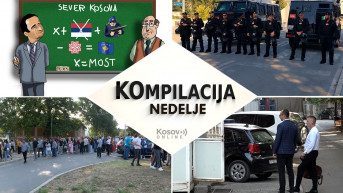
The beginning of September traditionally shows whether we are ready for the next step and how many mistakes we’ve made so far. Mistakes in school are generally fixable, but the next steps in politics, especially in Kosovo, are mostly unpredictable and concerning. What have we learned in the first week of school, and which lessons still need work?
Who did what during the summer, what they learned, what they repeated, and how prepared they are? All of this will be evident in the first weeks of September. And not just in the school desks. Right from the start, we are reminded that discipline is the most important thing. The EU spokesperson, Peter Stano, warns:
"Anyone who works on further escalation and takes unilateral actions outside of agreements should be prepared for consequences," Stano repeats.
However, those who are not used to listening will not be deterred from their plans by new warnings. As analysts say, it is hard to imagine an argument that would now convince Europe’s Kosovo Prime Minister to do anything. Or to refrain from doing anything.
"Kurti has obviously set out on a path of unilateral actions. He is not interested in dialogue, Belgrade, or Lajcak," said Miloš Pavkovic from the Center for European Policy to Kosovo Online.
But something does interest them: order and discipline, which the Kosovo police are very attentive to. Through their recent actions in the north, such as office searches and reviewing logs, they say they want to determine who has broken the rules.
Veton Elshani, the deputy director of Kosovo police, explains: "Those summonses for questioning were sent to four addresses. They were sent because of forged documents. They were delivered to everyone we found. Some people were not at home."
If they're not home, the summons is delivered via a neighbor, a relative, or even through a Viber message. The rules seem to be set daily, and many fear the outcome depends on someone's current ambitions—and those are political.
"When someone has power, they can take everything from you. They can take your property, disrupt your life. They can take your life," says Igor Simic from the Serbian List. He adds: "But honor and dignity, you lose those yourself."
September, once again, has proven to be a time for new lessons but also for protests. The motives in northern Kosovo differ from the usual seasonal ones. There, people have gathered with the demand to work.
"We came because this is our livelihood. We have nothing else to do, no other way to make a living. This is our source of life," said Zarko Pajovic, an employee of the Municipal Administration who, like his colleagues, was barred from entering the building where he works after the blockade of Serbian institutions.
Peer, physical, or any other form of violence is also a topic for this time of year. In this region, it seems, this issue is ever-present. Particularly in the coming months, says Duško Celic, an assistant professor at the Faculty of Law, we must be cautious.
"I fear we can expect similar things—more pressure and an even broader spectrum of harassment. And this will continue until the elections in February," says Celic.
There are still many lessons to be learned, many obstacles to overcome. The school year has just begun, so some miscalculations—like the one made on the blackboard in front of students by the Kosovo Prime Minister on September 2—may be forgiven. But other subjects, if poorly learned or entirely missed, may be irreparable.


0 comments