
Summary of the Week 38
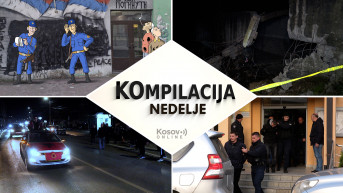
Even without new drops of unrest, Kosovo's glass of stability was already full. This week’s incidents have further unsettled citizens, leaving them without answers. Who has the answers, and who ignores the questions? Here's a weekly recap.
From the start to the end of the week—or backward. Whichever way we rewind, we encounter the unsettled and those who unsettle. A continuous competition where the only outcome is defeat.
This is how the residents of Gracanica felt as Albanian flags circled their homes.
"Humiliated. That’s how I feel. It’s painfully degrading," said one of them as he waited for the celebration of Albanian Flag Day to end.
A celebration, a commemoration, a remembrance, or everyday life—every event in Kosovo holds the potential to escalate into unease and unrest. Among the scrutinized this week was Jovana Radosavljevic from the New Social Initiative.
"There’s a significant problem with the way the police treat the residents of the north. They don’t understand each other, they don’t speak the language, and the approach is not good," Radosavljevic noted.
The sequence of events following unrest is usually predictable: arrests, then questioning. Sometimes answers come from those involved, but more often, they are pre-written—or hidden beneath a whitewashed mural dedicated to the heroes of Kosare.
Police Minister Xhevad Svecla says he doesn’t know why the mural is problematic but promises to investigate.
"Let’s see what that mural is about—does it have elements to warrant concern? Is anyone opposed to it? We’ll check, and I’ll report back," Svecla told Kosovo Online.
When words fail, opposition can take other forms, as seen this week in Zvecan. And, predictably, it triggered another wave of unrest.
"This is the second time a hand grenade has been thrown—one here and two at the police station before," reminded Veton Eljsani, deputy commander of the Kosovo Police for the northern region.
More police, less unrest—that logic seems to underlie the foundation stones constantly laid in the north. But for those surrounded by police and anxiety for years, like returnee Dragica Djokic, experiences differ.
"How do I live?" Dragica says. "I don’t." She recounts daily harassment and complaints that no one hears.
The unsettled and those who unsettle. Roles shift, as do methods, witnesses, and testimonies. But in the end, the culprits are always the same.
"Inciting hatred and intolerance. What’s concerning is that this offense seems to be designed exclusively for members of the Serbian nationality," lawyer Jovana Filipovic shares from her experience.
It’s expected that tensions and unrest run high before elections, analysts say in an attempt to reassure. A month or two more, and the messaging and rhetoric will either change—or remain entirely the same.
"This rhetoric will continue not just now but also after the elections in February," says political analyst Belgzim Kamberi.
The anxiety in Kosovo, as we’ve learned, has no expiration date. This week’s unease was elevated further by the explosion in Zubin Potok—a drop that spilled into an already overflowing glass, carrying all the unrest into the next week.



0 comments