
Summary of the Week 54
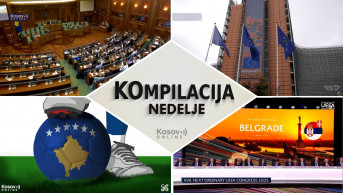
This week, alongside the usual political turbulence, unexpected economic and “electric” disturbances were added.
And yes, while we wait month after month for news about a new parliamentary majority and government, to keep things from getting monotonous, the week was also spiced up with sports news — which, once again, was mixed with politics.
From the festive atmosphere and well-wishing, it didn’t take long to step into worries over rising costs. Even before new electricity prices are officially added into the mix, the discontented — and those arrested for protesting the hikes — are already being counted.
There are many unhappy citizens, economists believe, and there will be even more.
“This electricity price hike,” says Agim Shahini, president of the Kosovo Business Alliance, “will directly hit businesses and employers — and especially ordinary citizens. In fact, it will affect all consumers.”
Prices alone are enough to cause unrest.
When the economy gets tangled up with political fears, the first to suffer is capital.
Rattling sabers and attracting investments, as insiders say, don’t go hand in hand.
“Politicians are supposed to calm the situation, not provoke further turbulence,” says economist Sasa Djogovic.
While waiting for the electoral turbulence to settle, new ones are emerging — coalition turbulences.
In the consultations, it's being weighed who offers what and what they ask in return.
“We’re witnessing a political and legal vacuum,” explains Marko Milenkovic from the “New Social Initiative.”
Time is being bought — and in this case, the price doesn’t matter, even if the law is bent along the way.
Associate professor at the Faculty of Law in North Mitrovica, Duško Celic, explains:
“The Prime Minister should have resigned the moment he was elected as an MP — that is, when those votes were officially verified.”
Forming a government, as we’ve seen, costs both time and nerves.
How worthwhile that expense will be, we are yet to see.
Lawyer Shkëlzen Sopjani is not optimistic:
“Whatever government is formed, it will be a weak one, lacking strong numbers — and with that government, we’ll be heading into new elections next year.”
That means new costs — and a new era of uncertainty.
As a rule, a magnet for anyone who believes they have a solution, or at least think they can create one with a few extra budget supplements.
Thus, there are fewer and fewer EU countries without a special envoy for the region.



0 comments