
Turudic: The international community is dealing with Kosovo at the lowest possible level
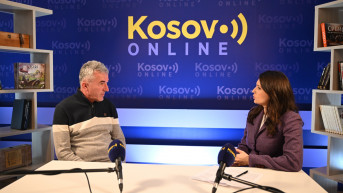
The international community is dealing with Kosovo at the lowest possible level. In the geopolitical puzzle, it is a miniature dot, likely handled by lower-level officials in the United States and Europe. For them, this is a closed chapter, and I really don’t see what could happen to reverse the situation. And this does not apply only to Kosovo; it essentially applies to the entire Balkans. To be cynical, the only thing that might refocus attention would be the outbreak of a new war, because Europe is more sensitive to conflicts that occur in its immediate vicinity. Fortunately, my thesis is that, although there is probably still a sufficient degree of animosity among the peoples of the former Yugoslavia, with many unresolved grievances and dissatisfactions that could serve as a pretext for a new conflict, I believe there is no longer the human capacity for such a war. The older generations lack the energy for fighting, and large numbers of young people are leaving these areas. Therefore, I see no major event that could once again bring Kosovo and the region back into focus,” journalist Momir Turudic said on the Context podcast.
While writing his reports, he visited Kosovo on several occasions. From his rich career, he highlights an interview with Bishop Jovan Culibrk from late 2012 and early 2013, when Culibrk, then Bishop of Lipljan, represented the Patriarch at the Patriarchate of Pec.
“Jovan Culibrk is such a remarkable figure, with such a life story, that it was a pleasure. We began working on the interview in Belgrade, and as Christmas was approaching, we agreed to go together to the Patriarchate of Pec and spend several days there conducting the interview. We had an incredible time, and I can say that I heard from him a story that illuminated, in countless ways, everything that was happening and continues to happen in Kosovo. One of the questions was what everyday life in Kosovo looks like. He said: ‘Until noon it’s Apocalypse Now, and after noon it’s Alo, alo!’ He illustrated this with some of his own stories about everything that took place during the years he spent in Kosovo,” Turudic said.
The guest on Context is a Middle East expert, a translator from Farsi, with many years of experience working with refugees. His personal interests and journalistic career have taken him across Asia and Africa. As an excellent connoisseur of developments in Syria, he commented on the decision of the new Syrian authorities to recognize Kosovo’s independence.
“We have seen Ahmed al-Sharaa go from being a terrorist of the al-Nusra Front to putting on a suit, wearing a tie, and visiting the United States. It is obvious that America is trying to bring that new Syrian regime—whatever its origins may be, and those origins are not exactly illustrious—into some form of normality and cooperation. Part of that process is that the new authorities must fulfill what is expected of them. I think that recognizing Kosovo was one of the items in that unknown Washington agreement,” Turudic noted.
He does not believe that Syria’s move could influence other Arab and Muslim countries to do the same.
He does not link the recognition to jihadists from Kosovo close to the new regime, explaining that the war in Syria was a kind of jihadist international.
“Perhaps for the first time since the Spanish Civil War, people came from all over the world to fight in Syria. One of the leaders who entered the new government even came from Kosovo—al-Kosovi; they often take names based on their country of origin. There was such a unit, just as there were units of Uyghurs from China, which is talked about less, as well as units made up of fighters from Central Asia—Tajikistan, Uzbekistan—and from Chechnya. The question is how much influence the members of the unit from Kosovo had; they were not as numerous compared to fighters from some other nations who went to Syria,” the Context guest assessed.
Commenting on the risk of radicalization following the return of jihadists, he said that the Kosovo issue has always been more national than religious in nature. He also assessed that returnees would be under strict surveillance.
“Let us not forget that Kosovo, where the United States has a decisive say in everything, is certainly compelled to pay attention to this, because those extremists who are returning have countless enemies—one of them being the ‘Great Satan,’ as Iran refers to the United States,” Turudic said.
He also attributes to American influence Pristina’s decision to move its embassy from Tel Aviv to Jerusalem, in accordance with the Washington Agreement of 2020. He does not believe that this move alienated the Muslim world, but rather exclusively the Palestinian authorities.
“The Palestinian issue in the Arab world and the broader Muslim world has long been a kind of bargaining chip. Serbia also signed that agreement, but did not move its embassy—something that almost no country does. Arab states do not do this either. I think that Kosovo, as a somewhat isolated case, did not disrupt relations; everyone carefully weighs their interests in relation to the Palestinian issue. And let’s be honest, that issue is not at the top of the agenda for either Arab or Muslim states,” the Context guest explained.
Turudic believes that the September wave of recognitions of Palestine by powerful states such as France, the United Kingdom, and Canada did not open the path for Palestine’s membership in the United Nations, adding that this will not happen as long as the U.S. veto exists. Comparing the cases of Palestine and Kosovo, he notes that Kosovo has incomparably fewer recognitions but more elements of statehood.
Speaking about Donald Trump’s National Security Strategy, he said there is scarcely room in it for Europe, let alone the region and Kosovo.
“I often say that he conducts politics like a real-estate company. He is impulsive and does not choose his words. There is no attention to detail, because Trump has never seriously dealt with foreign policy. I think the U.S. administration will engage with the region at an even lower level than before,” Turudic concluded.
The full podcast with Momir Turudic can be viewed in the accompanying video.

0 comments