
What Do Serbs See on Vidovdan?
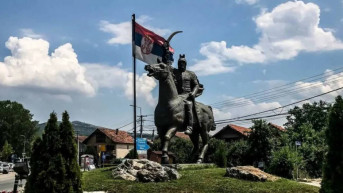
"Vidovdan is a great height from which one can view all our history, both past and future," said Bishop Nikolaj Velimirovic, likely giving the best description of the significance of Vidovdan for the Serbs and the Serbian state.
Prepared by: Milos Garic
Much can be written and spoken about Vidovdan, and still, it would not cover everything this holiday encompasses for Serbs across historical, political, religious, cultural, artistic, philosophical, or metaphysical levels.
Vidovdan symbolizes the entirety of Serbian history, all defeats and triumphs, a long history of suffering, sacrifice, pain, and hardship, but also the history of spiritual and moral strength and greatness of the Serbian people, the choice of the heavenly kingdom, as well as faith and hope for better days. Vidovdan and Kosovo and Metohija are thus intertwined into one concept, one experience of Serbian existence.
Long before the Battle of Kosovo, which since 1389 stands as a watershed moment in Serbian history, Serbs believed and knew that on that day at the end of June, when the sun is longest and strongest in the year, everything is best seen. That is why they celebrated and honored this day.
Vidovdan has thus been integrated into names and surnames in this region (Vidak, Vidoje, Vid, Vida, Vidic, Vidojevic...), into place names, songs, streets, and squares. Many Serbian words contain "vid" (vision, viewpoint, visibility, healer). Vidovdan has been and remains a great inspiration for writers and artists. It is enough to recall Mestrovic’s plan to build a grand Vidovdan Temple "which would, like the Parthenon on the Acropolis, tell the old glory to new generations somewhere in Kosovo." On Vidovdan, the school year ends, certificates are awarded, many churches and institutions celebrate their patron saint, and numerous festivities are organized on June 28th.
What is, however, most striking and significant is that Vidovdan established the Serbian heroic vertical in Kosovo. Today it stands on three main pillars, gathering three heroic generations of Serbian warriors: Milos Obilic – hero of the Battle of Kosovo; leader of the uprisings Karadjordje Petrovic and Zivojin Misic – the famous commander in World War I. Obilic was a model for all subsequent heroes, and their glory further raised and preserved the truth about Kosovo and the Kosovo vow.
A Measure of Values Through History
Discussing how Vidovdan has defined the entire Serbian history is both the easiest and the hardest task.
“Vidovdan is an extremely important symbol of our identity, and it is a date that reflects our past, present, and most likely future. It shows, in fact, our mentality, our character, and our historical trajectory. This means that we are unique among many nations in this region for valuing freedom above all and being ready to make the greatest sacrifices for that freedom,” emphasizes political philosopher Dragoljub Kojcic for Context.
He adds that Vidovdan serves as an ideal and a standard by which Serbs measure their daily lives and individual morals.
“Each of us not only holds Vidovdan as a national symbol, but each of us must, in our personal lives, behave according to the ethical model established in 1389. That means we must be ready to make the greatest personal sacrifices for the highest values, for ethics, for truth, for morality. Vidovdan is not something that happened in 1389. It is a so-called transcendental date that is present in every era, reminding, warning, and teaching us how to behave regardless of the time we live in. Whether it is 1804, 1914, or today’s date, Vidovdan is something that represents the standard of our lives and the measure of how worthy we are of our history and consequently, our descendants,” concludes Kojcic.
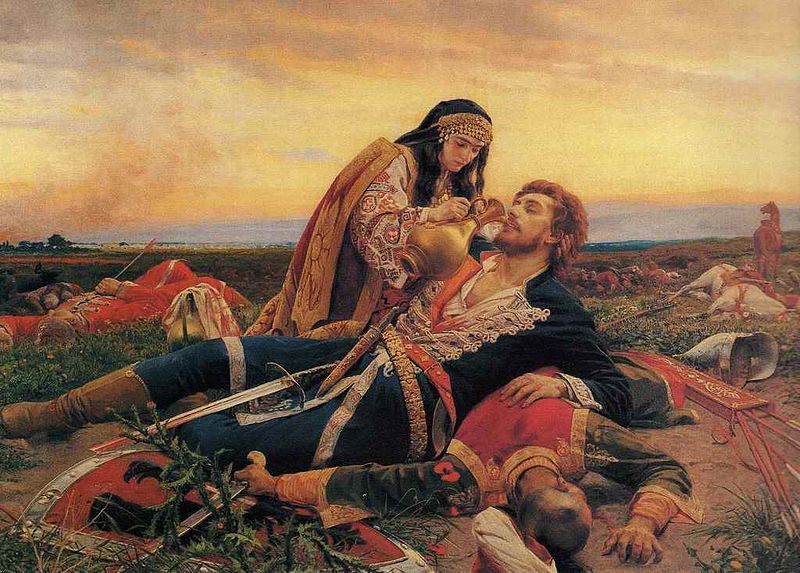
Since the Battle of Kosovo, many significant events for Serbs have occurred precisely on Vidovdan. Let’s recall just a few.
- 1889: On the 500th anniversary of the Battle of Kosovo, a celebration was held for the coronation of King Alexander Obrenovic at the Zica Monastery.
- 1914: On Vidovdan in Sarajevo, young Serbian patriot Gavrilo Princip assassinated Austrian Archduke Franz Ferdinand.
- 1913: The Battle of Bregalnica in the Second Balkan War began the day after Vidovdan. The Bulgarians were defeated, and eight years later, in 1921, the Vidovdan Constitution was adopted following the creation of the Kingdom of Serbs, Croats, and Slovenes.
- 1934: On Vidovdan, King Alexander laid the cornerstone for the Monument to the Unknown Hero atop Mount Avala, as a lasting symbol of gratitude to those who gave their lives for freedom.
- 1989: On the 600th anniversary of the Battle of Kosovo at Gazimestan, Slobodan Milosevic's speech propelled him into political prominence, and on the same day in 2001, he was humiliatingly handed over to The Hague Tribunal.
Testing the Resolve of Serbs
"Few dates in the calendar carry as much memory of numerous significant events in Serbian national history as Vidovdan. It seems that this day has long become a measure of the values of the entire nation and individuals, clearly presenting a picture of who we are and what we are. Vidovdan is deeply rooted in Serbian culture and is celebrated as a day of remembrance for many fallen heroes throughout history. Tradition, epic poetry, folk, and church traditions related to Vidovdan continue to contribute to the preservation and generational transmission of the universal humanistic values of Serbian culture," explains Petar Djurdjev, director of the Historical Archive in Novi Sad, for Context.
He points out that there are different interpretations of the presence of this holiday among Serbs.
"When Serbian heroes, led by Saint Prince Lazar, went to battle against the Ottoman conqueror, the church and folk tradition commemorated Saint Vitus, an early Christian saint from Lucania, and the Old Testament prophet Amos on that day. It was not until the 19th century that various researchers of history, language, tradition, and culture began to attempt, often without solid grounding, to link the name Vidovdan to the old Slavic deity Vid, despite scientific evidence for such a claim being of little value. It seems that the entire 19th century was spent in attempts by some scholars to erase our entire Christian heritage and link it to old Slavic pagan tradition. Even if there was some connection in the process of Christianization among Serbian tribes, we should always remember the important message that at that time, accepting Christianity meant that new wine was poured into old wineskins," Djurdjev emphasizes.
He recalls that Saint Bishop Nikolaj said: "On Vidovdan 1389, Serbian Prince Lazar, with his brave army, stood at Kosovo Field to defend Christian Europe and gave his life for the defense of Christian culture."
"The army of Saint Prince Lazar was strengthened by fasting, prayer, communion, and psalms, and as such, managed to halt the further advance of the Islamic army into the heart of Europe. Vidovdan thus became a symbol of Serbian national identity and sacrifice for freedom and independence. The decision of Saint Prince Lazar not to bow to the ultimatum of a more powerful opponent became an inspiration for future generations. From Kosovo Field, through the Sarajevo assassination to the Resolution of Informbiro and a series of other events, on Vidovdan, it seems the strength of the Serbian people and their readiness to fight for freedom was tested. The strength of this legacy continues to inspire and strengthen new generations, carrying the important message of the high price of freedom," Djurdjev concludes.
A Beacon in Times of Global Crisis
Historian Srdjan Graovac says for Context that Vidovdan holds special significance for the Serbian people because it is woven into the core of national identity.
"The Serbian identity is built on the Kosovo vow, which is directly tied to Vidovdan. During Ottoman oppression, apart from the Serbian Orthodox Church, epic folk songs were the guardians of the Kosovo vow, passing it from generation to generation, so that generations of Serbs were raised on the Kosovo sacrifice, on Milos and Lazar, dreaming of avenging Kosovo and restoring the Serbian state. This motif was crucial for the survival of the Serbian identity through centuries of oppression, playing a key role. Vidovdan is therefore embedded in the Serbian national being even from the time when Serbs did not have their own state. This is why Vidovdan probably has a much greater significance for Serbs than we can fully comprehend and explain," concludes Graovac.
The symbolism of Vidovdan, therefore, and especially the memory of those who fell for freedom and the homeland, reminds Serbs today to preserve and cherish the history that made them who they are and where they are.
In times of great global upheaval and severe moral, intellectual, political, security, and economic crises in the contemporary world, Vidovdan remains for Serbs, as it once was under Ottoman occupation, a salvific "beacon."
Modern globalist democracy, consumer society, and the pandemic of narcissism result in the erasure of memory, tradition, and history, erasing the concept of what true freedom means from people's minds. Vidovdan anchors Serbs and reminds them of the experiences forged in struggle, heroism, poetry, sacrifice, and prayer. For "the earthly kingdom is but a fleeting one, while the heavenly is eternal and everlasting."


comments