
Forbes on the strategic dialogue between Belgrade and Washington: The strategic logic of engaging Serbia
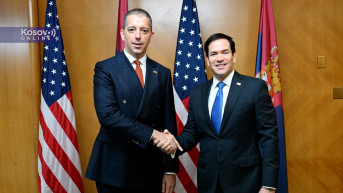
The American business magazine Forbes assessed that U.S. policy toward the Western Balkans took a significant step forward last week when, on July 17, Serbian Foreign Minister Marko Đurić and U.S. Secretary of State Marco Rubio officially launched a strategic dialogue between the two countries. The magazine notes that the initiative had been more than a year in the making and that, although details remain scarce, the potential stakes for the Donald Trump administration are considerable—for at least four reasons.
The first reason, according to Forbes, is energy security.
The magazine points out that the Trump administration has rightly made the diversification of the Western Balkans' energy supplies a priority. Building on last year's Ministerial Meeting of the Partnership for Transatlantic Energy Cooperation in Athens, the United States joined Bulgaria, Greece, Moldova, Romania, and Ukraine in advancing the Vertical Gas Corridor—a north-south route designed to bring American and Azerbaijani natural gas to Central and Eastern Europe and the Balkans, thereby reducing the continent's long-standing dependence on Russian energy.
According to Forbes, Serbia plays a major role in these plans because it lies along this route and already possesses the infrastructure needed to become a key regional energy transit hub.
Moreover, Belgrade is currently constructing gas interconnectors with Romania and North Macedonia that will enable increased imports of non-Russian energy sources, the article notes.
This is particularly significant given that the Russian state-owned energy giant Gazprom currently holds a controlling stake in NIS, Serbia's national oil company. In recent years, Russia has used NIS as a geopolitical instrument to finance various malign influence operations in Serbia, ranging from encouraging protests to spreading anti-American propaganda, Forbes writes.
The article recalls that, as part of a broader package of measures targeting Russia's energy sector, the Trump administration imposed sanctions on NIS last October, and that the pressure has produced results. In January, the Hungarian energy company MOL stepped in and signed an agreement to acquire the Russian stake, although the transaction has encountered delays. Nevertheless, the Serbian government appears serious about ending this dependency. Its 2026 budget, adopted as early as December, allocates 164 billion dinars (approximately USD 1.6 billion) for energy security—funds that could be used to nationalize NIS should the Russians ultimately refuse to sell their stake.
An intensified strategic dialogue with Washington could help accelerate this process and firmly integrate Serbia into American and Western energy supply chains, thereby depriving Moscow of one of its most effective remaining geopolitical instruments in the Balkans.
The second reason, Forbes adds, is strategic minerals.
Although not widely known, Serbia possesses the largest lithium reserves in Europe. The Jadar deposit in western Serbia, for example, ranks among the most significant in the world and is estimated to be capable of meeting up to 90 percent of Europe's current lithium demand. Serbia has committed to developing these resources with Europe rather than China, formalizing a strategic partnership with the European Union on raw materials and battery value chains in 2024, and subsequently securing Jadar's designation as a strategic project under the EU Critical Raw Materials Act.
According to Forbes, these steps reflect deliberate decisions by the Serbian government to tie its most valuable strategic resource to Western supply chains rather than Chinese ones. This is a trend that should be encouraged, as Washington has a direct interest in diversifying global lithium supplies away from Beijing.
The third reason is defense modernization.
The article notes that Serbia is actively modernizing its armed forces by acquiring fighter aircraft from France, transport aircraft from Spain, helicopters from Germany, and various defense systems from Israel. At the same time, successive administrations in Washington have historically been cautious about selling American weapons systems to Belgrade, partly because of objections from regional neighbors. Increasingly, however, such caution appears counterproductive, since a Serbian military equipped with American systems would be more interoperable with NATO, more transparent, and more closely aligned with Western rather than Russian military standards.
Finally, Forbes points to Serbia's growing value as a partner in the Middle East.
Belgrade has emerged as a reliable partner of two key U.S. allies—Israel and the United Arab Emirates. Serbia was among the few European countries to provide Israel with significant military support following October 7, 2023, and it has maintained that policy despite pressure from other European states. As a result, bilateral relations have flourished, producing tangible benefits for both sides. For example, the Israeli defense company Elbit Systems is currently building a USD 2 billion drone manufacturing facility in Serbia—one of the few such facilities outside Israel.
Meanwhile, the United Arab Emirates has become one of Serbia's most important non-European partners. Over the past fifteen years, it has invested substantial resources in the country, launching projects ranging from renewable energy to digital infrastructure. This cooperation has delivered clear benefits to Belgrade while providing Abu Dhabi with a strategic foothold in the Balkans to better counter regional rivals such as Turkey.
Taken together, Forbes argues, these developments make Serbia a valuable multiplier of American priorities in the Middle East at a time when the Trump administration is increasingly questioning the commitment of many of its other European partners.
The launch of the strategic dialogue between Washington and Belgrade last week advances progress on all four fronts. Whether this initiative ultimately translates into lasting strategic gains for the United States in the Western Balkans will depend on the concrete results achieved in the areas of energy, strategic minerals, defense, and regional partnerships, Forbes concludes.

0 comments