
What is the further political fate of Kurti after the termination of the partnership with the USA?
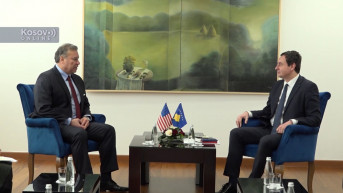
"We cannot reliably know how much Washington is truly bothered by everything Albin Kurti is doing, but they are clearly very upset that he is being 'deaf' and rejecting comments and suggestions from the State Department. At the same time, they are aware that among Albanian voters, Kurti with an anti-American approach has convincing support and is the main favorite in the upcoming elections."
Edited by: Milos Garic
How much and in what way is Albin Kurti's political position in Kosovo jeopardized by the open conflict with the US administration, into which he very consciously entered during the past few months, some would say since coming to power?
This question cannot be avoided after everything that has been said recently, primarily by high-ranking officials from the State Department, but also by Kurti himself, who clearly states that he is willing to listen to allies, but does not necessarily have to obey them when he believes it is not necessary.
One such situation arose in connection with the decision to ban the dinar in Kosovo, which Kurti made, as it turned out, without consulting Western centers of influence, the Quint countries, although there are still some doubts about it because Kurti these days insists quite a lot on demonstrating excellent relations with London and Berlin.
In any case, every time there is a deep sigh in Washington because of Kurti's "mischievousness", no matter how much Kurti tries to ignore it, some kind of political and media storm erupts in Pristina.
We cannot reliably know whether Washington is more bothered by what Kurti is doing, producing one ethnic crisis after another in Kosovo, challenging the basic rights of the Serbs, or if their bigger problem is that he is being "deaf" and blatantly rejecting all comments and suggestions coming from the State Department, thereby jeopardizing the credibility and authority of the main sponsor - the United States.
Will the current Prime Minister of Kosovo have to pay a political price for Washington's frowning at the mention of his name and nervously shaking their heads? Can Kurti survive without the support of the US, after the message that he is not welcome as a further partner?
A populist, problems only in the long run
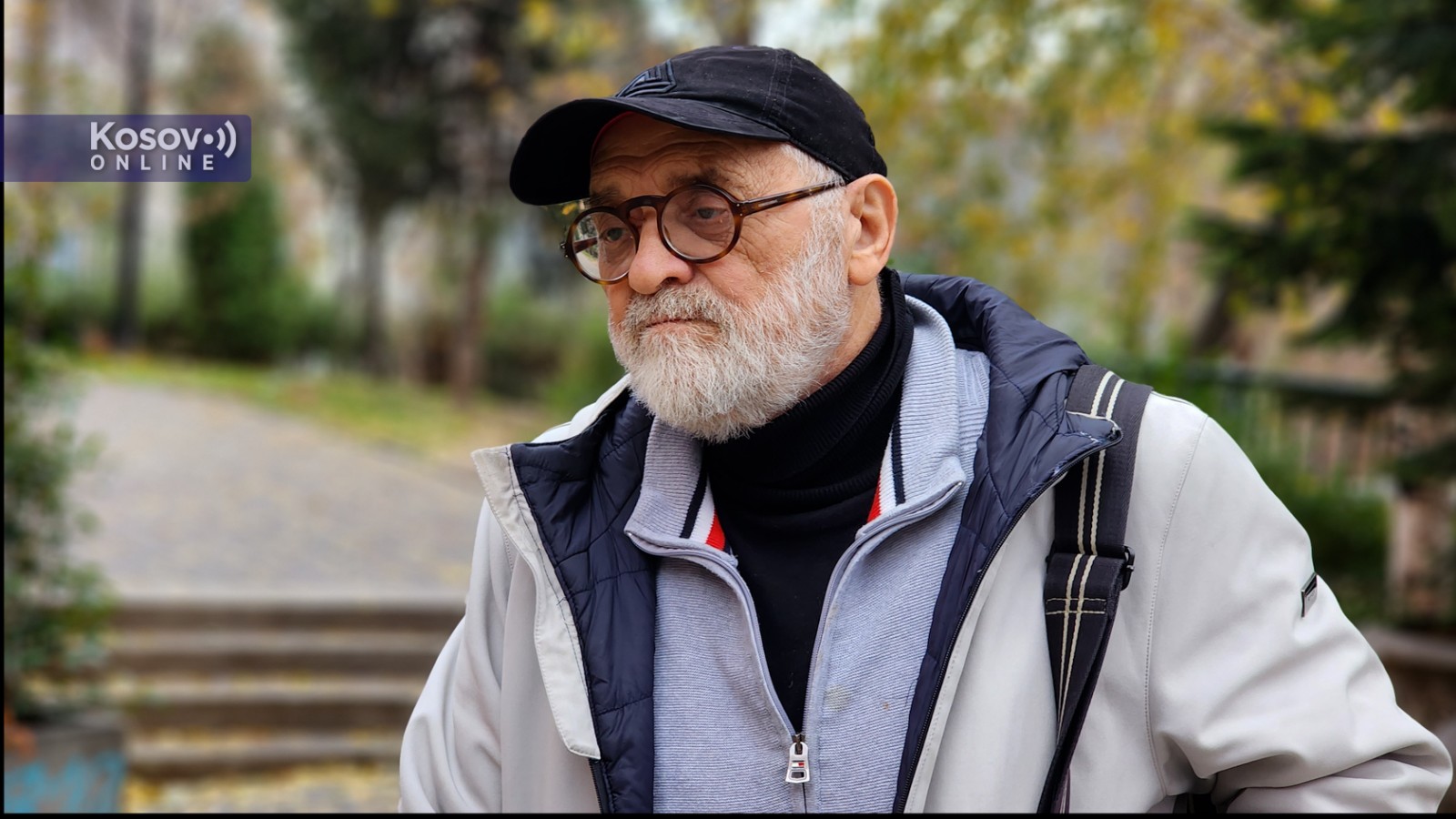
Experienced political analyst from Pristina, Shkelzen Maliqi, tells Kontekst that it will be difficult for Kurti to survive without US support in the long run.
"It's not yet a 'do or die' situation, and so far they have tolerated him, in the sense that they haven't acted like Grenell to remove him immediately, but there is obviously a great dissatisfaction. Not only from the US diplomacy but also from the European one. He may survive a bit longer, as he has survived so far, but not indefinitely, not in the long run. No, if we are now approaching some kind of solution, with these attitudes, where he yields little by little, a bit him, a bit Vucic, so it is progressing very slowly, instead of putting a stop to this phase of the relationship, and then moving on to create a new construction for the region's security," Maliqi says.
He adds that Kurti does not necessarily need US support in the upcoming Kosovo elections.
"He doesn't need US support. He's a populist, he counts on his people, but I don't believe he'll have the support of voters from other parties like last time. In the previous elections, he received around 100,000 votes from Vjosa Osmani's supporters, who are LDK voters, but LDK has split into two factions. Now he won't have that, he can't win the elections alone. He can seek another coalition, but there's no prospect for that. No one would like to be with him now because they know how LDK fared in previous elections when they ran as a coalition. He dismantled it after a month, personally Kurti, when he replaced his deputy from the LDK at midnight," Maliqi points out.
He believes that the messages sent by the Special Representative of the State Department, Gabriel Escobar, in Pristina were very harsh.
"He was quite forceful, just softened a bit when he said that it was a good move Kurti made regarding the Decani Monastery, which was anyway a constitutional obligation of Kosovo. The Constitutional Court of Kosovo ruled in favor of the monastery, so he sort of praised him, but also criticized him for not cooperating," Maliqi pointed out.
Historian and political analyst Ognjen Karanovic says that, excluding the period of President Donald Trump's administration, there is serious doubt whether any leader of the Albanian separatist and terrorist movement in Kosovo and Metohija, at any time from 1990 until today, has been in any major trouble with US government agencies, especially when it comes to the administrations of all US presidents in this period.
The State Department changes its policy slowly
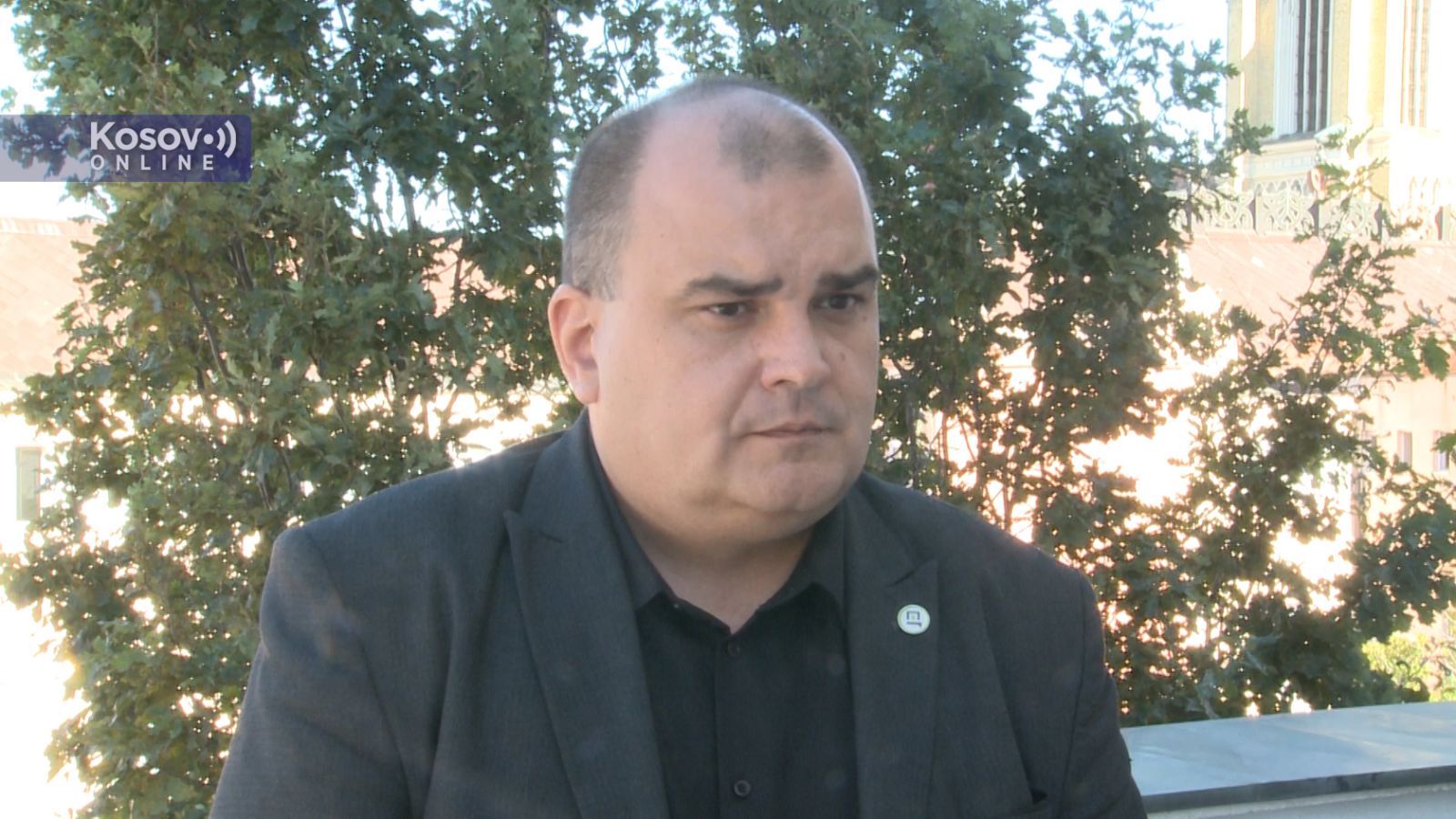
"Albanian political elites, stemming from separatist and terrorist circles since 1996, are perceived as allies of the United States in the Western Balkans. But not only by the US, but also by many NATO countries and EU member states, and by many states in the broader political West. So, this is a product of historical circumstances and processes that have long-lasting character. Such is essentially the case with Albin Kurti. Kurti personally, as well as his entire movement Self-Determination, are in very complex, and we can say, antagonistic relations towards the administration of President Donald Trump. Especially when it comes to his personal relationship with Richard Grenell, who at one point was the US Ambassador to Germany and head of all US intelligence agencies. He was also Donald Trump's special envoy in the dialogue between the state of Serbia and the Albanian separatist movement in the southern Serbian province, that is, the institutions in Pristina. Kurti's extremist, radical, and terrorist policy gained full meaning and capacity in his second term, when Donald Trump left the White House," Karanovic explains for Kontekst.
He, however, emphasizes that the Albanian separatist movement, including all terrorist organizations that emerged from it, which also includes Albin Kurti and his circle of political associates and organizations, are all, according to Karanovic, in some way, the offspring of the foreign policy or geopolitical position of the US and other countries in the so-called political West.
"The essence of the relationship of the political West in that geopolitical spectrum towards Kosovo and Metohija does not change and will not change. Even if there is another change in the White House, meaning if Donald Trump becomes president again. We could probably expect further escalation of relations towards Albin Kurti, perhaps we could expect his downfall from power, but their fundamental attitude towards the status of the southern Serbian province will not change significantly. When it comes to the State Department, since the time of the Bill Clinton administration, both in terms of personnel and, certainly, in political terms, and when it comes to the agenda based on which the employees work and all those organizational units, little has changed," Karanovic reminds.
He adds that there is a high degree of inertia when it comes to foreign policy challenges, observing the US political system as a whole.
"We count the administration of the president there, of course, we are also talking about legislative bodies, when it comes to Congress, when it comes to the Senate, when it comes to the Pentagon, the security apparatus. But certainly, we must first talk about the State Department. For all these 30 years, since the time of Bill Clinton, there have been the least changes there. Or rather, changes have been slowest there. The dynamics of work, and even the content of that work towards the southern Serbian province, have undergone the least changes in the State Department. That was also the reason why Donald Trump eventually chose Richard Grenell to be his special representative in the dialogue between Belgrade and the Pristina institutions. At the same time, the State Department had its representative. So, we saw that dichotomy there, or the division in the US political system. And that reveals a lot about why the United States does not change its strategic policy towards the southern Serbian province," the Kontekst interlocutor explains.
The role of tribal elders and Edi Rama
Karanovic believes that significant changes, especially regarding the US attitude towards the status of Kosovo and Metohija, cannot be expected there. However, in his opinion, if Donald Trump returns to the White House, then we can expect more serious sanctions against Albin Kurti, even his removal from power.
"The US is aware, and so is the Biden administration, that at this moment Kurti is an extremely strong political figure in Kosovo. With his populist, demagogic, but at the same time dangerous measures and steps for the Serbs, he has further mobilized his political body, and he would now, or in some future elections, easily win. And that would further complicate the entire situation. Kurti is an important political actor when it comes to the Albanian separatist political body in Kosovo, and his departure from power does not depend solely on the US," Karanovic emphasizes.
He adds that tribal elders, or the symbiosis of influence between Albanian tribal elders and mafia circles, also play a significant role in Kosovo.
"If they turn their backs on Kurti, then we can expect a political crisis. For now, we don't see that happening. On the other hand, Biden has returned to the Obama and Bush doctrine that, due to the priorities the United States has in other meridians of the world, whether it's Ukraine or the Middle East, China, they have left this issue, the issue of Southeast Europe and Kosovo and Metohija, to their European allies, in fact, Germany. This is a doctrine that Donald Trump avoided or tried to undermine. He took the initiative in the dialogue between Belgrade and Pristina, and we saw some progress then in the dialogue. However, with Albin Kurti, an extremist of such caliber, who has the undivided support of Germany and some other European countries, and certainly the US in essence, any dialogue, any compromise with him is doomed to failure. And I think everyone knows that, including the United States, but because of all these geopolitical circumstances in the world and the fact that Albin Kurti is now an important political figure in Kosovo and Metohija, they can't do much about it," Karanovic says.
However, he leaves open the possibility that Albanian Prime Minister Edi Rama could be a factor in the whole story.
"Perhaps a conflict between Edi Rama and Albin Kurti over primacy in Albanian political and national corpus could lead to some limitation of Kurti's destructive power, but again, such a conflict, or escalation, would have to be fueled by major powers. That still isn't happening, and it's questionable whether it will happen," Karanovic concludes.

comments