
Who debunks the debunkers?
Written for Kosovo Online by Srdjan Garcevic, founder of The Nutshell Times
Every so often, Balkan Pundits decide to embarrass themselves by touting a piece of research that "debunks" a certain "Serbian myth ", only for it to show their lack of information, basic logic or scruples (often all three).
This time around, it came from yet another grand-sounding think tank, the European Stability Initiative, and sought to "debunk "the "lie" that Serbs are leaving Kosovo and Metohija due to the pressures imposed on them by the Priština authorities.
The "background paper", titled "Invented pogroms: Statistics, lies and confusion in Kosovo", claims that Serbian migration from Kosovo is certainly not fuelled by many and varied attacks on Serbs and their property, as there are similar migration patterns in Serbia, based on Serbian police, medical and school attendance data.
Predictably, the authors provide "background" very selectively.
The only mention of the (documented) systemic violence and discrimination against the Serbs by the Priština authorities are in the quotes of the Serbian government and media, which they seek to debunk and dismiss.
Unsurprisingly, they do not even mention instances of massive pogroms in Kosovo (in 1999 and 2004) and even seem to imply that the only reason why Serbs have not been returning to Kosovo and Metohija after the war is (what they consider) shoddy Serbian data rather than general hostility of the Priština authorities and local Albanian population.
On the economic front, they do not consider it pertinent to mention that the relatively generous subsidies that Serbs in Kosovo and Metohija receive make Kosovo and Metohija incomparable to other regions of Serbia.
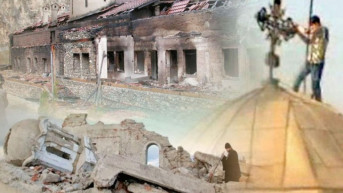
In the main part of the paper, the quality of data is itself questionable (many Serbs retain formal residence in Kosovo while living elsewhere), the tone is in very snarky bad taste (authors had the time to jokily insert a photo of a white rhino but not, say, the iconic footage of Albanian extremists burning Serbian churches in 2004) but what makes the paper truly embarrassing is its premise.
This line of reasoning in the paper, if followed, would also lead one to question "the narrative "that migrations from Bosnia and Herzegovina and Croatia in the 1990s were due to war rather than a simple result of the fact that the West (temporarily) liberalised its migration requirements for their residents. Indeed, the Austrian Academy of Sciences showed that the drop in population in Latvia and Lithuania between 1990 and 2017 is comparable to that in Bosnia and Herzegovina. Should we wait for the ESI paper about "The invented Yugoslav refugees?"
I would not hold my breath.
Cheerleaders of the ESI's research, many of whom work for major media outlets covering the Balkans, decided to partake in this embarrassing display by attacking anybody who pointed out its obvious flaws.
Most recently, Jelena Žarković, a professor of Development Economics at the University of Belgrade, decided to take it upon herself to gauge the validity of claims made by this pseudo-academic organisation and explain what they are lacking.
Rather than disprove any of Žarković's claims, one of the prominent Balkan Pundits launched into a tirade which only served to repeat all the tired techniques of Balkan pundits when faced with their own embarrassment, which basically amount to name-calling and guilt by association. To make it even more unhinged, the tirade ended with a claim that "Belgrade-based coffee-house wisdom" protects Kosovo Serbs less effectively than ESI's (Berlin/Brussels/Istanbul-based) pseudo-researchers who do not even dare mention Albanian attacks on Serbs.
Thankfully, this laughable "research" and its defenders seem to imply that truth is merely a Serbian talking point.
I am sure that ESI staff and its defenders genuinely believe in both their own intellectual abilities and the moral soundness of their goals; thus, it would be wrong to accuse them of hypocrisy or the spreading of propaganda.
The issue is the systemic rot that is driving the Balkans (and the world) to ever more problems. The rot is most pronounced in the fact that "pundits" and "experts" are people who are constantly at odds with reality.
The ESI staff, despite having demonstrably questionable research abilities, are financed not only by private foundations (Open Society Foundations and Mercator Foundation) but also by the Swedish taxpayers (through SIDA), and they used to receive funds from, among others, Canadian, UK, German governments as well as the EU Commission.
It is just one among many "initiatives", "institutes", and "societies" (pick a para-academic name) that "serve to inform" policymakers and the public not by providing them background and facts but by dumbing down conversation and reducing everything to narratives and counter-narratives, though ever more convoluted theories, as if the real world does not exist.
This tragic tendency is most pronounced in the media, with many "disinformation" experts routinely focusing more on who said what and how rather than on the reality of the situation described.
The danger of caring more about debunking "narratives" than the real world showed itself most tellingly when Jon Stewart, the father of edgy punditry, launched into a tirade in which he claimed that the bad state of US public transportation (at least in comparison to that in Moscow) is the price that the US citizens "pay for freedom". By forgetting that the US was no less free a few decades ago when it could maintain its infrastructure and public safety, he inadvertently showed his own inability to reason beyond trying to "one-up" his opponent.
Unfortunately, Balkan Pundits, generally less charming or witty than Steward, are taking it upon themselves to talk about things much more important than urinal-caked subways.

0 comments